REVIEW · BORBA
Borba: Visita à Casa Museu Interativa de Borba e Degustação
Book on GetYourGuide →Operated by EM Rézio- Casa Museu Interativa de Borba · Bookable on GetYourGuide
Borba throws you into a working wine story. Vinho de Talha here isn’t a theory—it’s told inside an old house that still holds its original clay wine jars, 46 of them. You’ll walk through a 19th-century home-turned-casa museu, with the wine cellar at ground level and a setup that uses multimedia on your own phone or tablet to connect the past to what you’re seeing right now.
Two things I really like: the sheer physical reality of the jars themselves (they’re not props) and the way the visit ends with a tasting of 2 Vinho de Talha plus local food. A possible drawback to plan around: this is a small, self-serve style experience. If you’re only passing through and expect a big guided tour, it can feel like a quick stop—not a full destination day.
In This Review
- Key Things I’d Put On Your Must-Do List
- Casa Museu Interativa de Borba: walking into a working cellar
- Vinho de Talha, explained in plain language (and why it’s special)
- The multimedia self-guided walk: use your phone, but don’t rush
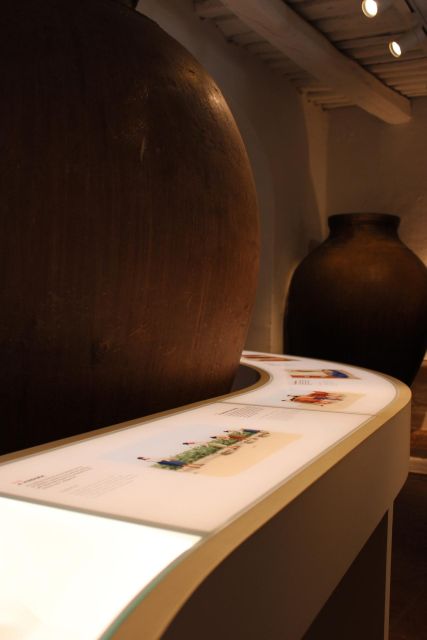
- Inside the cellar: what you’re actually seeing with the 46 talhas
- Ending with the tasting: 2 Talha wines and a serious Alentejo starter plate
- Price and value: why $25 can be either fair or too much
- Who should book this Borba Talha experience?
- Practical tips to get more from your visit
- Should You Book This?
- FAQ
- Do I need to confirm anything at the start?
- Is the visit self-guided?
- How long does the experience take?
- What do I taste?
- What languages are available?
- Is it wheelchair accessible?
- Can I cancel?
Key Things I’d Put On Your Must-Do List
- 46 original talhas de barro housed in the building’s cellar, not replicas
- Self-guided multimedia stations using your phone or tablet
- Production cycle walkthrough of how Talha wine is made
- Tasting of 2 Vinho de Talha from local vintners
- Alentejo petisco pairing basics like bread, olive oil, olives, cheese, and sausages
Casa Museu Interativa de Borba: walking into a working cellar
The Casa Museu Interativa de Borba sits in the Beja District, in Borba, and it feels like you’re stepping into someone’s house, not just a showroom. The museum is placed on the ground floor of a 19th-century home that carries a real family chain-of-custody story: the property was passed by testament in 1936 by José Manuel da Silva to Mariano, his godson. That detail matters. It helps explain why this space feels personal, not staged.
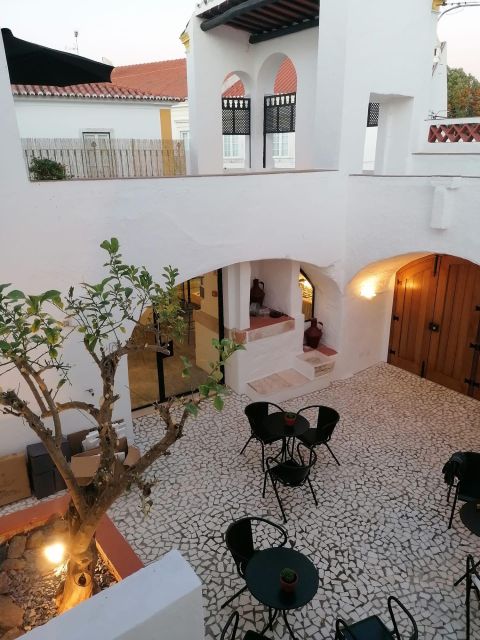
What you’re really here for is the cellar. The building includes the wine cellar area with 46 original terracotta talhas, plus the vinegar cellar, a patio, an old stable area, and even a well. That combination is part of what makes this place more satisfying than a typical museum. Wine in Alentejo wasn’t just one product—it was a whole household system. You can see the pieces of that system under one roof.
Also, you start on the ground floor. That makes the logistics simple: you’re not racing between levels or turning it into a workout. For most people, it reads as an easy day activity that fits cleanly between other Borba plans.
Vinho de Talha, explained in plain language (and why it’s special)
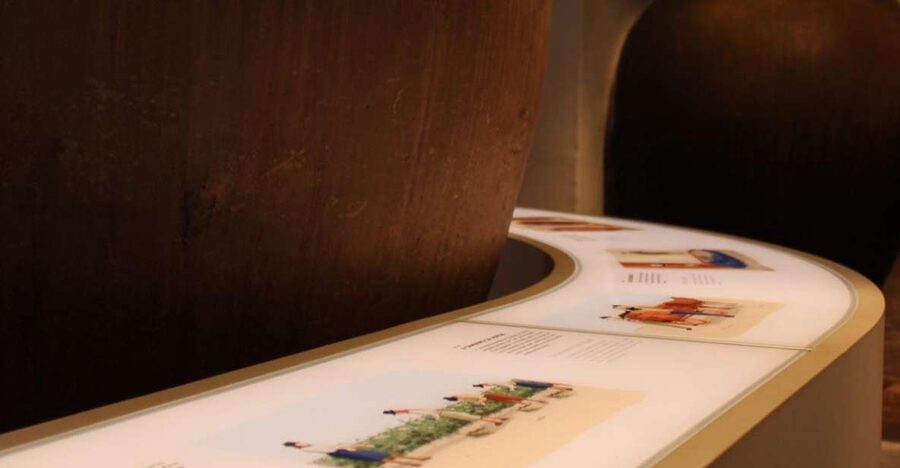
The tradition at the heart of the visit is Vinho de Talha—an ancestral winemaking technique with roots that go back to Roman times in the region. You don’t need a textbook to understand the appeal. The core idea is that the wine is made in earthenware jars (the talhas), and those jars shape the way the process works.
During your visit, you’ll follow a flow that connects what you’re seeing in the cellar to the production cycle. The museum doesn’t treat the jars like decorative background. It frames them as the center of the winemaking method, including how the space functioned for more than just wine.
This is also why the included vinegar and old household areas feel relevant. Historically, this same site produced wine, vinegar made from wine, and aguardente (a spirit). In other words, the building wasn’t a one-off workshop. It was a practical food-and-drink production space. If you like cultural experiences that show how people actually lived and produced, you’ll get a lot from the way the museum ties the rooms together.
The multimedia self-guided walk: use your phone, but don’t rush
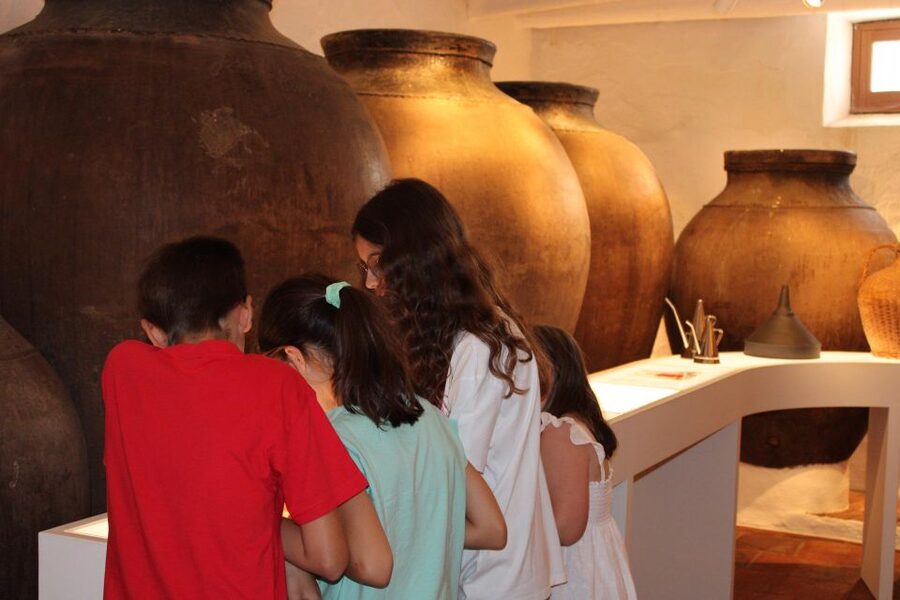
A big part of the experience is how it’s presented. It’s a self-guided, interactive visit with multimedia support. The museum uses your smartphone or tablet as a window into stations inside the space. The messaging is simple: the place has an old-world base, but the presentation uses tools that bring you current-day context while you stand in the exact location being explained.
In practice, that means you’ll move from point to point at your own pace. You’re given a tablet during the visit to describe the different stations, and the audio guide is available in Portuguese and English. If you prefer to read while you look, you can. If you prefer to listen first, you can do that too.
One tip: don’t speed through just to “finish the route.” The jars are the star, and they reward slow attention. Look at the scale, the material, and the setting they’re kept in. Then let the multimedia explain what you’re seeing. When you do that, the experience becomes less like watching content and more like interpreting a real room.
Inside the cellar: what you’re actually seeing with the 46 talhas
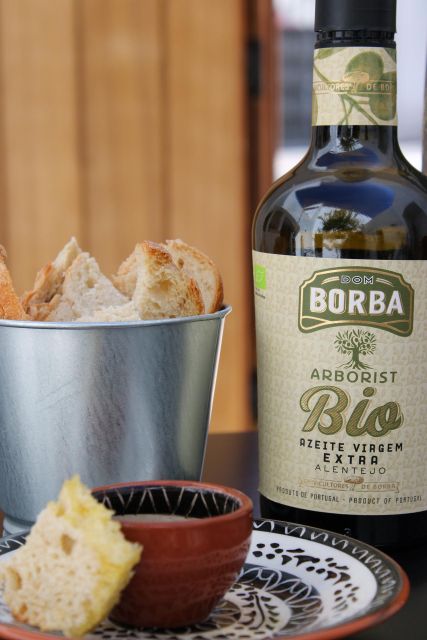
The museum’s cellar is the anchor. It includes 46 talhas de barro (original clay wine jars). These are the vessels that make the whole tradition concrete. When you see them together in one place, you start to understand the logic of the method. This wasn’t a niche practice done with one fancy jar. It was a system with volume and repetition.
As you explore, the museum setting also includes the vinegar part of production and a few other practical spaces: a patio, the old stable area, and a well. Even if you don’t fully memorize every function, the layout helps you grasp a key idea: winemaking in Alentejo was integrated into daily needs. It wasn’t only about celebratory bottles. It was about producing staples for the household and keeping them ready.
Photo lovers will have a good time here. The jars are visually strong—especially because they’re authentic and installed in the room, not displayed behind glass. You’ll also likely notice that the building feels more lived-in than sterile. That’s a quiet quality that helps the story stick.
Ending with the tasting: 2 Talha wines and a serious Alentejo starter plate
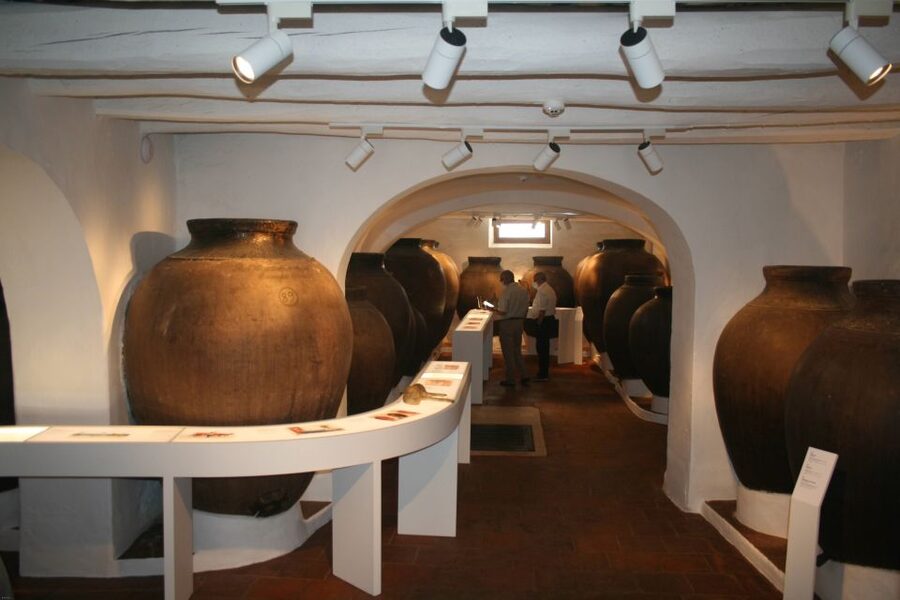
The best reason to do this experience isn’t just the museum. It’s how it ends: tasting of 2 Vinho de Talha and an accompanying spread of local food.
The tasting includes two Talha wines from local vintners. That matters for value because you’re not just tasting one sample to be polite. You get contrast—enough to start forming opinions and learning what style differences might exist between producers and/or lots.
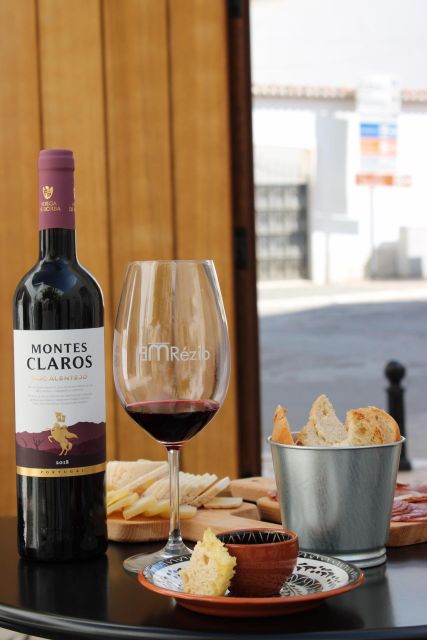
Then comes the petisco regional Alentejano, built to help you taste: bread, olive oil, olives, cheese, and sausages. This is the part that feels most practical. Wine tastings can sometimes turn into a standalone event where you don’t have the basics to reset your palate. Here, you do. And that makes your wine impressions more meaningful.
If you’re picky about food, keep this simple mindset: these are classic Alentejo elements. You’re not eating a meal, but you’re getting a real context for the flavors of the region. It pairs naturally with local wine culture.
Price and value: why $25 can be either fair or too much
At about $25 per person for a 1-day experience, this can be a very fair deal if you want a focused taste of Talha culture. You’re paying for three things: the self-guided museum experience, the multimedia-supported interpretation, and a tasting with food.
Where the value becomes shaky is timing. If you’re driving from far away only for this stop, you may feel the price is fine but the overall day doesn’t line up. One drawback that shows up in this kind of format: it’s not a long guided saga. It’s a compact visit that works best when it’s part of a broader route in Borba or nearby.
So I’d judge value like this:
- If you’re already in the area and you want something authentic and not overly complicated, it’s easy to justify.
- If you’re planning a long detour, plan for the museum to be a stop, not your entire itinerary.
Who should book this Borba Talha experience?
I’d book it if you enjoy hands-on culture—especially food and drink history that’s connected to real objects. It’s also a good fit if you like self-guided experiences where you can linger in the room with the talhas and still understand the process through audio and station-style explanations.
It’s not the best match if you want a large, energetic group tour with lots of back-and-forth conversation. The experience is designed to run without constant staff direction. You confirm your reservation at the museum reception, then you’re set up to explore and follow the media stations.
And if you’re traveling as a couple or solo and you want an easy half-to-full day activity that doesn’t eat your whole itinerary, this one fits nicely. It’s also wheelchair accessible, which is a real plus if you need barrier-free options.
Practical tips to get more from your visit
- Give yourself time to look at the talhas before you start processing the explanations. Let the physical setting do its job.
- Bring a fully charged phone or tablet if you’re using your own device, and keep your eyes on the station prompts.
- Don’t treat the tasting like an afterthought. The wines are the payoff, and the petisco helps you taste better.
- If you care about English or Portuguese audio, make sure you’re set up with the language you prefer from the start.
Should You Book This?
Yes, if you’re in Borba or you’re building a route through the area and you want a direct connection to Vinho de Talha. This works well because you’re not just reading about tradition—you’re standing in the room where the tradition lived, with the original jars doing the talking.
Skip it or think carefully if you’re expecting a big guided day or a long production demonstration. This is compact and self-paced. If you’re coming only because it’s Talha-focused, make sure your schedule gives it enough room so you don’t feel like it’s over before you’ve started enjoying it.
FAQ
Do I need to confirm anything at the start?
You should confirm your reservation at the museum reception when you arrive.
Is the visit self-guided?
Yes. It’s a self-guided and interactive visit, supported by multimedia stations.
How long does the experience take?
The duration is listed as 1 day (you’ll follow the museum route at your own pace within that overall activity).
What do I taste?
You’ll taste 2 Vinho de Talha wines and also have a regional petisco with bread, olive oil, olives, cheese, and enchidos (sausages).
What languages are available?
The audio guide and support are available in Portuguese and English.
Is it wheelchair accessible?
Yes, the museum is wheelchair accessible.
Can I cancel?
Free cancellation is available up to 24 hours in advance for a full refund.