REVIEW · LARNACA
Private Full-Day Tour in Lanarca with a Visit to a Winery
Book on Viator →Operated by iTaxi Cyprus · Bookable on Viator
A long Cyprus day, with stops that make sense. This private Larnaca loop mixes churches, village craft, and UNESCO sights with winery time and scenic viewpoints. It’s built for people who want real texture in one 7 to 8 hour block, without juggling buses.
I especially like the way the day flows from hands-on culture to food and drink. You’ll see the women’s cooperative pottery of Kornos, then shift to traditional Cypriot making with halloumi and a proper winery visit in Kato Drys at Ktima Christoudia.
One thing to consider: lunch and several key entrances are not included, and the tour cost is a private full-day price. Add in the extra fees (and your own lunch plan) so you’re not surprised when you budget.
In This Review
- Key highlights worth planning around
- How this private Larnaca day is paced (and why it feels easy)
- Price, value, and what’s really included
- Stop 1: St. Thekla Monastery for a calm start
- Stop 2: Kornos Coop Pottery and the real story behind the ceramics
- Stop 3: Pano Lefkara for lace, silver, and a real lunch break
- Stop 4: Ktima Christoudia Winery in Kato Drys
- Food culture bonus: halloumi making at Petros Nikolaou
- Stop 5: Choirokoitia Neolithic Settlement for UNESCO-level perspective
- Stop 6: Tochni ruins and the Latin church remnants
- Pleasant view stop: mountain-range backdrop time
- Stop 7: Angeloktisti Church in Kiti (UNESCO Byzantine moment)
- Lunch, timing, and how to avoid a hungry-stress day
- Who this tour is best for (and who should consider another day)
- Should you book this Larnaca private tour with a winery visit?
- FAQ
- How long is the tour?
- What time does the tour start?
- Is pickup and drop-off included?
- Is lunch included?
- Are the entrance fees included?
- Is the winery tasting included?
- Is this a private tour?
- What if weather is bad?
- Are service animals allowed?
Key highlights worth planning around
- Wine tasting at Ktima Christoudia in the hillside village of Kato Drys, with a cellar visit before tasting
- Kornos Coop Pottery connected to a women’s cooperative pottery workshop founded in 1953
- Pano Lefkara for lace and silver work, plus a built-in 2-hour lunch break in the village
- UNESCO stops that cover two eras: Choirokoitia (Neolithic) and Angeloktisti Church (Byzantine)
- Tochni ruins and the Latin church remnants, paired with a mountain-range viewpoint stop
How this private Larnaca day is paced (and why it feels easy)
This is a private full-day tour starting at 9:00 am, usually clocking in around 7 to 8 hours. The big win for me is the air-conditioned vehicle and the pickup/drop-off setup. You don’t waste time coordinating transfers between scattered villages and heritage sites.
The schedule also respects travel reality. Most stops are short but not rushed, with built-in time at the places that actually need it. For example, you get 2 hours in Pano Lefkara (time to wander, browse, and eat), while other sites stay to a half-hour window.
You’ll also want to plan around one operational note: this experience requires good weather. If conditions are poor, it can be rescheduled or refunded, so I’d keep that flexibility in mind—especially if you’re trying to pack Cyprus tightly into limited days.
Price, value, and what’s really included
The price is $482 for a private tour. That’s not “cheap,” but it can be good value depending on your group size. The main thing you’re paying for is time: door-to-door pickup, round-trip logistics, and a route that hits multiple high-interest stops in one day.
Here’s what’s included:
- Air-conditioned vehicle
- Private transportation
- Pickup and drop-off
- A mobile ticket
- Most core stops have free admission (based on the listed entry info)
Here’s what you should budget for:
- Lunch is not included, and you’ll be on your own for meals and snacks.
- Entrance fees are not included for some major elements:
- Choirokoitia (estimated €2.50 per person)
- Kato Drys winery visit at Ktima Christoudia (estimated €7 to €10 per person)
- Petros Nikolaou halloumi making (estimated €7 to €10 per person)
Also note one detail that matters for expectations: a professional tour guide isn’t listed as included. In practice, you may still get helpful local context from your driver, but if you want deep historical narration all day, you should go in with that in mind.
Stop 1: St. Thekla Monastery for a calm start
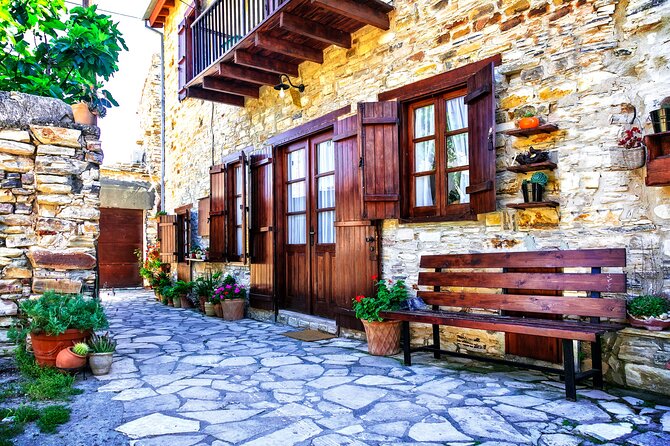
You begin with St. Thekla Monastery, listed as optional and said to be founded by Saint Helen in the 4th century. The time block is short—about 30 minutes—which makes it an easy “soft landing” before the busier village stops.
What I like about starting this way is mood. Even if you’re not chasing every religious site in Cyprus, monasteries tend to slow you down. You’ll likely get a peaceful church setting and a chance to reset before you move into crafts and UNESCO sites.
Optional means you can skip it if you’d rather spend more time later. That flexibility is helpful if your group leans practical and hates checklist pressure.
Stop 2: Kornos Coop Pottery and the real story behind the ceramics
Next up is Kornos, focused on Kornos Coop Pottery, an old pottery workshop founded by a women’s cooperative in 1953. This is the kind of stop that turns “shopping” into something more meaningful.
You’ll have about 30 minutes here, and the value is in seeing craft as a living tradition rather than a souvenir wall. Handicrafts in Cyprus often reflect local relationships to materials, tools, and community work. In this case, the cooperative origin adds weight: you’re not just buying ceramics; you’re supporting a particular history of making.
Practical tip: if you like pottery, don’t wait until the end of the day. Your hands might want to buy right away, and later stops can crowd your time for browsing.
Stop 3: Pano Lefkara for lace, silver, and a real lunch break
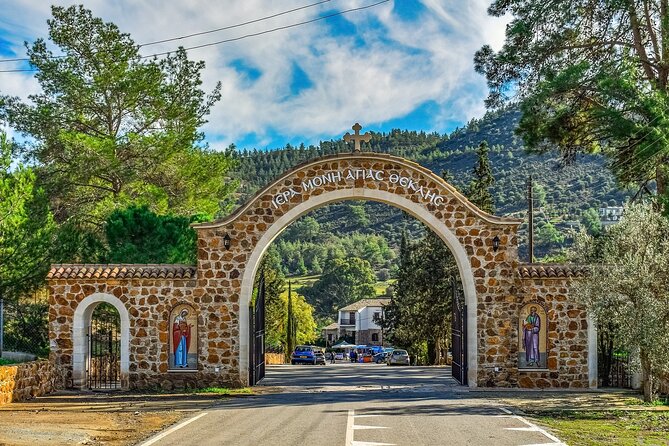
Pano Lefkara is one of those villages that earns its reputation. It’s famous for lace, locally known as Lefkaritika, and for silver handicrafts. Your stop is 2 hours, and that’s crucial.
It gives you room to do three things well:
- Browse lacework without rushing
- Compare small silver items and finishes
- Take a proper lunch break in the village area (lunch isn’t included, but the time is)
This is where I’d set expectations correctly. Lefkara is charming, but it’s also narrow-street and shop-heavy. Wear comfortable shoes. If your legs are sensitive, plan for uneven stones and take breaks as needed.
If you’re shopping, set a mini budget before you arrive. Lace and silver can pull you in fast, and with only two hours, deciding early helps you enjoy the wandering.
Stop 4: Ktima Christoudia Winery in Kato Drys
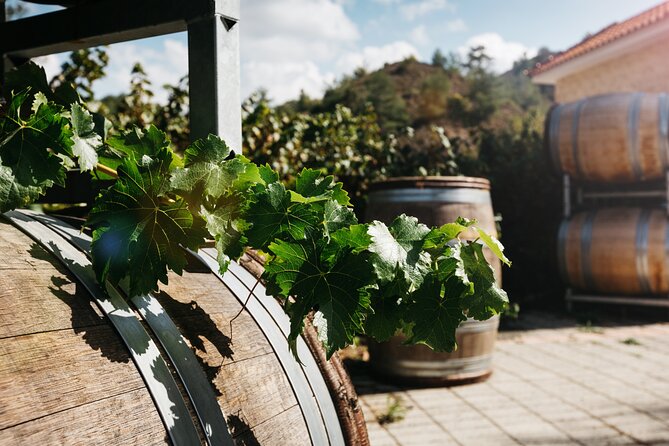
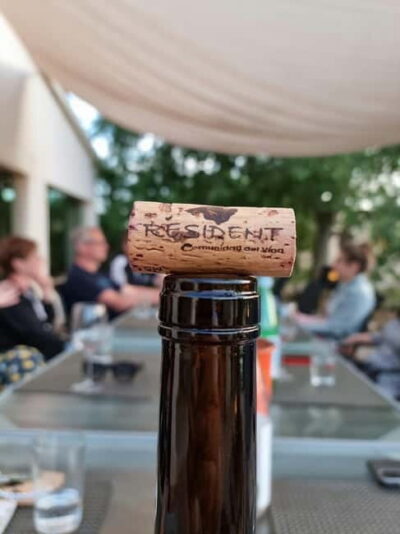
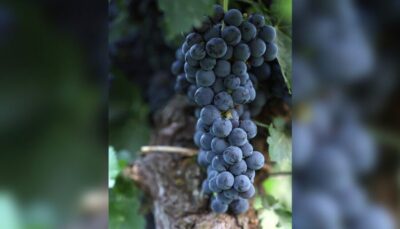
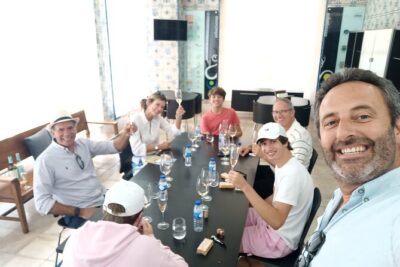
Then comes the highlight for many people: Ktima Christoudia Winery in the hillside village of Kato Drys. The visit includes an informative tour around the premises and cellar, then a wine tasting of its vintages. This stop runs about 1 hour.
A couple of practical things matter here:
- The winery entrance fee is not included (estimated €7 to €10 per person).
- You should plan to buy drinks only if it suits you; tasting is the core point.
- Since this is a private tour with pickup and drop-off, you can actually enjoy the tasting without the stress of getting yourself home.
Why this stop is worth structuring your day around: it connects Cyprus food culture to place. The winery visit isn’t just a pour-and-go. You’re given the setting—cellar and premises—so when you taste, it has context.
If you have dietary preferences, it’s still mostly about wine here, so you should be fine. But if you’re sensitive to alcohol timing, pace yourself during the tasting.
Food culture bonus: halloumi making at Petros Nikolaou

One of the cultural goals of this day is learning traditional halloumi making. The entrance fee for Petros Nikolaou halloumi making is listed as estimated €7 to €10 per person, and it’s not included.
I like food stops that teach you something you can’t easily replicate later. Halloumi making is one of those experiences where the process makes the product make sense. Even if you don’t become a cheese-making expert by the end, you’ll leave with better instincts for what you’re tasting when you buy halloumi back home.
Because the exact timing of this stop isn’t laid out in the detailed order, treat it as part of the day’s cultural structure. If you want to be sure it’s on your version of the schedule, ask at confirmation and review what’s included before you go.
Stop 5: Choirokoitia Neolithic Settlement for UNESCO-level perspective
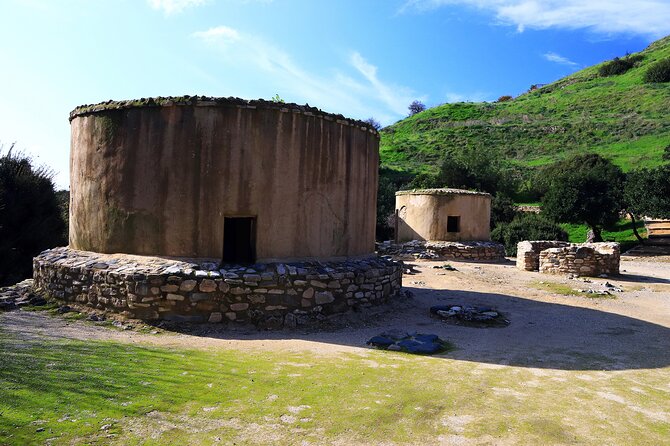
Next is Choirokoitia, a UNESCO World Heritage Site listed since 1998 and described as a remarkably well-preserved Neolithic Age settlement. The visit is about 30 minutes, and the entrance fee isn’t included (estimated €2.50 per person).
This stop is valuable because it resets your mental timeline. Cyprus isn’t just an island of beach days and modern towns. Sites like this help you understand that the landscape has been shaped by human life for a very long time.
The experience here is more about atmosphere than entertainment. You’ll be looking at structures and settlement layout, and the best way to enjoy it is to walk slowly and let your imagination do the work—how people lived, stored food, and built shelter with the materials available.
Stop 6: Tochni ruins and the Latin church remnants
Then you head to Tochni, in the Larnaca District, about halfway between Larnaca and Limassol. You’ll spend about 45 minutes, and admission is listed as free for this stop.
What makes Tochni hit harder than a standard photo break is the history context provided: before 1974, Tochni had a mixed Greek-Cypriot and Turkish-Cypriot population. The key sightseeing focus is the ruins of a historical old Latin church, which you’ll see as part of the stop.
I find ruins like this powerful because they show how layers of Cyprus history overlap in real space. You’re not just reading about it—you’re standing near remnants and letting the story land.
Pleasant view stop: mountain-range backdrop time
Between the heritage stops, there’s also a pleasant viewpoint stop with a breath-taking mountain range backdrop. It may feel like a breather, but it’s actually important.
After a day of churches, crafts, and UNESCO sites, a viewpoint gives your eyes and brain a reset. It’s also where you can take photos without worrying about “keeping up” through narrow village streets.
If you’re using your phone camera, quick tip: shoot a few frames wide first, then zoom in once to avoid spending all your time adjusting settings.
Stop 7: Angeloktisti Church in Kiti (UNESCO Byzantine moment)
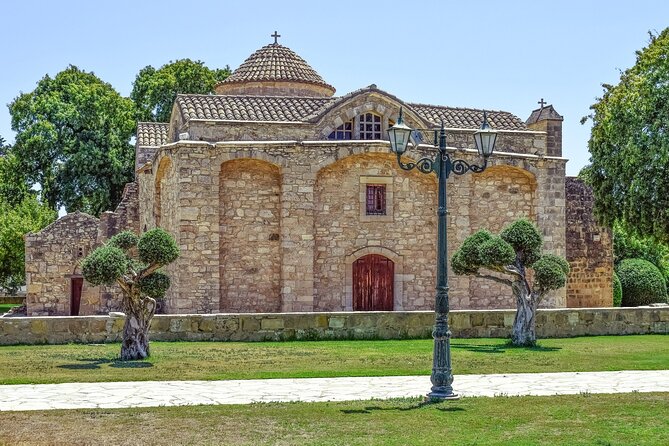
You finish with Angeloktisti Church, a Byzantine church in Kiti included by UNESCO in the World Heritage List. Time here is about 30 minutes, and admission is listed as free.
This is the kind of final stop that gives the day a clear arc: you’ve moved from early settlement life (Choirokoitia) to later religious sites and craft culture. Angeloktisti works as a capstone because it’s both specific and recognizable as a Byzantine landmark.
Take your time for the details. Even without a deep lecture, you’ll appreciate it more when you slow down and look.
Lunch, timing, and how to avoid a hungry-stress day
Lunch is not included, so you’ll need to plan for food. The itinerary includes a lunch break in Lefkara, but you’re choosing where and what to eat.
Here’s how I’d handle it:
- Eat earlier in your Lefkara break if you’re the type to get hangry later.
- Carry a bit of water, especially if you tend to walk more than planned.
- If you wear layers, keep something light for church stops and something comfortable for village walking.
Also, because the day involves a winery tasting, keep an eye on how much time you spend snacking. If you want the tasting experience to stay pleasant, don’t arrive hungry and rushed.
Who this tour is best for (and who should consider another day)
This private Larnaca day makes the most sense for:
- People who want craft + culture + wine in one route
- Travelers who like UNESCO sites, even if the visits are short
- Couples and small groups who value comfort and control from pickup to drop-off
- Anyone who wants to see more than just Larnaca town center
It may not be your best match if:
- You expected a professional tour guide for deep explanations all day
- You don’t want to pay extra for entrances (Choirokoitia and the winery, plus halloumi making if included)
- You dislike structured schedules and prefer a fully unplanned day
Should you book this Larnaca private tour with a winery visit?
I’d book it if you’re looking for a high-efficiency Cyprus day that mixes wine tasting, artisan stops, and UNESCO heritage without over-complicating your logistics. The route gives you craft moments (Kornos and Lefkara), historical layers (Choirokoitia and Angeloktisti), plus a personal favorite format: short guided stops where you can actually enjoy what you came for.
I’d hesitate if your budget is tight after add-on entrance fees and lunch, or if you want a full-on guided lecture from start to finish. In that case, you might compare other formats that clearly include a professional guide or that keep entrance costs bundled.
If your goal is a memorable Larnaca-district finale with wine, crafts, and heritage in one smooth private day, this one fits well.
FAQ
How long is the tour?
It runs for about 7 to 8 hours.
What time does the tour start?
The start time is 9:00 am.
Is pickup and drop-off included?
Yes. Pickup and drop-off are included, along with private transportation in an air-conditioned vehicle.
Is lunch included?
No. Lunch is not included, and you’ll also need to cover breakfast/snacks/soft drinks on your own.
Are the entrance fees included?
Some are not. Choirokoitia entrance is estimated at €2.50 per person, Ktima Christoudia Winery is estimated €7 to €10 per person, and Petros Nikolaou halloumi making is estimated €7 to €10 per person. Other listed stops are marked free.
Is the winery tasting included?
Yes. At Ktima Christoudia, you get a tour around the premises and cellar, followed by a wine tasting. The winery entrance fee is not included.
Is this a private tour?
Yes. It’s private, meaning only your group participates.
What if weather is bad?
The experience requires good weather. If it’s canceled due to poor weather, you’ll be offered a different date or a full refund.
Are service animals allowed?
Yes. Service animals are allowed.