REVIEW · MILAN
Milan: Wine Lovers Experience at Cantina Urbana Winery
Book on GetYourGuide →Operated by Cantina Urbana Milano · Bookable on GetYourGuide
A winery in Milan sounds odd at first. Then you taste the wines and it clicks. I like the way this urban cantina turns a big-city address into a real production experience, and I also love the hands-on 6-wine tasting paired with local charcuterie. One thing to consider: it is only about 1.5 hours, so if you want a long vineyard day with lots of walking, this is more focused and compact.
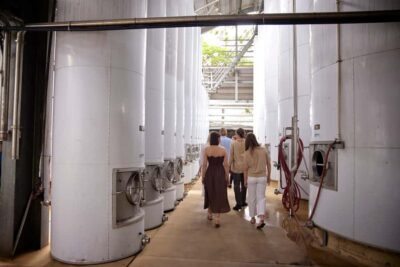
You start at Via Ascanio Sforza 87 and spend the time with a live guide in English or Italian, with guides such as Irene, Francesco, Mia, Julia, and May showing up in the guide roster. Expect a calm, small-space visit with wooden barrels, terracotta amphorae, and stainless steel tanks—basically wine-making rooms you usually only see in the countryside.
The other “heads up” is logistics in the city: you’ll want to plan your route to the address and give yourself a few minutes to find it, since it is not right next to a major tourist landmark. If you nail that part, this is an easy, flavorful way to slow down in Milan without losing half a day.
In This Review
- Key things I’d plan around at Cantina Urbana Milano
- A City Winery in Milan: What Makes Cantina Urbana Different
- Finding the Place and Using the 1.5-Hour Window
- Inside the Cantina: Barrels, Amphorae, and Organic Craft
- The Guided Tour: How the Sommelier Brings Wine to Life
- Tasting 6 Wines with Local Charcuterie Pairings
- If You Want More: The à la Carte Wine Bar Option
- Price and Value at About $36.44 per Person
- Who This Experience Fits Best (and Who Should Pass)
- Should You Book Cantina Urbana Milano?
- FAQ
- How long is the Cantina Urbana Milano wine experience?
- Where does the tour start?
- How many wines will I taste?
- What food is included?
- Is there an option to order more food or drinks?
- What languages are the tours offered in?
- Is the experience wheelchair accessible?
- Is there live guidance during the tasting?
- What is the price per person?
- What happens if I cancel?
- Can I book now and pay later?
Key things I’d plan around at Cantina Urbana Milano
- Certified organic approach and a wine story built around keeping it pure and respecting nature.
- Small-but-characteristic tour before the tasting, so you learn without rushing.
- Multiple winemaking methods are part of the point: think amphora, barrel, and stainless tank.
- 6 wines (or 4, depending on option) with food tasting that fits the menu style of a wine bar.
- Sommelier-led explanations that connect each wine to what happens during production.
- A real chance to add bottles to your trip if a wine speaks to you.
A City Winery in Milan: What Makes Cantina Urbana Different
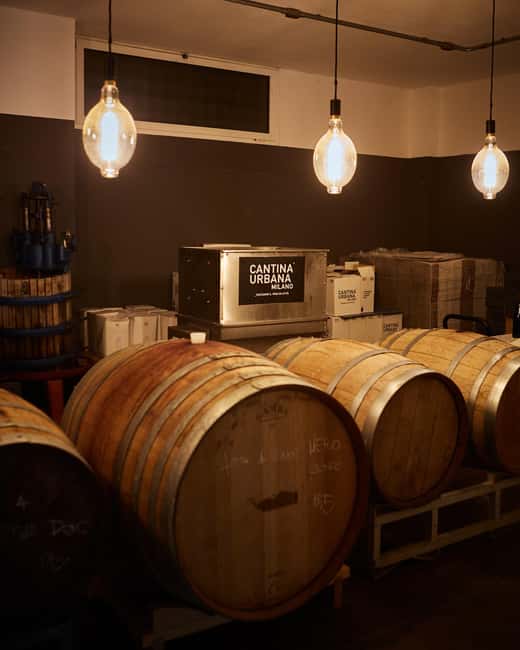
Cantina Urbana Milano is exactly what it sounds like: wine production inside the city. It is not trying to replace Tuscany or Piedmont. Instead, it gives you the fun part—how wine is made and why different techniques taste different—without the long travel time.
The setting is one of the biggest draws. You’re surrounded by wooden barrels, terracotta amphorae, and stainless steel tanks, which are not just props. They hint at the key idea you’ll keep hearing during the tasting: wine is shaped by what happens during fermentation and aging, not just by the grape name on the label.
What I like most is that this feels practical. You come in with curiosity, and you leave with a clearer sense of what to look for next time you’re choosing a bottle in a shop or ordering at a bar in Italy. The vibe is also approachable. You do not need to be a wine expert to follow along, but you’ll get enough detail to feel like you learned something real.
You can also read our reviews of more tours and experiences in Milan.

Finding the Place and Using the 1.5-Hour Window
Your visit centers on one address: Via Ascanio Sforza 87. The experience runs for about 1.5 hours, with a guided tour and tasting built into that time. That matters because it keeps the whole plan simple. You can fit it between museum time and dinner, or do it on a lighter day when you still want something memorable.
There’s also a timing angle worth knowing: start times vary, so you’ll want to check availability for the exact slot that works best with your day. If you’re planning a tight schedule, picking an earlier start can help you avoid the Milan “everything moves slowly” effect after lunch.
Getting there is mostly about being realistic. This is not a must-see square where you step out and you’re instantly there. Some people flag that there’s a short walk involved from nearby transit. One extra helpful detail: the place has been described as close to the No3 tram stop, which is useful if you’re using the tram network to get around.
Inside the Cantina: Barrels, Amphorae, and Organic Craft
This is where the “urban” part becomes interesting instead of gimmicky. The cantina has a clear winemaking setup, and you can see the equipment styles that hint at different flavors and textures.
You’ll move through a winery space that includes:
- Terracotta amphorae (often connected to gentler handling and distinct fermentation/aging effects)
- Wooden barrels (commonly associated with aging and added complexity)
- Stainless steel tanks (typically linked with cleaner, fresher expressions)
Those three materials are a simple map for your tasting. Even if you don’t know the technical terms, you’ll start connecting the dots: why one wine feels tighter or more aromatic, and why another feels broader or more structured.
Then there’s the environmental angle. The winery is certified organic, and that theme shows up as part of the story about staying pure and respecting nature. That does not guarantee better wine every time—nobody should pretend it does—but it does mean the producer is making a clear set of choices, and you’ll hear that connected to their values and how they work.
The Guided Tour: How the Sommelier Brings Wine to Life
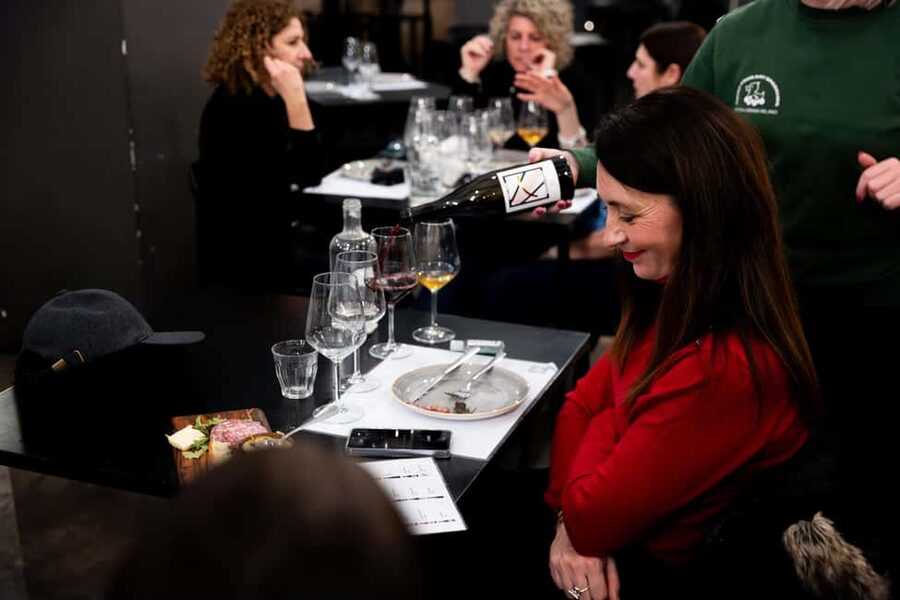
Before the tasting, you get a guided look at the winery. The tour is described as small but characteristic, which is good news for anyone who hates being shuffled through a long walk with limited time to ask questions.
This is also where you’ll benefit from the fact that the host is not just reading facts. The tasting is presented with a sommelier style, connecting each wine to production decisions—especially the various wine-making methods behind the scenes.
From what’s described, the guides tend to explain in a way that sticks. You’ll hear the difference among the wines and why they taste the way they do. Names like Irene, Francesco, Mia, Julia, May, and Irena come up with consistent praise, including people noting how guides manage to keep the group engaged and on pace. If you’re the type who asks questions—what’s the difference between this white and that one, why does the aging matter—this is a good format for you.
One practical note: since the experience is only around 1.5 hours, the tour and tasting move at a friendly but definite pace. If you’re hoping for a super slow, long conversation about wine for the full duration, you may find it brisk—but that’s also part of why it’s great value for time.
Tasting 6 Wines with Local Charcuterie Pairings
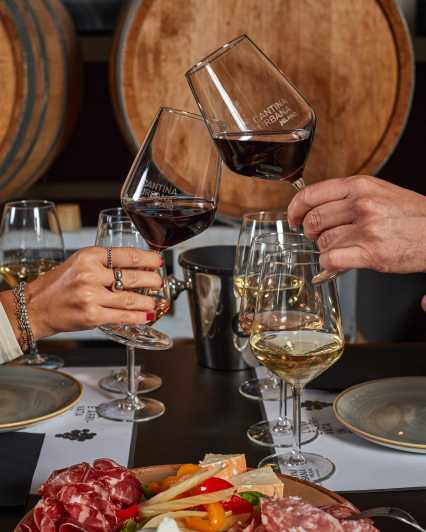
The main event is the tasting of 6 different wines (or 4, depending on the option you choose). This is the moment where the urban setting stops being strange and starts being fun. You’re not just tasting casually; you’re tasting with an explanation that helps you build a mental “flavor map.”
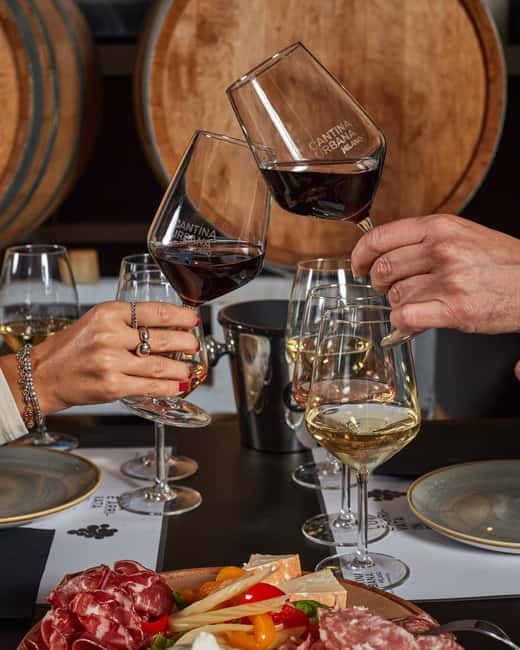
Alongside the wines, there’s a food tasting built around typical gastronomic products. You’ll get a charcuterie-style spread—think cold cuts and cheese in a pairing setup that keeps the tasting grounded.
What’s especially nice here is balance. If you are used to wine tastings that lean too far into theory or too far into drinking, this one aims for middle ground. You taste, you learn the production angle, then you reset your palate with the food. Several people also describe the board as more than just tiny bites—enough to feel comfortably fed during the session.
In terms of variety, some tastings are described as including a white, rosé, an orange wine, and two reds, with other combinations possible depending on what’s being poured. So treat the specifics as “you’ll get variety,” and expect at least some interesting surprises rather than only predictable crowd-pleasers.
If You Want More: The à la Carte Wine Bar Option
One clever perk is that the winery also operates like a wine bar. That means if the tasting leaves you wanting more food, you can order from an à la carte menu rather than trying to squeeze in another stop immediately.
This matters because wine tastings can be either:
- a complete meal experience, or
- a quick palate check.
Here, it’s easier to make it match your day. If you’ve been snacking lightly all afternoon, order extra. If you’re already hungry for dinner, you can keep it simple and just have a bottle or two to carry your day forward.
A few people also mention buying bottles to take home after the tasting. That’s a sign the wines connect, not just that the tasting is a marketing exercise. Even if you don’t buy, it helps you think about what you might want in the rest of your Italy trip.
Price and Value at About $36.44 per Person
At $36.44 per person, this experience is priced for people who want a guided wine hit without the cost (or time) of a full-day countryside tour.
Here’s what you’re really paying for:
- a guided tour of the cantina itself (not just a table with poured wine)
- a structured wine tasting (4 or 6 options)
- a paired food tasting with typical local products
- explanations in English or Italian, led by a live guide and sommelier-style hosting
If you compare this to what a guided tasting alone often costs in big cities, the added food and tour are what push the value into a sweet spot. You’re not buying just wine; you’re buying context. And context is what helps you remember what you tasted and what you liked.
For the money, it also lands as a reliable “plan B” activity. Milan can be great, but weather and time can be unpredictable. This is one of those experiences that stays satisfying even if your day has already been packed.
Who This Experience Fits Best (and Who Should Pass)
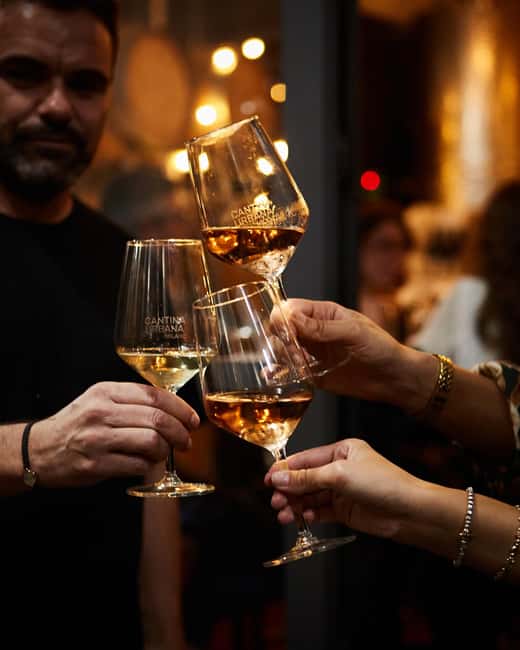
This is a strong fit if you want:
- a focused wine education without a long day out of town
- a low-stress way to taste multiple wines in one sitting
- an experience that mixes production details with a real food pairing
- a unique Milan activity that isn’t just another museum or shopping stop
It’s also good for couples and small groups because the session is structured around a guide-led flow. People describe the host as friendly and willing to talk, which is what you want if you’re not trying to speak up for attention the whole time.
Who might want a different option? If you’re dreaming of vineyard views, long scenic drives, and hours of walking outdoors, this may feel too compact. It’s a city cantina, so the atmosphere is about the wine-making space and tasting format—not the landscape.
Should You Book Cantina Urbana Milano?
Yes—if your idea of a great Milan day includes learning how wine is made and tasting it with food in a real guided format. Book it when you want six wines (or choose four if you prefer lighter sampling), and when you appreciate a short, well-run experience that fits into city planning.
I’d especially book it if:
- you’re a true wine lover who wants multiple styles explained in one session
- you like the idea of organic wine values and hands-on production context
- you’re traveling with someone who drinks, but you don’t want a whole day to revolve around it
I would think twice if you need a long outdoor excursion or you’re only interested in a single bottle and nothing else. In that case, a simple wine bar stop might be enough.
If you book, I suggest planning transit with a little buffer and arriving calm. Once you’re in, the time goes fast—in a good way. You’ll leave with tastes you can name and reasons you can explain, which is the best souvenir kind.
FAQ
How long is the Cantina Urbana Milano wine experience?
The experience duration is listed as 1.5 hours.
Where does the tour start?
The starting location is Via Ascanio Sforza, 87.
How many wines will I taste?
The tasting can include either 4 or 6 wines, depending on the option you select.
What food is included?
A food tasting is included, featuring typical gastronomic products to go with the wines.
Is there an option to order more food or drinks?
Yes. The winery is also open as a wine bar, and you can order from the à la carte menu if you want more.
What languages are the tours offered in?
The live tour guide is available in English and Italian.
Is the experience wheelchair accessible?
Yes, it is listed as wheelchair accessible.
Is there live guidance during the tasting?
Yes. The experience includes a live tour guide, with a sommelier leading the wine production explanations as part of the tasting.
What is the price per person?
The price is listed as $36.44 per person.
What happens if I cancel?
You can cancel up to 24 hours in advance for a full refund.
Can I book now and pay later?
Yes. You can reserve now and pay later, keeping your travel plans flexible.