REVIEW · TRENTINO ALTO ADIGE
Visit of the vineyard on Mount Mezzocorona and tasting of 3 wines
Book on Viator →Operated by CittàDiLazise.it · Bookable on Viator
There’s wine up in the clouds. This small-group tour takes you from Mezzocorona up by cable car to a mountain view, then across the skywalk and (optionally) a suspended Tibetan bridge before you reach the vineyard and tasting. I love the mix of adventure and calm, and I also love that the tasting isn’t random sips. You get a real look at how Navarro, the mountain sparkling wine, is made—and you taste three specific bottles with clear aging stories.
One thing to consider: if you have vertigo or altitude concerns, this isn’t the best match. You’ll take the cable car to reduce strain, but you’ll still do short walks and be near high viewpoints.
In This Review
- Key Points Worth Your Time
- Up To Mezzocorona by Cable Car: Views First, Then Wine
- Skywalk, Sky Views, and the Optional Tibetan Bridge
- Stop at Castello di San Gottardo: A Quick Pause on the Way
- Walking Toward the Vineyard: Learning the Company Philosophy
- The Vineyard Visit and Navarro: Why Mountain Sparkling Wine Feels Different
- The Three-Wine Tasting: What You’ll Taste and What to Look For
- Local Food Pairings: Speck, Grana, Lucanica, and Cold Cuts
- Pace, Group Size, and What to Bring for a Smooth 3.5 Hours
- Value for Money: Why This Tasting Package Works
- Who This Tour Is Best For (and Who Should Skip It)
- FAQ
- How long is the vineyard and wine tasting experience?
- Where does the tour start and end?
- What language is the tour offered in?
- What wines are included in the tasting?
- What food is served with the wine?
- Is the Tibetan bridge required?
- Can dietary needs be accommodated?
- Is this tour suitable for people with vertigo or altitude problems?
- Final Take: Should You Book This Mezzocorona Vineyard Tour?
Key Points Worth Your Time
- Small groups (max 8) keep the pace friendly and the wine answers actually useful
- Cable car + skywalk gives big views without making you hike the whole way
- Vineyard visit + company philosophy helps you understand what you’re tasting
- Three aged wines with exact aging timelines, not a vague tasting flight
- Local food pairings include speck and Trentingrana, plus cold cuts and lucanica
- Tibetan bridge is optional, so you can choose your comfort level
Up To Mezzocorona by Cable Car: Views First, Then Wine
The day starts at the company store in Mezzocorona, where you’ll get a quick meet-and-greet and a sense of how the group will move together. Then you head out for the cable car ride up to Mount Mezzocorona. This matters more than you might think. The area is hilly and elevated, and the cable car takes the edge off, so you can enjoy the scenery without burning all your energy before the tasting.
Once you’re up, the views do the heavy lifting. You’re looking down over the valley and toward the vineyards you’ll be learning about soon. It’s the kind of start that makes the wine feel connected to place, not like a separate indoor stop.
Also, keep in mind the tour includes short walking parts even though you avoid a big climb. You’ll do a short walk near the woods and toward the skywalk. Wear shoes you trust. Smooth sneakers can be fine in town; on a mountain route, I’d rather see proper grip.
You can also read our reviews of more tours and experiences in Trentino Alto Adige.
Skywalk, Sky Views, and the Optional Tibetan Bridge
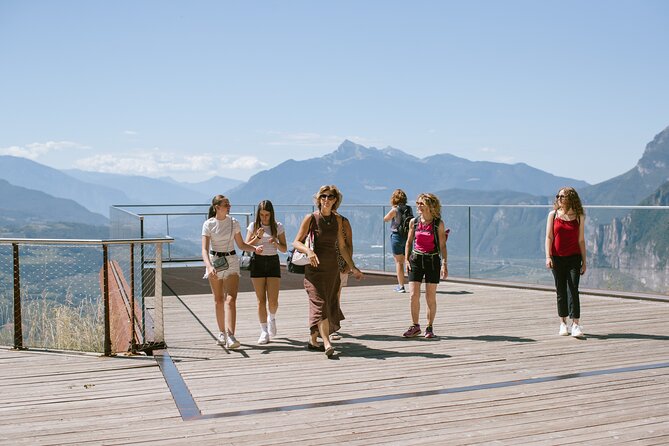
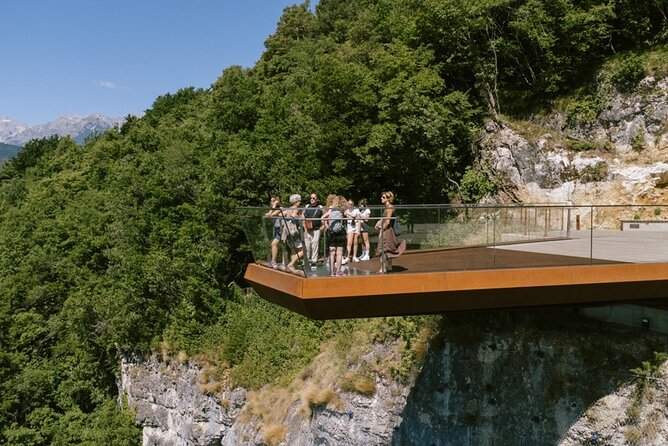
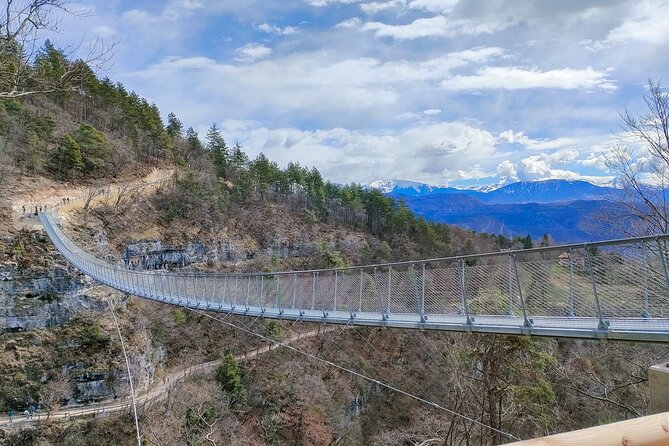
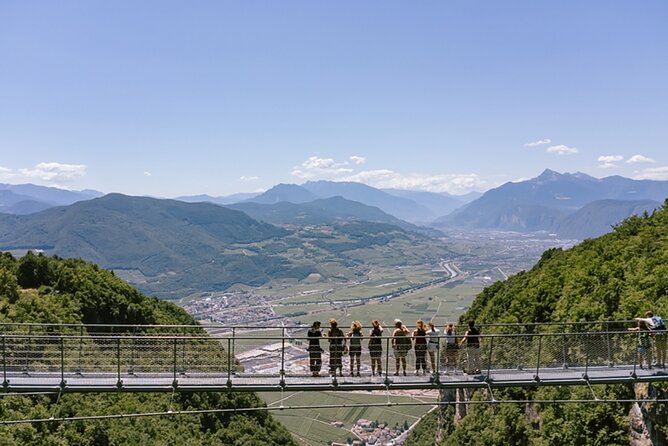
After the ride, the itinerary shifts from “getting there” to “seeing it.” You’ll move along paths that include the skywalk, which looks out over the vineyards of the Piana Rotaliana area. This is where the tour really earns its name: you’re not just tasting wine, you’re learning how the terrain shapes it.
The skywalk portion also gives you time to notice details that people usually miss from ground level—things like how the vineyard blocks fit into the slope and how the land changes as you look around. The guide also explains territorial niches as you move through the viewpoints. That phrase can sound academic, but in practice it turns into an easy way to understand why grapes behave differently across small areas.
Then there’s the suspended Tibetan bridge. It’s marked as optional, and that’s a smart option to offer. If you’re game, it adds a fun burst of adventure. If you’re not, you can still get the full experience without forcing your comfort level. I’d treat it as a personal choice, not a badge of courage.
Stop at Castello di San Gottardo: A Quick Pause on the Way
Part of the route includes a stop at Castello di San Gottardo. The tour data doesn’t spell out a long visit or timed program here, so I’d think of it as a scenic or context stop—something that breaks up the movement from mountain viewpoints to vineyard time. If you’re the type who likes photos with a sense of local history, this is the kind of pause that can add texture without slowing the whole day down.
Even with short stops, you’ll keep momentum. The tour is built around a tight 3.5-hour window, so each portion has a job: transport you to the right elevation, show you the vineyard terrain, then feed you and pour wine.
Walking Toward the Vineyard: Learning the Company Philosophy
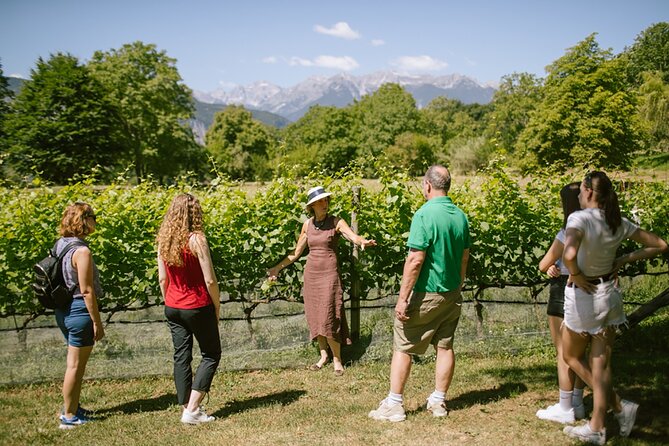
On the way to the vineyard, you’ll hear about the company philosophy. This isn’t just marketing talk. It’s meant to give you a lens for what you’re about to taste—especially if you’re trying to understand why mountain sparkling wine can feel different from what you may already know.
What I like about this part is that it’s paced while you’re still outside. You’re not trapped in a lecture room before your tasting. You’re walking through a natural setting and getting the story as the view keeps changing. That makes it easier to remember details like aging time and production choices later.
You’ll also get the feeling that this is designed for a small group. With limited capacity, the guide can answer questions without the whole tour turning into one big rush.
The Vineyard Visit and Navarro: Why Mountain Sparkling Wine Feels Different
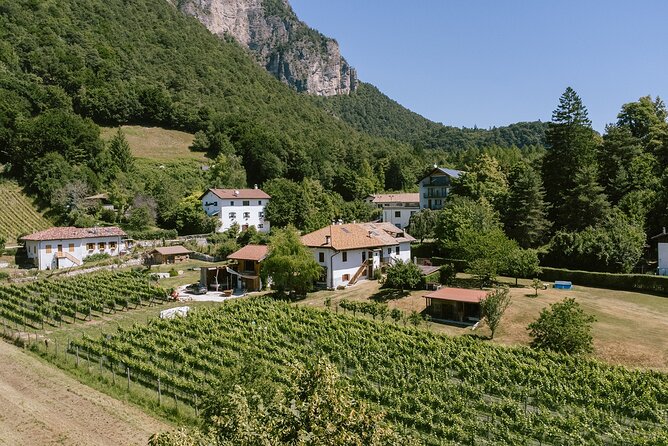
At the vineyard, you get in-depth insights into production of Navarro—the true mountain sparkling wine. Here’s the practical value: once you understand how a wine is built on place and process, the tasting stops being a guess-and-grade exercise.
Navarro’s tasting spotlight is a specific bottle: Navarro Trento DOC Riserva. You’ll hear that it’s aged on the lees for 60 months. That long time on lees matters for texture. In the glass, you’re likely to notice finer, more integrated bubbles and a creamy feel—exactly the kind of detail the guide points you toward.
This is the moment where the tour design makes sense. First you see terrain and viewpoints. Then you walk into the production story. When you taste afterward, you can connect the aging and method to how the wine shows up.
If you’re a curious wine person, this portion is a highlight. And even if you’re not an expert, the explanations come with enough structure that you’ll still leave with a clear takeaway.
The Three-Wine Tasting: What You’ll Taste and What to Look For
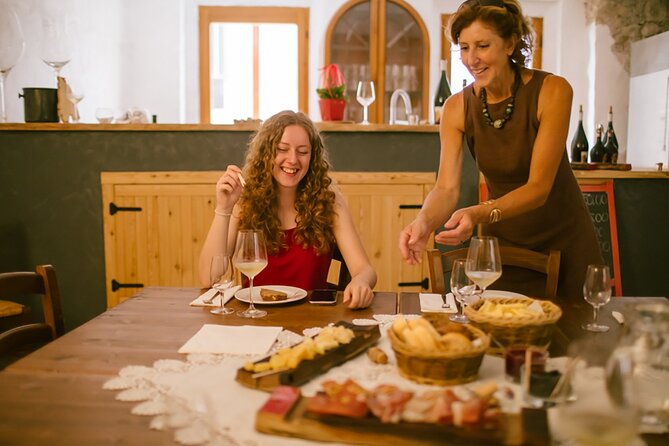
The tasting is accompanied by local products, but the real center is the three wines. You’ll try them in a format that keeps the day moving while still giving you enough time to appreciate what changes from bottle to bottle.
Here are the wines and the aging notes you’ll focus on:
Navarro Trento DOC Riserva (sparkling)
- Aged on the lees for 60 months
- Expect fine bubbles and a rich, creamy texture
Rosso Mancato delle Dolomiti (red)
- Made from Teroldego
- Aged in oak for 15 months
Nero Viola delle Dolomiti (intense red)
- Also from Teroldego
- Aged in oak for at least 50 months
- Then aged in bottle for 12 months
Two things I like about this tasting lineup. First, it’s not three random wines—it’s built around a theme: mountain terroir and how time in oak (and for the sparkling wine, lees aging) changes structure. Second, Teroldego shows up twice, so you can compare how different aging choices shift character.
If you’re trying to decide what you actually like, pay attention to how the oak time affects feel and flavor weight. The Rosso Mancato is shorter in oak, while the Nero Viola spends far longer—then adds bottle aging. That’s the kind of detail that turns a tasting into a learning experience.
Local Food Pairings: Speck, Grana, Lucanica, and Cold Cuts
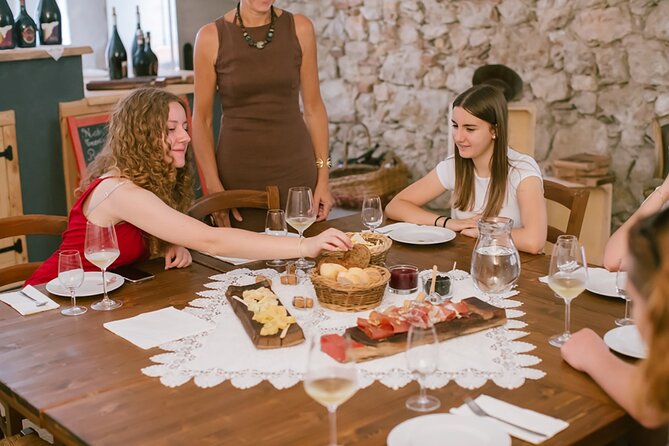
Wine tasting is better when you get food that matches the region. This tour includes local pairings such as Trentino speck, cold cuts, Trentingrana cheese, and Trentino lucanica. If you’ve had speck before, you know it can bring smoky, salty lift that helps keep wine from feeling flat.
Trentingrana is a real asset on the plate. It’s the kind of cheese that adds savory depth and texture, which is especially handy alongside both sparkling and red wines.
One important constraint: the tour cannot serve vegan, gluten-free, or lactose-free food. If you have food intolerances or preferences, you should report them when you book. That way they can tell you what’s possible in advance rather than hoping you’ll be able to improvise on-site.
Pace, Group Size, and What to Bring for a Smooth 3.5 Hours
This is a 3 hours 30 minutes experience, and it’s designed for momentum. Cable car, short walks, skywalk, optional bridge, vineyard visit, and then the tasting with local food. That’s why shoes matter and why you shouldn’t plan to treat it like a slow stroll.
Group size is small: a maximum of 8 travelers. That keeps questions from getting lost. In my view, that small-group element is part of the value. When a guide can actually talk with you, you get better explanations and a tasting that feels tailored.
From the review details, the guide names that stood out were Holly (tour guide) and Ms. Viola (leading the wine tasting). It’s a nice touch when the person guiding the story can also explain the wine in plain language—exactly what you want when you’re listening while walking or moving between viewpoints.
What to bring:
- Comfortable, grippy shoes for the short walks
- A light layer if the mountain air feels cooler
- Water if you tend to get dry while walking (you’ll still be fine, but it’s a smart habit)
Value for Money: Why This Tasting Package Works
At $114.02 per person, this tour isn’t the cheapest way to drink wine in the region. But it’s also not priced like a generic “show up and pour bottles” situation. You’re paying for a full package of mountain access plus structured wine education.
You get:
- Cable car ticket
- Visits and walking routes including the skywalk
- Vineyard visit with philosophy explanations
- A tasting of three aged wines
- Local food pairings
The value is strongest if you want both sides: the outdoors time and the wine time. If you only want one of those—either just hiking views or just drinking wine—then you may feel the price is steeper. But if you want an organized mountain experience that ends with a guided tasting you can understand, this fits well.
Who This Tour Is Best For (and Who Should Skip It)
This tour is a great match if you:
- Love mountain views and don’t mind short walks
- Want a guided tasting with clear aging timelines
- Like Teroldego and want to compare two different aging styles
- Prefer small groups and a more personal pace
It’s not ideal if you have:
- Vertigo or strong altitude concerns (even with the cable car)
- Limited mobility needs (not accessible for reduced mobility)
If you’re coming as a couple, a friend group, or solo, the small size helps you feel included without feeling crowded.
FAQ
How long is the vineyard and wine tasting experience?
It’s about 3 hours 30 minutes.
Where does the tour start and end?
It starts at Funivia Monte di Mezzocorona, Via alla Grotta, 1, 38016 Mezzocorona TN, Italy, and ends back at the same meeting point.
What language is the tour offered in?
The tour is offered in English.
What wines are included in the tasting?
You’ll taste Navarro Trento DOC Riserva, Rosso Mancato delle Dolomiti, and Nero Viola delle Dolomiti.
What food is served with the wine?
Local products such as Trentino speck, cold cuts, Trentingrana cheese, and Trentino lucanica are included.
Is the Tibetan bridge required?
No. The Tibetan bridge walk is optional.
Can dietary needs be accommodated?
They cannot serve vegan, gluten-free, or lactose-free food. If you have intolerances or preferences, you should report them when booking.
Is this tour suitable for people with vertigo or altitude problems?
It’s not recommended for those with altitude problems or vertigo.
Final Take: Should You Book This Mezzocorona Vineyard Tour?
If you want a tight, well-paced mountain day that mixes views with a meaningful tasting, I’d book it. The best parts are the small group size, the cable car-to-skywalk setup, and the fact that the tasting comes with specific aging details for Navarro, Rosso Mancato, and Nero Viola—not just generic wine talk. Just be honest with yourself about walking comfort and your comfort around height, since the skywalk and optional suspended bridge can be a deal-breaker if you’re prone to vertigo.