REVIEW · LIVORNO
Winery Tour & Wine Tasting with Food near Livorno & Pisa
Book on GetYourGuide →Operated by Slow Travel · Bookable on GetYourGuide
Wine history and amphora red in one stop.
This 1.5-hour guided visit around Casale Marittimo pairs a hands-on walkthrough of the winery’s production spaces with the story tied to the Etruscan Prince Warrior tomb on the property, which gives the whole tasting real meaning. I also like that you’re not just sampling; you get to see the barrel and aging rooms and understand how those choices shape the wines. One possible drawback: transportation isn’t included, so you’ll want to plan your ride ahead, and the whole experience is compact by design.
In This Review
- Key highlights at a glance
- Casale Marittimo: The starting point for Tuscany’s coast-meets-country vibe
- Entering the Etruscan Prince Warrior story (and why it’s more than a gimmick)
- Winery tour time: Vinification areas, then barrels and aging rooms
- The four-wine tasting: What to look for in each glass
- BLUMEA IGT Costa Toscana White
- MONTALEO DOC Montescudaio Red
- OLMATA IGT Toscana Red
- PRINCIPE GUERRIERO IGT Costa Toscana Amphora Red
- What makes the lineup smart
- Pairing your pours: cured meats, cheeses, and crostini
- How to make the most of 90 minutes (without rushing yourself)
- Price and value: Is $58 per person worth it?
- Who should book this tour (and who should think twice)
- Should you book this Winery Tour & Wine Tasting near Livorno and Pisa?
- FAQ
- How long is the tour?
- How many wines do you taste?
- What food is included with the wine tasting?
- Where does the tour start?
- How far is Casale Marittimo from Livorno and Pisa?
- Is transportation to and from the winery included?
- What languages is the live guide available in?
- Who is the tour not suitable for?
- What’s the price per person?
Key highlights at a glance
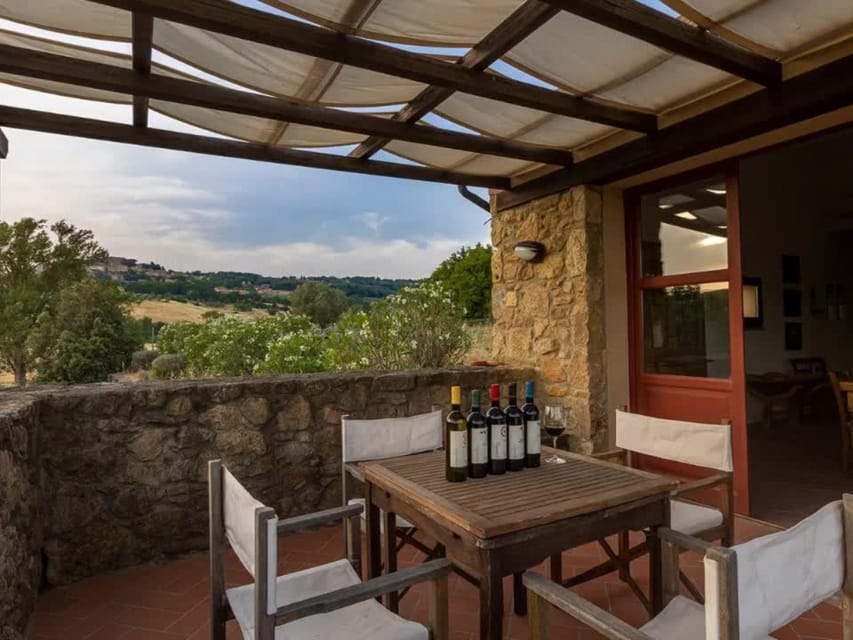
- Etruscan Prince Warrior tomb on-site gives context you won’t get at typical tastings
- Barrel and aging rooms tour turns wine tasting into actual winemaking knowledge
- Four wines, one clear theme: how time changes flavor (including an amphora-aged red)
- Food pairing included: cured meats, cheeses, and bread/crostini to match the pours
- Friendly, bilingual guides (Italian and English) help you follow every step without guessing
Casale Marittimo: The starting point for Tuscany’s coast-meets-country vibe
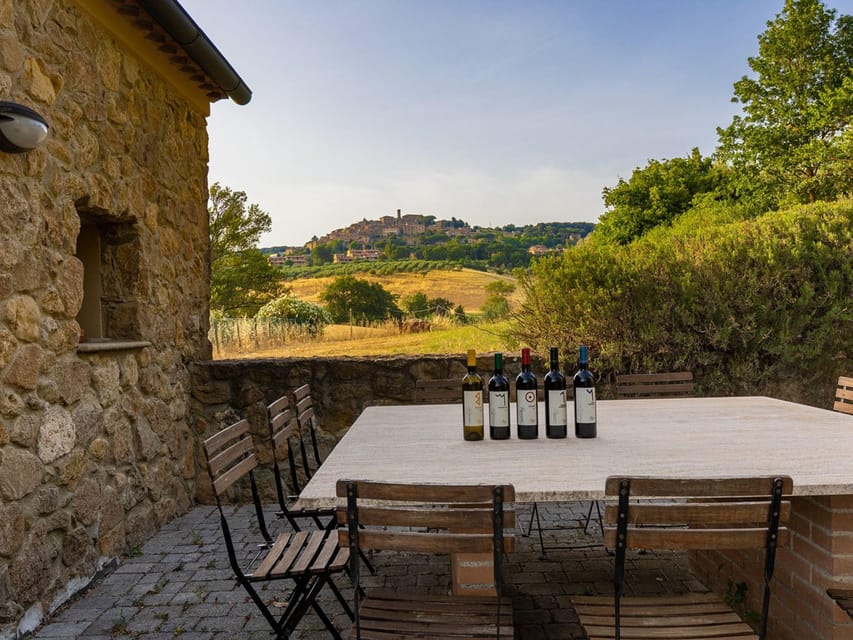
The tour meets in Casale Marittimo, a small village in Tuscany that feels closer to the sea than it does to a big city. It’s a practical base if you’re staying around Livorno or visiting Pisa, but it also means you’re choosing a quieter, countryside setting on purpose.
If you’re driving from Livorno, plan on about 50 minutes. From Pisa, it’s about 1 hour by car. That timing matters because the tour itself is only 1.5 hours—you’ll want to arrive ready to go, not rushed.
One thing I like about this kind of setting is that it helps the tour feel local. You’re not just stepping into a tasting room; you’re in the place that grows the grapes and keeps the estate story alive.
You can also read our reviews of more tours and experiences in Livorno.

Entering the Etruscan Prince Warrior story (and why it’s more than a gimmick)
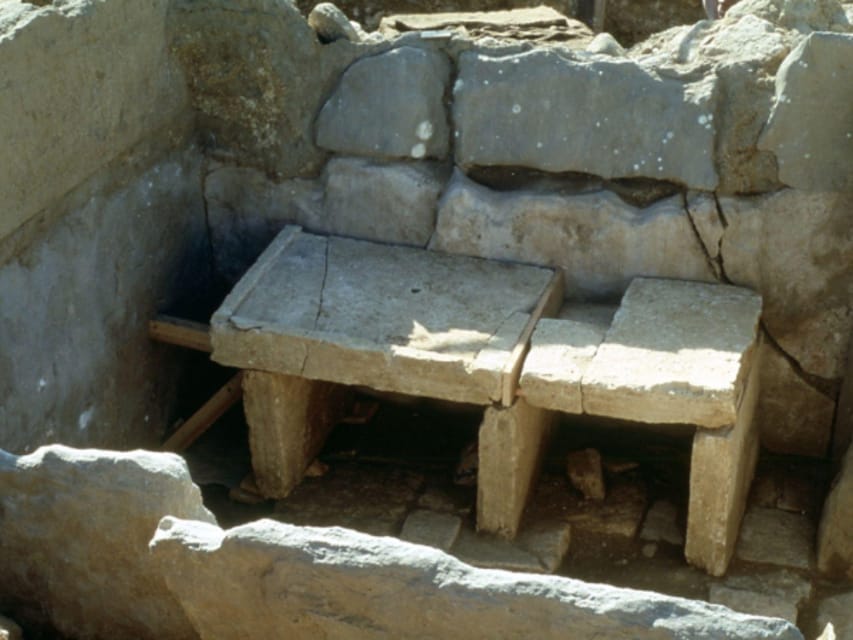
What makes this winery tour different isn’t only the wine. It’s the way the estate ties itself to the Etruscan Prince Warrior—specifically, the tomb located within the winery grounds, set among the vineyards.
When you start, you’ll get an introduction to the viticultural history of the estate and how it’s linked to that Etruscan heritage. This is the moment where a lot of winery tours either stay general or get interesting. Here, the tomb connection gives you a concrete image to hang the rest of the tour on: land, generations, and what gets passed down.
If you like experiences that feel like they belong to a place—rather than being interchangeable across regions—this is a strong reason to pick this one. The tomb detail is unusual, and the fact that it’s on the property makes the story feel grounded, not just decorative.
Winery tour time: Vinification areas, then barrels and aging rooms
After the historical intro, the tour moves into the practical side of winemaking. You’ll do a guided walk through the winery and its vinification areas, which is exactly where many wine tastings fall short. They ask you to taste first and explain later. Here, the order helps.
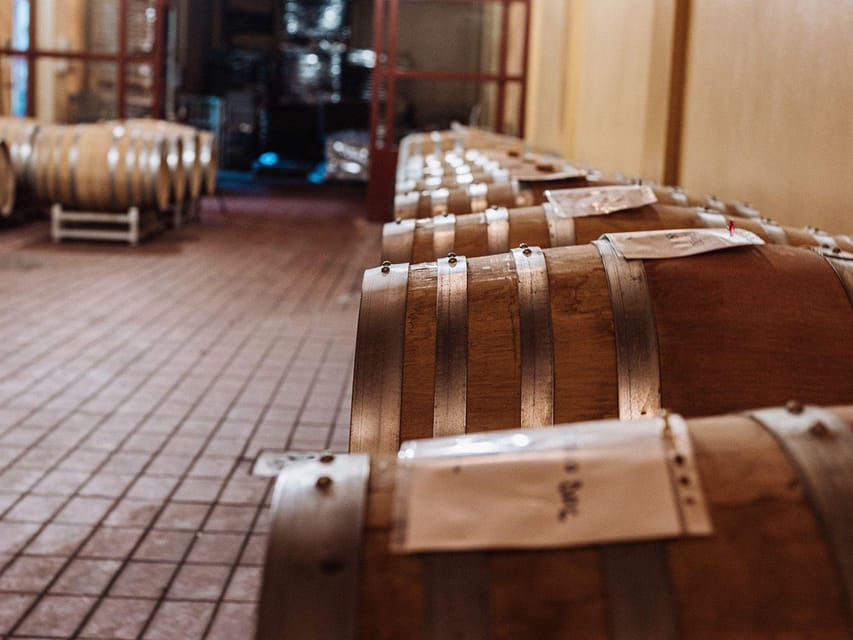
Then comes the part that’s great for wine-curious people: a visit to the barrel and aging rooms. This is where you can connect cause and effect. Aging isn’t abstract—it’s where oxygen exposure, wood influence, and temperature stability start doing their work.
Even if you don’t know terms like vinification or maturation (no shame—wine is a learn-as-you-go hobby), you’ll leave with a clearer sense of why the wines taste the way they do. And because you’ll taste the wines at the end, those explanations don’t evaporate.
The four-wine tasting: What to look for in each glass
The tasting includes four wines, each with a different angle. You’re also pairing them with local food, so you’ll get the best kind of feedback: how the wine changes when you add a bite.
Here’s how I’d pay attention to each one:
BLUMEA IGT Costa Toscana White
This is your white pour, tied to the coastal region character. As you taste, notice how the wine reads in three steps: aroma first, then acidity on the palate, then finish. Whites from coastal zones often feel more about freshness and balance than heaviness, and this one is designed to show that side.

MONTALEO DOC Montescudaio Red
This is a red with a stronger expression of local terroir, and it’s the wine that usually helps you understand how regional grapes behave when they’re grown and made for reds. Look for structure—how the flavors hold up from mid-palate to the finish. It’s the kind of wine that food pairing can really support.
OLMATA IGT Toscana Red
This one is described as smooth and expressive, and that matters because it’s likely the easiest bridge between the more structured red and the more experimental style later in the lineup. If you’re the type who thinks you dislike some reds but still wants to enjoy the tasting, this is often the crowd-pleaser.
PRINCIPE GUERRIERO IGT Costa Toscana Amphora Red
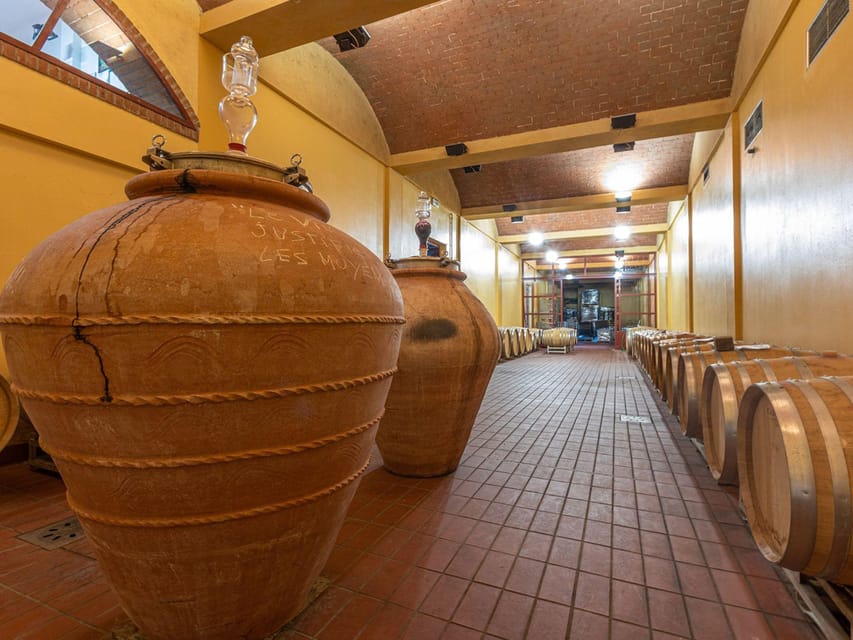
This is the standout on paper and in practice: a red wine aged in amphora. Amphora aging is one of those topics that sounds technical until you taste it. In this glass, pay attention to how the wine feels in the mouth—often it can read different in texture and aromatic profile than wine aged only in traditional vessels. It’s also the most direct link to ancient-style tradition, which keeps the Etruscan story relevant right through the tasting.
What makes the lineup smart
A four-wine tasting can easily become repetitive. Here, it doesn’t, because you move from white to multiple reds and then to an amphora-aged style. That gives your palate a clear set of reference points. You’re not just collecting tastes; you’re learning how different winemaking choices land on your tongue.
Pairing your pours: cured meats, cheeses, and crostini
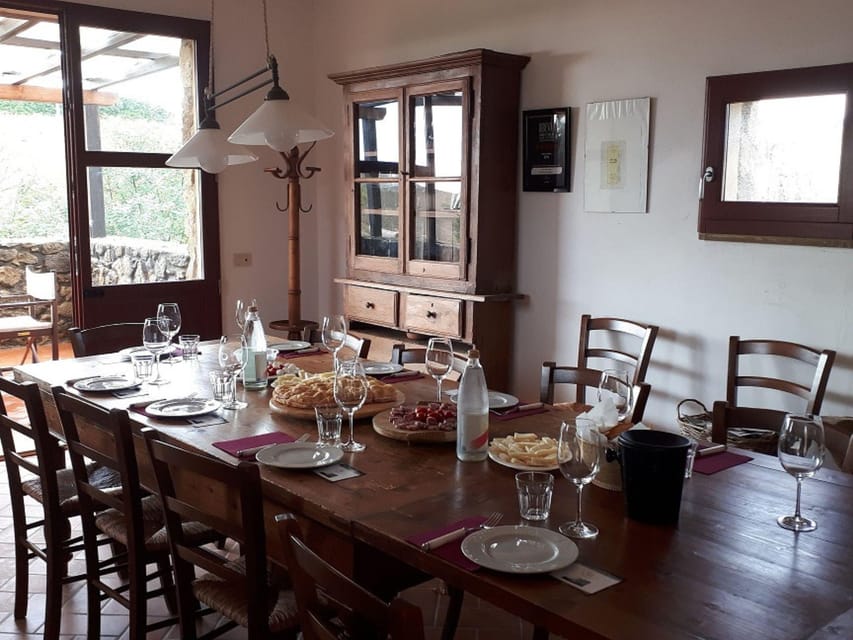
The food pairing is included: cured meats, cheeses, and bread/crostini. That’s a classic Tuscan approach because it’s built for matching wine without getting in the way.
A few practical ways to use the pairing:
- Start with the simplest bite (bread/crostini) to reset your palate between wines.
- When you hit the reds, cheeses and cured meats can help reveal more depth in the wine instead of making it feel flat.
- If you want to compare two reds, use food to stabilize flavors so your brain can focus on differences in the wine itself.
Portion expectations are the one area where opinions can vary. One feedback point noted that the tasting plates could have felt more generous and varied relative to the wine pours. Translation for you: the pairing is there to support the wines, but this isn’t a full meal experience. If you’re hungry, plan to eat afterward.
Also, because the tasting is only 1.5 hours, you won’t have time for slow drifting. You’ll taste, eat, and move on—so come ready to enjoy the rhythm.
How to make the most of 90 minutes (without rushing yourself)
This is a short tour. That’s not a flaw—it’s part of the value if you structure your day well.
Here’s what helps:
- Wear comfortable shoes. You’ll be walking through production spaces and up to areas connected with the estate grounds.
- Go light on heavy meals before you start. You want enough appetite for the tasting, but not so much that food overwhelms the wine.
- Use the amphora wine as your moment. It’s the one that feels most different, and it’s where your learning payoff tends to be highest.
If you’re the kind of visitor who likes to ask questions, this is also a good setting. Having a guide with English and Italian support means you can get clarification without breaking the flow.
And one more practical note: this experience doesn’t include transportation. So your day needs a plan for getting there and back—especially because the meeting point is in a small village, not a tourist hub.
Price and value: Is $58 per person worth it?
At $58 per person for 1.5 hours, this tour is priced like a focused, guided tasting with real content. You’re paying for more than four pours—you’re paying for:
- a guided winery tour that covers production areas
- the barrel and aging rooms visit
- the Etruscan Prince Warrior story tied to the property
- food pairing with cured meats, cheeses, and crostini
If you’ve ever done tastings where the guide talks mostly about the bottle and you get rushed through a quick pour, this one feels more complete. The inclusion of the aging rooms is a strong value factor because it gives you context that changes what you notice in the wine.
For the cost, the experience is best if you want a compact, guided overview rather than a long, high-volume tasting session. If you’re hoping for hours of conversation or a big sit-down meal, you might find the time too tight.
Who should book this tour (and who should think twice)
This works best for:
- wine lovers who want a guided learning angle, not only “try this, try that”
- people curious about Etruscan connections in Tuscany, especially when they’re tied to something you can actually see on the property
- travelers who like a countryside day that’s easy to reach from Livorno or Pisa
It may not be ideal for:
- pregnant women, since the activity is listed as not suitable for this group
- wheelchair users, since it’s marked not suitable for wheelchair users (even though wheelchair accessibility is also listed, the two notes conflict—so you’ll want to confirm directly with the operator before you go)
Should you book this Winery Tour & Wine Tasting near Livorno and Pisa?
I think you should book this if you want a small, place-based winery experience with two big rewards: a guide-led explanation of how wines are made (barrels and aging rooms) and a rare story element tied to the Etruscan Prince Warrior tomb on the estate.
Skip it if you need transportation included, have mobility constraints that make countryside walking difficult, or you’re looking for a longer meal-style tasting. At 1.5 hours, it’s efficient, not slow.
If your Tuscany plan includes Livorno or Pisa, this is one of those tours that can turn a simple wine stop into a more memorable day—because you’re tasting and learning in the same breath.
FAQ
How long is the tour?
The experience lasts about 1.5 hours.
How many wines do you taste?
You’ll taste four wines.
What food is included with the wine tasting?
The pairing includes cured meats, cheeses, and bread/crostini.
Where does the tour start?
The winery is in Casale Marittimo, a village close to the seaside.
How far is Casale Marittimo from Livorno and Pisa?
Driving time is listed as about 50 minutes from Livorno and about 1 hour from Pisa.
Is transportation to and from the winery included?
No. Transportation is not included.
What languages is the live guide available in?
The guide is listed as available in Italian and English.
Who is the tour not suitable for?
It’s listed as not suitable for pregnant women and wheelchair users.
What’s the price per person?
The price is listed as $58 per person.