REVIEW · NAPLES
History & Local Wines: Amphitheater, Mitrium and Winery Visit
Book on Viator →Operated by Events in Italy · Bookable on Viator
Ancient Capua feels close when a guide explains it. I like the way this tour turns a distant past into something you can actually picture, with a private guide leading you through Santa Maria Capua Vetere and the preserved Mitreum of Mithras. You get a full “from street to site” experience too, starting with hotel pickup and ending with a relaxed food-and-wine finish near Vesuvius.
I love the balance of big, cinematic ruins (including the amphitheater linked to Spartacus) plus an unusual stop that most people never get to see in Italy: one of the world’s best-preserved Mithras temples. The main drawback is the pacing: in about 5 hours, you’ll cover two major areas with transport time, so it’s best if you’re okay with a structured day rather than a slow wander.
In This Review
- Key highlights at a glance
- From Naples Pickup to Santa Maria Capua Vetere’s Ancient Scene
- Santa Maria Capua Vetere Amphitheater: Older Than Rome’s, More Than Just Stones
- The Mitreum of Mithras: Why This Temple Feels So Rare
- Temple of Santa Maria Capua Vetere and Capua’s Gladiator Museum
- A Winery in Front of Vesuvius: Wine Tastings With Traditional Food
- Price and Value: What You’re Paying For at $868.20 Per Person
- Timing, Transport, and How to Prepare for a Structured 5-Hour Day
- Who This Tour Suits Best (and Who Might Want Something Else)
- Should You Book Amphitheater, Mitrium and Winery Visit?
- FAQ
- How long is the Amphitheater, Mitrium and Winery Visit?
- Do I get hotel pickup in Naples?
- Is this a private tour?
- What sites do we visit in the Capua area?
- Is admission included for the main stops?
- What do we do at the winery?
- What are the operating hours?
- What if the weather is bad?
- What is the cancellation policy?
Key highlights at a glance

- Santa Maria Capua Vetere’s amphitheater: older than Rome’s famous one, built about a century earlier
- Mitreum of Mithras: one of the few preserved temple sites, tied to a cult that was later deliberately destroyed
- Spartacus connection: the amphitheater linked to his performances makes the ruins feel personal
- Gladiator Museum visit: adds context around the entertainment culture of the region
- Winery in front of Vesuvius: wine tasting paired with traditional food in a volcanic backdrop
- Photo-friendly pacing: the experience is run with friendly attention that makes it easy to slow down for great shots
From Naples Pickup to Santa Maria Capua Vetere’s Ancient Scene
This is the kind of day trip that feels smoother than the usual “hop on a bus, hope for the best” plan. Your guide meets you at your hotel reception in Naples, and the driver takes you out to Santa Maria Capua Vetere. That matters. It means you can spend your energy on the sites instead of figuring out routes.
Santa Maria Capua Vetere is a town with roots that go way back. It was founded by the Etruscans around 600 BC, then conquered by Rome in 340 BC. Standing in the area with a guide talking through those shifts helps a lot. You stop thinking of Capua as just ruins on a map, and you start understanding how layer after layer of power shaped what you see today.
Also, expect a full first stretch—about three hours—so you’re not rushing through one highlight and calling it a day. You’ll get a guided visit focused on the key historical spaces, including the amphitheater and the Mitreum.
You can also read our reviews of more tours and experiences in Naples.


Santa Maria Capua Vetere Amphitheater: Older Than Rome’s, More Than Just Stones

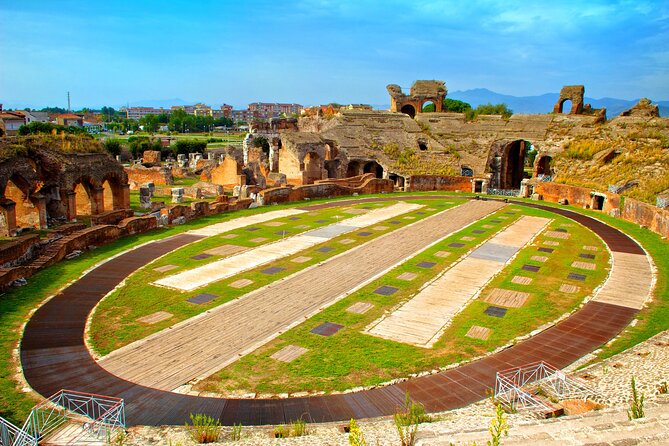
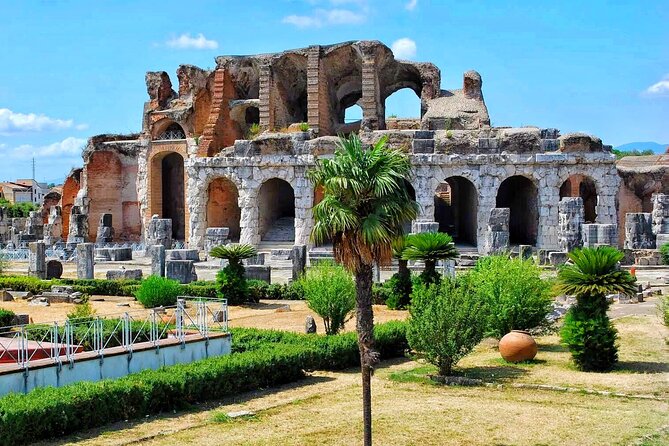
The amphitheater here is the headline for a reason. It’s older than the famous Roman one. In fact, it was built about a century before the amphitheater in Rome. That small timeline detail is the kind of thing that makes you recalibrate your mental history: this wasn’t a late copy. This was early Roman-scale spectacle.
The tour also ties the amphitheater to Spartacus, one of the most famous names connected with gladiatorial conflict. Whether you’re a history buff or you just love the stories behind famous rebels, that connection turns the space into more than seating rows and arches. You can start imagining the noise, the movement, and the sheer theatricality of the event culture in the region.
One thing I appreciate: you’re not only looking at the building from the outside. You’re getting guided context that helps you see how the amphitheater fits into the bigger Capua story. And for photos, this is one of those places where details matter. Arches, angles, and textures reward you for taking your time a bit—so don’t feel guilty if your camera roll grows fast.
Possible drawback: ancient sites can mean some uneven walking and lots of sun or shade shifts. So wear comfortable shoes and pack a light layer, especially if you’re traveling in warmer months.
The Mitreum of Mithras: Why This Temple Feels So Rare
Then comes the stop that most people don’t even know exists: a Mitreum, the temple of the cult of Mithras. The key fact is right there in the story—this is one of the few preserved Mitreum sites in the world.
The guide’s explanation of why it’s preserved adds weight to the visit. With the advent of Christianity, these temples were purposefully destroyed. That means what survives is precious. You’re not just seeing an old room. You’re seeing rare evidence of a belief system that was actively targeted and removed.
Standing in a space like this changes how you think about religious history in Italy. You realize Rome wasn’t just one religion marching forward. It was competition, conflict, and changing power. The Mitreum becomes a physical reminder that the ancient world had multiple spiritual tracks, and they didn’t always coexist peacefully.
If you like museums but also enjoy atmosphere, this is the kind of site that works. The structure and purpose make it feel like you’re stepping into a private world of rituals—one that history would have erased if not for rare survival.
Temple of Santa Maria Capua Vetere and Capua’s Gladiator Museum

After the amphitheater, the tour moves you into the broader historical fabric of Santa Maria Capua Vetere, including the Temple of Santa Maria Capua Vetere and the Gladiator Museum. Even if you’re only loosely interested in gladiators, the combination helps.
Here’s why: the gladiator theme can turn into a single-note topic if you only see costumes and weapons. The museum context (paired with what you learned about Capua and the amphitheater) helps you understand the entertainment ecosystem—how places like this weren’t just for sport. They were part of social life, political signaling, and crowd culture.
Meanwhile, the temple stop anchors you back into the religious evolution of the region. It’s a useful contrast point. You see how sacred spaces shift over time, even when the landscape stays the same.
I also like the way this portion of the day stays guided rather than just self-paced. When you’re inside a site like this, you need a thread. The guide provides it, so you’re not left wondering what you’re looking at or how everything connects.
A Winery in Front of Vesuvius: Wine Tastings With Traditional Food

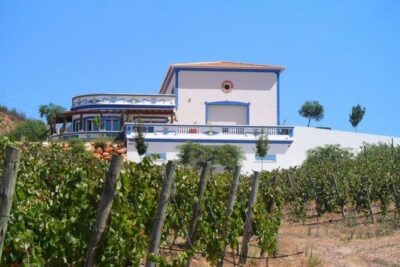
After the ancient sites, the tour pivots to something you’ll probably remember longer than expected: wine tasting with traditional food, with Mount Vesuvius in view.
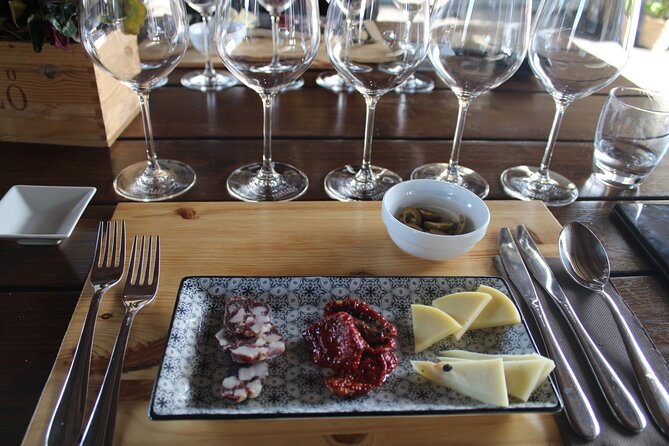
The winery stop lasts about two hours, and it’s set up for a relaxed finish rather than another sprint through attractions. You taste different local wines, and you get them paired with traditional food. That pairing is more than a nice touch. It helps you actually notice the flavors instead of just sampling and moving on.
Also, location matters here. Drinking wine with Vesuvius as a backdrop changes the mood. You’re no longer in ancient stone. You’re in living agriculture—vineyards shaped by volcanic soil, with the volcano looming behind the scenes like a reminder that the ground beneath Campania keeps changing.
What to expect in practice: this is a tasting experience, so go in with the mindset of learning a little and enjoying the moment. If you’re the type who normally skips tastings because you think it’s all too formal, this setup usually feels friendlier since it includes food and doesn’t feel like a lecture.
A practical note: since this is a wine-focused stop, plan for water breaks and pace yourself. Your tour day starts in history mode and ends in enjoyment mode, so it’s worth staying comfortable.




Price and Value: What You’re Paying For at $868.20 Per Person
At $868.20 per person, this isn’t a casual add-on. But it can still feel like good value if you care about getting the full story rather than just ticking off stops.
Here’s what you’re paying for, in real terms:
- Private touring: it’s only your group, not a large shared crowd experience
- Guided time at multiple major sites: amphitheater/Capua area plus the Mitreum plus museum context
- Hotel pickup and a dedicated driver: saves you time and stress in a region that can be tricky to navigate on your own
- Wine tasting with traditional food: that final stop gives the day a satisfying payoff
The pricing also makes more sense when you consider the visit structure: you get around three hours on the Capua side and about two hours for wine. That’s a lot to compress into one day, and it’s the difference between “I saw it” and “I understood what I saw.”
One thing to consider: since it’s private, your cost per person depends heavily on group size. If you’re traveling solo, you’ll feel the price more. If you’re a couple or small group, it’s easier to justify.
Timing, Transport, and How to Prepare for a Structured 5-Hour Day
Plan around the rhythm. The tour runs roughly 5 hours total, with a major historical block up front and the winery finish after. That means you should treat the day like a set itinerary—not something you’ll tweak on the fly.
Weather is also a factor. The experience requires good weather. If it’s canceled due to poor weather, you’ll be offered a different date or a full refund. So if your travel dates are flexible, it’s easier to manage.
My practical prep checklist:
- Wear shoes that handle uneven or ancient surfaces
- Bring sun protection (you’ll likely be outdoors for portions of the day)
- For the winery, plan to sip slowly and drink water
- Use the mobile ticket approach since you’ll have less friction day-of
Because pickup is offered, you’ll also want to be ready with your hotel details when you book. It’s one of those small things that keeps the start of the day from feeling chaotic.
Who This Tour Suits Best (and Who Might Want Something Else)

This works especially well if you like:
- Ancient sites with a guided narrative, not just photos
- Off-the-beaten-path sacred history, like the preserved Mitreum of Mithras
- A day that combines dramatic ruins and a satisfying local food-and-wine stop
It’s also a smart match for couples. The pacing gives you time to learn, and it ends with a more social, relaxed atmosphere.
If you’re the type who hates structured schedules and wants to wander freely for hours, this may feel too organized. With just five hours total, there’s little room for detours or long self-paced breaks.
Should You Book Amphitheater, Mitrium and Winery Visit?
I’d book this if you want a single day in Campania that gives you both atmosphere and meaning. The amphitheater’s age and Spartacus link make the Capua portion memorable, and the Mitreum adds a rare kind of historical curiosity that most Italy trips miss. Then the winery finish near Vesuvius makes the day feel like a treat, not just a lesson.
The decision comes down to one question: do you want a guided, high-impact day with a clear structure and a final food-and-wine reward? If yes, this is a strong choice. If you want maximum free time or you’re highly weather-sensitive, you might prefer a more flexible plan.
FAQ
How long is the Amphitheater, Mitrium and Winery Visit?
It lasts about 5 hours.
Do I get hotel pickup in Naples?
Yes. Pickup is offered, and the guide meets you at your hotel reception.
Is this a private tour?
Yes. It’s private, and only your group participates.
What sites do we visit in the Capua area?
You visit Santa Maria Capua Vetere, including the amphitheater, the Temple of Santa Maria Capua Vetere, and the Gladiator Museum, plus a Mitreum (temple of the cult of Mithras).
Is admission included for the main stops?
The provided information lists admission ticket free for the main historical stop and the winery stop.
What do we do at the winery?
You visit a winery in front of Mount Vesuvius and taste different local wines paired with traditional food.
What are the operating hours?
The experience runs Monday through Sunday from 8:00 AM to 8:00 PM, within the date range 04/14/2022 to 06/16/2026.
What if the weather is bad?
The tour requires good weather. If it’s canceled due to poor weather, you’ll be offered a different date or a full refund.
What is the cancellation policy?
Free cancellation is available. You can cancel up to 24 hours in advance for a full refund. If you cancel less than 24 hours before the start time, the amount paid isn’t refunded.