REVIEW · SORRENTO
Pompeii, Herculaneum and Winery on Vesuvius with an Archaeologist
Book on Viator →Operated by Fabrizio Belleni - Leisure Italy Private Guide · Bookable on Viator
Roman ruins look different with a pro. This private day pairs archaeologist Fabrizio Bellini (27 years guiding Pompeii) with a winery lunch inside Vesuvius National Park, so the sites make sense fast instead of feeling like a checklist. I especially love the crowd-smart pacing and the way the tour helps you read Pompeii and Herculaneum like real places.
One consideration: it’s a long 8–9 hour day with real walking over uneven stone, in outdoor sun. The winery part is great, but the tour does not reach the summit of Mount Vesuvius.
In This Review
- Key things you’ll really notice
- Why Pompeii and Herculaneum Work So Well in One Day
- Meet Fabrizio Bellini: an Archaeologist Who Moves at Your Pace
- From Porta Marina Into the Roman Heart of Pompeii
- Pompeii Highlights You Should Prioritize: Apollo, the Forum, and the Big Houses
- Teatro Grande and the Antiquarium Casts: See the City and the People
- Cantina del Vesuvio Winery: Lunch With Vesuvius Views (and Real Wine Time)
- Herculaneum’s Antiquarium: Understand the Preservation
- Boat Pavilion and Ancient Beach: The Shoreline Stops Being Background
- Casa dei Cervi and Casa di Nettuno e Anfitrite: Luxury at Human Scale
- Women’s Baths and the Palestra: Roman Daily Life You Can Picture
- Price and Logistics: What You’re Paying For
- Family-Friendly Mode: Keeping Kids Interested (and Adults Comfortable)
- Should You Book This Pompeii and Herculaneum With a Winery Day Trip?
- FAQ
- Is this tour private?
- Where does pickup happen?
- How long does the day take?
- Is the tour offered in English?
- Are admission fees to Pompeii and Herculaneum included?
- Is lunch and wine tasting included in the tour price?
- Does the tour go to the top of Mount Vesuvius?
- What’s included in the cost besides the guides?
- What about fitness level and walking?
- Can I cancel for a full refund?
Key things you’ll really notice

- Private, small-group feel: just your group, up to 7, with a comfortable air-conditioned vehicle
- A guide who keeps you oriented: Fabrizio adapts pace and routing so you actually understand what you’re looking at
- Pompeii’s key story beats: Porta Marina entry, Forum focus, then standout houses like the House of the Vettii
- Herculaneum’s human scale: Antiquarium exhibits plus the Boat Pavilion and Ancient Beach shoreline area
- Winery lunch inside Vesuvius National Park: guided vineyard walk + set menu lunch paired with 5 wines
- Family-friendly options: built for kids too, with an approach that keeps them engaged
Why Pompeii and Herculaneum Work So Well in One Day
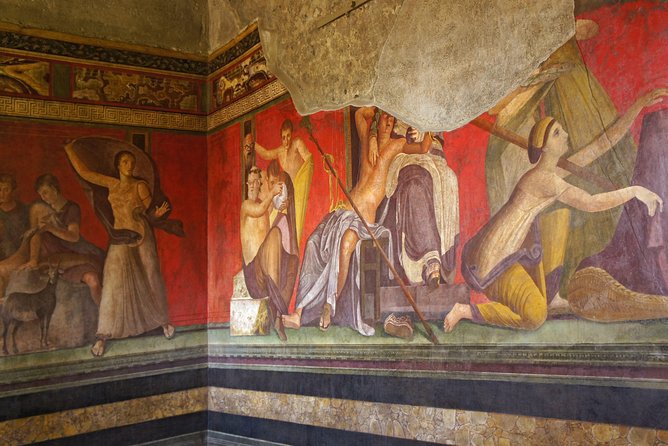
If you visit Pompeii alone, you get the drama of 79 AD. If you add Herculaneum right after, the whole story becomes clearer: one city shows streets and buildings that look frozen in place, the other shows how preservation can keep details so intact you feel the everyday life.
This is also a practical combo. You’re not trying to figure out transport, ticket timing, and “what matters most” on your own. You get a plan built around what you should see first, then second, and why.
You can also read our reviews of more tours and experiences in Sorrento.


Meet Fabrizio Bellini: an Archaeologist Who Moves at Your Pace
This tour is led by Fabrizio Bellini (Leisure Italy Private Guide). He’s not a generic museum lecturer; he’s guided Pompeii for 27 years and studies archaeology, which you’ll feel in how he explains the ruins.
Two things stand out about his style. First, he keeps the experience understandable, pointing out what to notice in each building and street. Second, he adjusts on the fly—pace, priorities, and even the order between Pompeii and Herculaneum—so the day doesn’t turn into a race against crowds or fatigue.
You should expect a day that stays flexible. The tour includes walking, but it’s not “one speed for everyone.” If you need shade or slower stops, the guide can shape the route around your group.
From Porta Marina Into the Roman Heart of Pompeii
Pompeii starts strong at Piazza Porta Marina. This modern plaza acts like a bridge from the present into the archaeological park, sitting by the Porta Marina gate in the old city wall. It’s a smart way to begin because you get context before you start walking deeper into the city.
From there, the route climbs toward the Roman core of Pompeii. Along the way, you’ll pass key “setup” spaces like the Antiquarium context area and the nearby Suburban Baths area known for its famous erotic frescoes.
If you want your visit to feel like a story, this opening matters. It helps you understand Pompeii’s layout and purpose before you stare at walls and wonder what you’re looking at.
Pompeii Highlights You Should Prioritize: Apollo, the Forum, and the Big Houses
At the edge of the Forum, the Temple of Apollo is a must. It’s one of Pompeii’s oldest sacred sites, and it’s fascinating because you can trace religious evolution from Greek to Roman practice. You’ll also see details like the surrounding columns and replicas that help make the gods feel real.
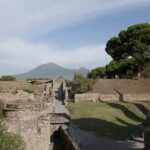
Then you’re in the Forum of Pompeii, the city’s political, religious, and commercial center. Walking across original travertine paving stones puts you right in the role of an everyday Roman—traders, speakers, ceremonies. Mount Vesuvius frames the scene in the distance, which makes the setting feel strangely immediate.
Next are the houses, where Pompeii stops being just “public spaces” and becomes private life. The Casa dei Vettii is a top highlight, famous for its Fourth Style frescoes and recent restoration. It’s the kind of place where you see luxury choices in the details: wall paintings, mosaics, and the layout of rooms around a peristyle garden.
If you want a bonus kind of excitement, the Insula dei Casti Amanti is worth it too. Recently reopened with elevated walkways, it lets you look down into an entire block, including a grand home and a bakery. You can also spot drawings by children nearly 2,000 years ago, which is the rare moment where the past feels playful instead of tragic.
Teatro Grande and the Antiquarium Casts: See the City and the People
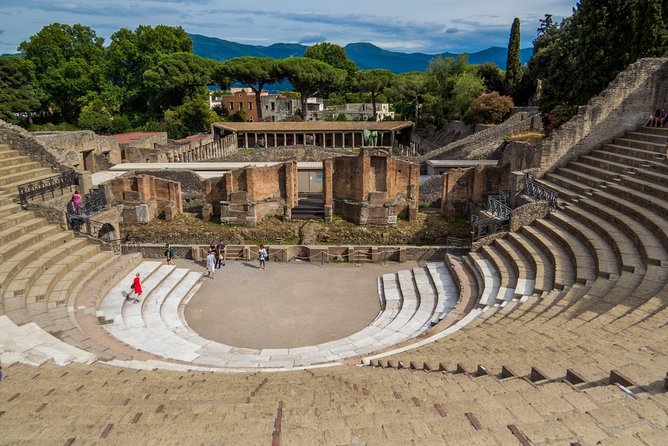
The Teatro Grande is one of those Roman sites you can’t fake with photos. It’s a horseshoe-shaped stone theater with seating organized by social rank, which makes the architecture feel like part of the culture—not just ruins.
A big practical win here is the acoustics. This theater is famous for how well sound travels, so it’s easier to picture performances without guessing. Even if you don’t test it (please don’t), the setting helps your brain understand how social life worked.
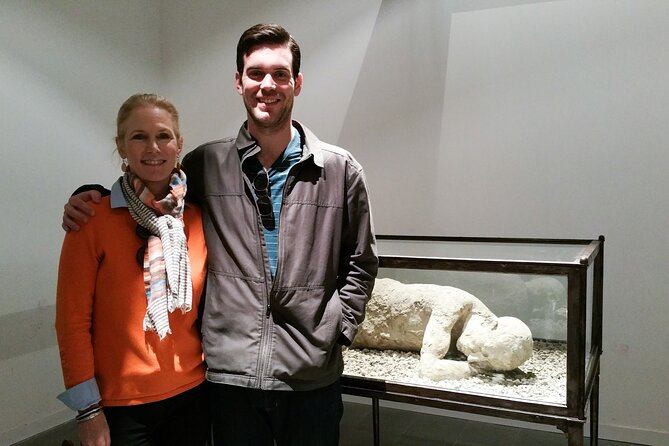
Then you finish Pompeii with the Antiquarium di Pompei at the Porta Marina entrance. This museum focuses on context and emotion. The standout section is a gallery of plaster casts showing victims’ final moments, including a guard dog—details that shift Pompeii from “ancient sightseeing” to something more human.
If you’re sensitive to tragedy, pace yourself here. But if you want a visit that stays meaningful, this stop does the job.


Cantina del Vesuvio Winery: Lunch With Vesuvius Views (and Real Wine Time)
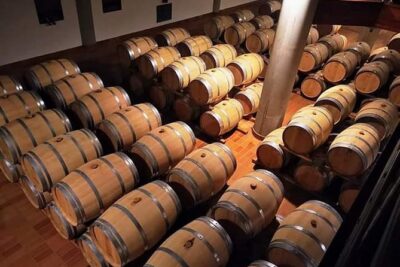
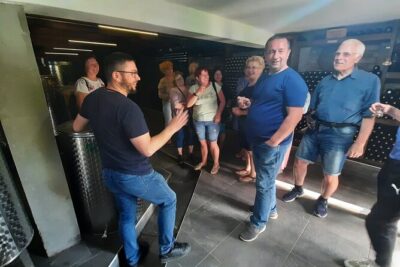
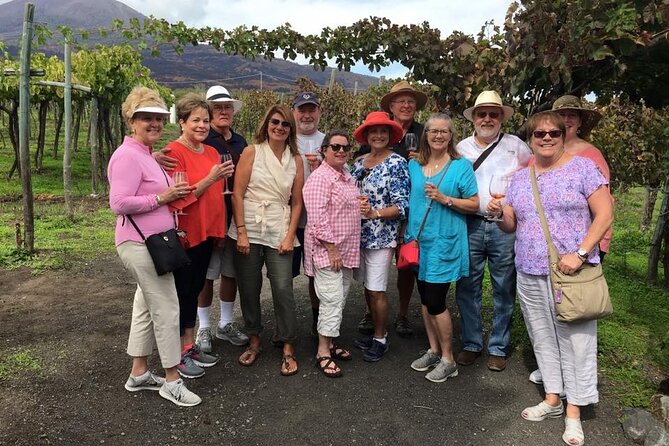
Between ruins, you get a proper break at Cantina del Vesuvio, an organic winery inside Vesuvius National Park. You’re not just eating; you’re learning. The visit begins with a guided 15-minute stroll through vineyards, then a wine tasting built around local varieties, including the famous Lacryma Christi.
Lunch is a set menu paired with five local wines. Expect classic regional flavors: appetizers like bruschetta, cheeses, and cured meats; spaghetti with Vesuvius cherry tomatoes; and Pastiera as dessert. Vegetarian and gluten-free options are available.
Two cost notes to plan around. The winery lunch experience isn’t included in the base tour price. It’s listed as about €50 per person all-inclusive, or €60 if you choose a superior wine upgrade. Payment is handled on-site by card or cash, and the guide takes care of booking.
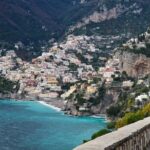
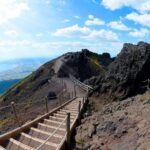
Also, the views are the point. You get the Bay and a dramatic look toward the volcano crater area, with the Amalfi Coast in the distance. This is a good place to refill water and reset your pace before Herculaneum.
Herculaneum’s Antiquarium: Understand the Preservation
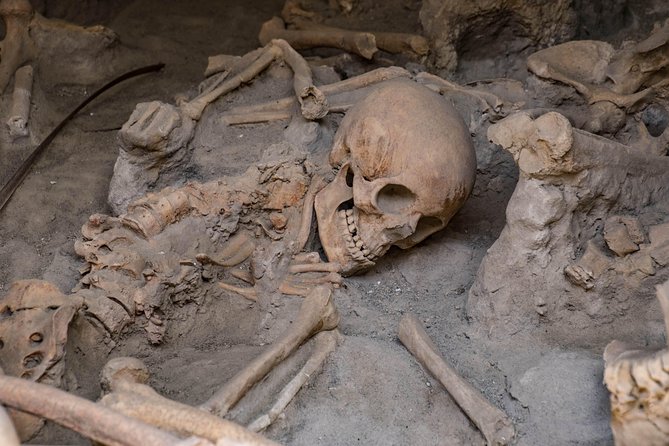
When Herculaneum starts, it feels different from Pompeii. The city’s preservation conditions are part of the story, and the Antiquarium di Ercolano helps you understand why.
This museum is intimate and focused, with exhibits that include organic materials rarely preserved elsewhere—like carbonized wooden furniture and textiles. You’ll also see standout pieces tied to victims, including the shimmering Herculaneum Treasure, plus frescoes and statuary rescued from volcanic mud.
If Pompeii is about city blocks and public spaces, Herculaneum is about how life looked up close. Seeing the museum first makes the later walking around the ruins hit harder and make more sense.
Boat Pavilion and Ancient Beach: The Shoreline Stops Being Background
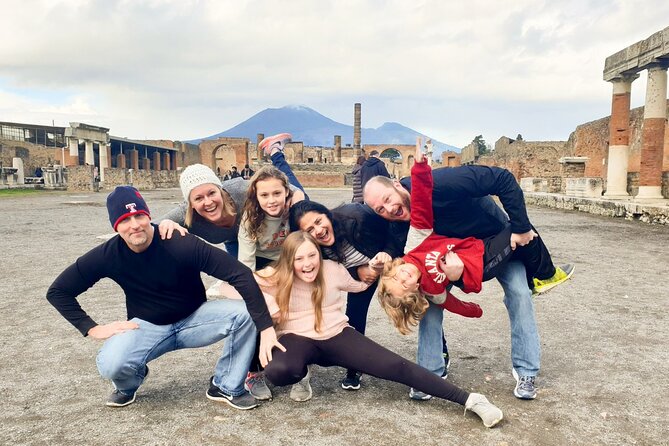
The Boat Pavilion is one of the most moving stops on the day. It displays a carbonized keel of a nine-meter-long boat, found upturned where it was by the pyroclastic flows. You can also see smaller maritime items like fishing weights, nets, and a carbonized rope.
This is where your brain connects ruins to real behavior—people working, traveling, trying to move quickly when everything changed.
Then comes the Ancient Beach, reopened to the public in 2024 after restoration. Walking along this shoreline area is powerful because it’s literally the coast where the eruption reached its climax. You’ll see the fornici boat sheds’ massive arches, and the remains of over 300 residents discovered huddled in their final moments.
One practical takeaway: the beach sits several meters below modern ground level, so the visit helps you understand the scale of volcanic reshaping without having to guess.
Casa dei Cervi and Casa di Nettuno e Anfitrite: Luxury at Human Scale
Houses in Herculaneum aren’t just pretty. They show how wealthy people lived in a seaside retreat, and the architecture is built around views and breezes.
The Casa dei Cervi (House of the Stags) is named for famous marble stags statues in the garden. The layout includes an inverted arrangement with a grand panoramic terrace and open garden space designed to catch sea breezes across the Gulf of Naples.
Next door is the Casa di Nettuno e Anfitrite with one of the Roman world’s most recognizable mosaics. You’ll see gods depicted with shimmering gold and blue glass paste. It also includes an outdoor summer triclinium decorated with shells and lava stone, which makes the house feel like a place where people actually ate and spent time.
What really seals this visit is the attached shop. The area is considered one of the best-preserved grocery stores from antiquity, with carbonized storage bins and wooden shelves, giving you a tangible sense of everyday commerce.
Women’s Baths and the Palestra: Roman Daily Life You Can Picture
The Termas Femeninas (Women’s Baths) feel remarkably complete compared to similar sites. You’ll enter through an original vaulted doorway and immediately notice a crisp black-and-white mosaic in the apodyterium showing Triton with dolphins.
What’s impressive is the survival of small details. You can see organic remnants like wooden shelves used for clothing, plus intact stucco decorations in barrel-vaulted ceilings. The route moves from the warm tepidarium to the caldarium, where hollow-wall heating systems show how comfort was engineered.
After that, the Palestra (gymnasium) reveals civic pride in physical culture. It’s anchored by a monumental cross-shaped swimming pool, the natatio, and includes a five-headed hydra fountain. Walking through the large courtyard helps you imagine youth training and social life under the Mediterranean sun.
There’s also a discovery of a carbonized wooden statue of a benefactor, adding a personal human connection inside all that stone.
Price and Logistics: What You’re Paying For
The tour is priced at $861.07 per group for up to 7 people, with an 8–9 hour day. That group pricing matters because this isn’t just driving between two sites. You’re getting private guided time in both Pompeii and Herculaneum plus winery time and transport.
Your budget also needs two extra lines. Admission fees are not included and are listed as about €40 per adult for both sites (with free entry for under 18s with valid ID). The winery lunch experience is an additional €50 per person (or €60 for superior wine upgrade) paid on-site.
If you fill a group of 7, the base tour cost breaks down to roughly $123 each before admissions and lunch. If you’re a smaller group, the per-person cost rises, but you still benefit from the private, guided structure rather than trying to piece together two major sites yourself.
Family-Friendly Mode: Keeping Kids Interested (and Adults Comfortable)
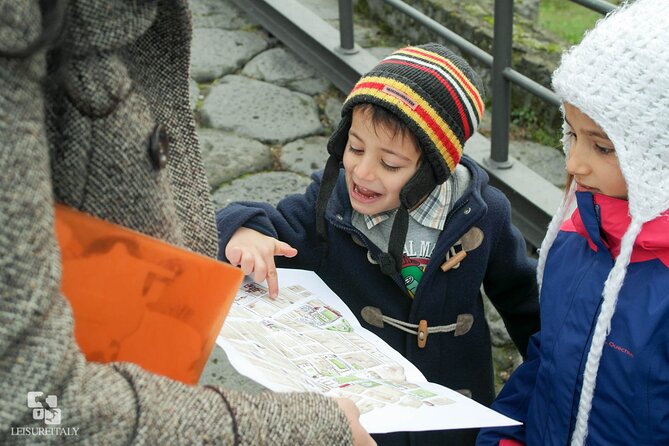
This tour is offered with an upgrade designed to be family-friendly and keep children engaged. Fabrizio’s approach is practical and interactive, and the day includes breaks built in between long ruin sections.
Just remember the physical reality: you’ll be walking on uneven stone in Pompeii and moving between sites across the day. The tour lists a moderate physical fitness level, so plan for real steps, not flat museum floors.
The good news is the vehicle is air-conditioned and the guide provides water during the day, plus Wi‑Fi on board. That matters more than people think when the sun is strong and the schedule is full.
Should You Book This Pompeii and Herculaneum With a Winery Day Trip?
Book this if you want a day that runs on clear guidance, not guesswork. The combo works well because Pompeii gives you the city’s public and private life, while Herculaneum gives you preservation and human closeness, and the winery break keeps it from becoming exhausting.
I’d skip it only if you strongly prefer a self-guided pace, or if you’re not up for long walking over uneven surfaces in outdoor heat. Also note the winery is on Vesuvius slopes, but the tour does not reach the top of Mount Vesuvius.
FAQ
Is this tour private?
Yes. It’s a private tour/activity, and only your group participates (up to 7 people).
Where does pickup happen?
You can be picked up anywhere in the Naples or Sorrento area. If you’re staying on the Amalfi Coast, you’ll need to contact the provider.
How long does the day take?
It runs about 8 to 9 hours.
Is the tour offered in English?
Yes, the tour is offered in English.
Are admission fees to Pompeii and Herculaneum included?
No. Admission fees are not included and are listed as about €40 per adult for both sites. Under 18s can be free with valid ID.
Is lunch and wine tasting included in the tour price?
Lunch and the winery wine experience are not included in the base price. The winery experience is listed as about €50 per person all-inclusive, or €60 for a superior wine upgrade.
Does the tour go to the top of Mount Vesuvius?
No. The tour does not reach the top of Mount Vesuvius.
What’s included in the cost besides the guides?
Included are an air-conditioned vehicle, water and Wi‑Fi on board, private guided tours in both Pompeii and Herculaneum, and private transportation. You also get a mobile ticket.
What about fitness level and walking?
The tour calls for moderate physical fitness. There is walking on site, including Pompeii’s uneven stone areas.
Can I cancel for a full refund?
Free cancellation is available. You can cancel up to 24 hours in advance for a full refund.