REVIEW · SORRENTO
Private Pompeii Tour with Archaeologist & Winery on Mt Vesuvius
Book on Viator →Operated by Fabrizio Belleni - Leisure Italy Private Guide · Bookable on Viator
Pompeii becomes way easier with a guide who plans for you. This private tour pairs an adjustable Pompeii walk around the Forum with archaeologist Fabrizio Belleni, and it ends with a winery meal paired with five local wines near Mt Vesuvius.
What I like most is how practical it feels: you get the big sights without wasting time, and you get the history explained in a way that actually helps you see what you’re looking at.
I also love the logistics. Door-to-door Mercedes minivan pickup (from Naples or Sorrento) plus Pompeii Express skip-the-line admission means you spend your energy walking, not waiting. Even small touches show up in the details, like having water on hand in the van.
The one thing to think about: the winery lunch and tasting aren’t included in the main price, and the plan also does not include the Mt Vesuvius summit. If your idea of Vesuvius is big summit views from the top, this is still a great day, just not that kind of hike.
In This Review
- Key things I’d book for
- Why this Pompeii and Mt Vesuvius day works
- Pickup, van comfort, and skip-the-line Pompeii entry
- Inside Pompeii: what “Forum-focused” really means on the ground
- The Pompeii walk: stop-by-stop highlights and what to watch for
- Archaeological Park of Pompeii (the anchor)
- Porta Marina (the main sea entrance)
- Pompeian Basilica (courthouse and commerce)
- Temple of Apollo (and that Vesuvius view)
- Forum of Pompeii (the daily Roman hub)
- Macellum (the covered food market)
- Forum Baths (the one still functioning during the eruption)
- House of the Faun (elite scale and famous art)
- Casa dei Vettii (the restored fresco rooms)
- Insula dei Casti Amanti (Block of the Chaste Lovers) and the view-from-above walkway
- Teatro Grande (Roman entertainment and a quick acoustics trick)
- Antiquarium di Pompei (the museum that gives context fast)
- Cantina del Vesuvio winery: lunch, five wines, and crater views (without the summit hike)
- Price and value: what you pay up front vs what to budget on the spot
- Who this private tour is best for
- Should you book this Pompeii tour with Fabrizio and the Vesuvius winery?
- FAQ
- How long is the Pompeii and winery tour?
- Does this tour include Pompeii tickets and skip-the-line entry?
- Do we go to the top of Mount Vesuvius?
- What winery experience is included, and what do I pay for?
- Is pickup available, and where does it start?
- Is this tour private?
- Can I cancel for free?
Key things I’d book for
- Private archaeologist guide (Fabrizio Belleni) who adjusts the route to your requests and pace
- Forum-focused Pompeii route built around the city’s core highlights and major public buildings
- Skip-the-line Pompeii Express admission and a mobile ticket for less hassle
- Big-art stops: House of the Faun and the House of the Vettii, including restored fresco rooms
- Mt Vesuvius winery add-on: guided vineyard stroll plus lunch and five wine pours
- Stress-free transfers in an A/C Mercedes from Naples or Sorrento
Why this Pompeii and Mt Vesuvius day works
Pompeii is huge in area—about 150 acres—and it can eat up a whole day if you’re figuring things out on the fly. This tour is designed around focus. Instead of a scattershot approach, you’re centered on the Forum area and the nearby must-sees that connect the political, commercial, and everyday sides of Roman life.
The other smart move is ending with food and wine at the winery. After hours of stone streets and shaded courtyards, a sit-down lunch turns the day from sightseeing into a real experience. The setting is also part of the payoff: you’re in Mt Vesuvius National Park with views over the Bay of Naples and the volcano crater area.
Finally, it’s private. That matters more than people think. You can ask for what you care about—architecture, art, daily life, or just the key highlights—and the plan can be tuned to your physical attitude.
You can also read our reviews of more tours and experiences in Sorrento.

Pickup, van comfort, and skip-the-line Pompeii entry

This is set up as a true transport-first day. You can arrange pickup in Naples or Sorrento, then ride in an A/C Mercedes van to Pompeii, and later get dropped back to your original area.
On the Pompeii side, the tour includes the Pompeii Express skip-the-line admission fee, and you’ll use a mobile ticket. That helps a lot on busy days, because Pompeii ticket lines can slow you down fast.
Practical tip: use your morning time wisely. Even with skip-the-line, Pompeii is still walking and heat, so you’ll want comfortable shoes and a refillable water bottle. The guide experience is built around pacing, and the van water touch shows they’re thinking about the day being human-sized.
Inside Pompeii: what “Forum-focused” really means on the ground
When a tour says it focuses on the Forum, it’s not just a vague Rome-style “old town” reference. It means you spend your time where Pompeii’s public life clustered: courts, temples, markets, baths, theaters, and some of the most important private houses close enough to make sense in one walk.
The tour is also built to be adjustable. The route is described as tuned to your will and physical attitude, and you can request special interests ahead of time so the guide can plan around your time and comfort.
And the guide style matters. In the real-world comments tied to this tour, Fabrizio gets strong marks for staying on point and keeping people engaged even if history isn’t your main hobby. That’s not trivia for trivia’s sake—it’s what helps you connect what you see (columns, platforms, floor plans) to what the spaces were used for.
The Pompeii walk: stop-by-stop highlights and what to watch for
Archaeological Park of Pompeii (the anchor)
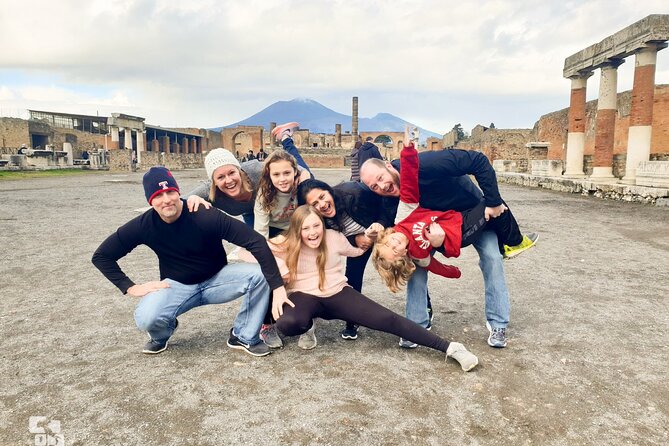
You start in the Archaeological Park of Pompeii with an orientation toward the highlights around the Forum. This opening sets your bearings fast: you’ll understand what buildings do what jobs, and why Pompeii feels so organized even in ruins.
Because Pompeii covers about 150 acres, you’ll notice the guide isn’t trying to cram everything. Instead, it’s about seeing the right places well and linking them in your mind.


Porta Marina (the main sea entrance)
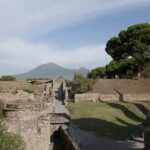
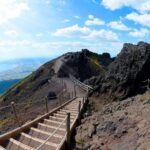
The Porta Marina visit helps you picture Pompeii’s relationship to trade and travel. This gateway is a dramatic dual-arched entrance that feeds you up Via Marina toward the Forum, and it connects to the defensive wall line (the Cinta Muraria).
Look around as you move away from the gate. You’ll start understanding how the city funneled movement toward the administrative and religious core.
Pompeian Basilica (courthouse and commerce)
The Basilica Pompeiana is one of the key “secular power” buildings in the Forum. This large three-aisled structure dates to the 2nd century BC and functioned as the main courthouse and a commerce hub, not a religious site.
When you’re inside, focus on the raised tribunal platform at the far end and the bases of the 28 columns. Those column heights and the open central nave help you imagine speeches, arguments, and business happening under a roofed hall.
Temple of Apollo (and that Vesuvius view)
The Temple of Apollo is both old and visually iconic, with origins going back to the 6th century BC and a mix of Greek and Italic styles. It sits on the western side of the Forum and is surrounded by a portico of 48 columns.
What I like here is the mix of “art” and “architecture.” You’ll see details like the white marble altar and a sundial feature on an ancient Ionic column topped with a sundial. And yes, the setting gives you a direct view toward Mount Vesuvius.
Forum of Pompeii (the daily Roman hub)
The Forum is the big rectangular plaza that once held political, commercial, and religious life—walk the travertine paving and you’ll feel why it was central. You can still see remnants of column pedestals that once carried statues of emperors and notable citizens.
This space also helps you connect the rest of the day. The Forum sits at the center of daily markets, legal proceedings, and ceremonies, with Vesuvius looming to the north.
Macellum (the covered food market)
The Macellum is Pompeii’s main covered market, located in the northeast corner of the Forum. It’s a rectangular complex with a courtyard and a circular tholos pavilion, plus surrounding shops (tabernae).
Try to spot the mensa ponderaria, the stone table used to verify official weights and measures. It’s a small detail, but it turns “market ruins” into a real picture of fair trade and everyday commerce. The market also links to the imperial family through a dedicated shrine.
Forum Baths (the one still functioning during the eruption)
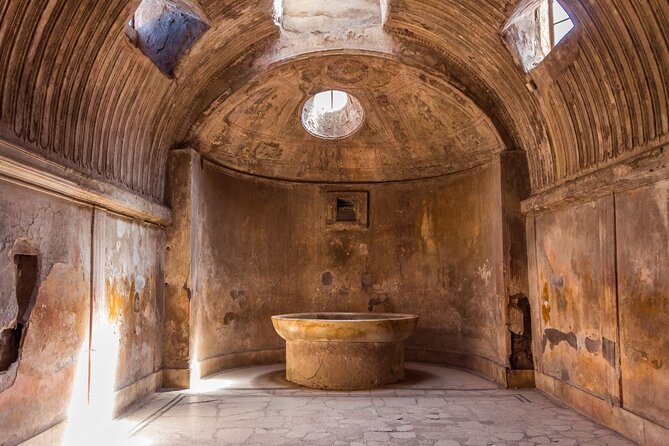
The Forum Baths (Terme del Foro) are a special stop because this complex was still operational during the eruption of 79 AD. That gives the spaces a more immediate feel—Roman hygiene and social life in action, even in the final days.
You’ll move through changing room to cold, warm, and hot areas: apodyterium, frigidarium, tepidarium, calidarium. It’s also a Roman engineering showcase, including the hypocaust system for heat circulation and features like bronze heating brazier evidence.
If you like “how people lived,” this is one of the strongest stops. The women’s section has been opened through restoration, with frescoes visible, so you get a fuller picture of who used the baths and how social routines worked.
House of the Faun (elite scale and famous art)
Casa del Fauno is one of Pompeii’s largest luxury homes, taking up an entire insula (city block). It’s known for peristyle gardens and atriums, and it’s a good place to understand the scale of wealth.
Two of the most famous art pieces are now mostly seen as replicas in Pompeii, while originals are housed in Naples. You’ll still get the sense of why the bronzed Dancing Faun matters and why the Alexander Mosaic is a standout.
Practical takeaway: treat this stop like a lesson in domestic layout. You’re looking at how rich Pompeians organized space for leisure, status, and daily movement.
Casa dei Vettii (the restored fresco rooms)
Casa dei Vettii is often called the Sistine Chapel of Pompeii for good reason: the frescoes are vivid and tightly packed with detail. The house was recently reopened after a 20-year restoration, and it’s owned by two brothers who rose from slavery to become wealthy merchants—exactly the kind of story you can feel in the house’s confidence.
You’ll find Fourth Style frescoes, the iconic entry painting of Priapus, and rooms like the Room of the Cupids. There’s also a peristyle garden replanted according to ancient patterns, which helps make the place feel complete rather than just “ruins with walls.”
Insula dei Casti Amanti (Block of the Chaste Lovers) and the view-from-above walkway
This is a modern archaeology moment in a place famous for ancient tragedy. The Insula dei Casti Amanti reopened in 2024 with an elevated walkway system, letting you look down at excavations and get a broader view of the neighborhood layout.
You’ll see how daily-life spaces connect—homes like the House of the Painters at Work and even a bakery area are part of this block. And it’s described as accessible through a Pompeii for All barrier-free itinerary, which matters if you want a less step-heavy way to see the site.
Teatro Grande (Roman entertainment and a quick acoustics trick)
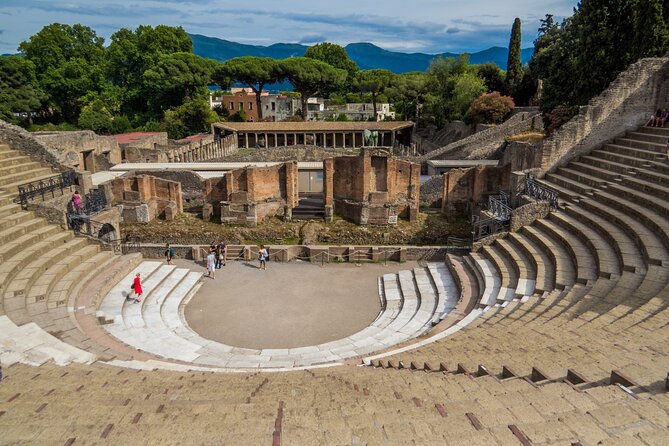
The Teatro Grande sits in the southern district near the Triangular Forum, carved into a natural hillside. It could hold about 5,000 spectators and still shows the social hierarchy through seating tiers—local elites in the ima cavea and higher sections for broader audiences.
One of the fun parts is the acoustics. The space is known for its sound behavior, and you can test it by speaking from the orchestra center. It’s one of those moments where you stop thinking like a tourist and start thinking like a Roman spectator.
Antiquarium di Pompei (the museum that gives context fast)
The Antiquarium at Porta Marina is a climate-controlled introduction to Pompeii’s story. You’ll see fragile artifacts in a modern museum setting before returning to open-air ruins.
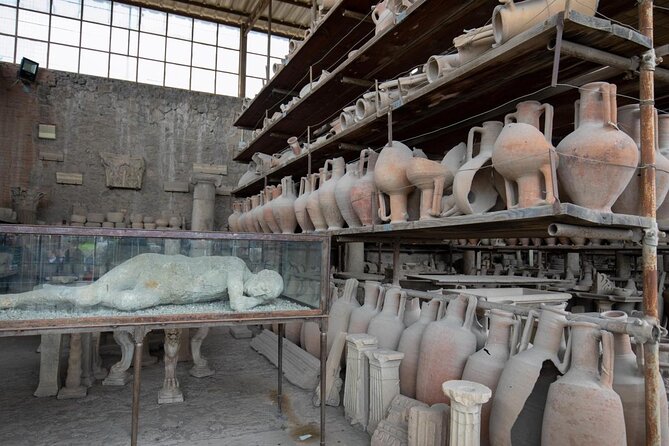
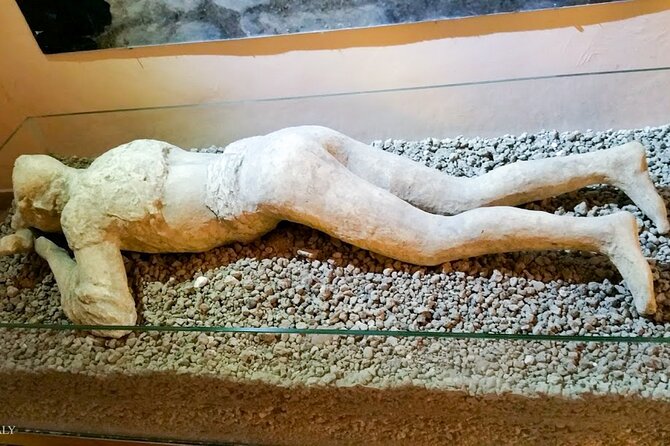
This is where you connect your walk to real objects and names, from treasures like the Moregine silver treasure to the sorcerer’s hoard of amulets. The museum also features world-famous plaster casts, including the Dog of Pompeii and victims frozen in their final moments, which adds human weight to what can otherwise feel like a cool architecture tour.
The museum experience is described as enhanced with multimedia projections and digital assistants (as of 2026). Even if you’re short on time, it’s a strong way to understand what you’re about to see, rather than just walking through without context.
Cantina del Vesuvio winery: lunch, five wines, and crater views (without the summit hike)
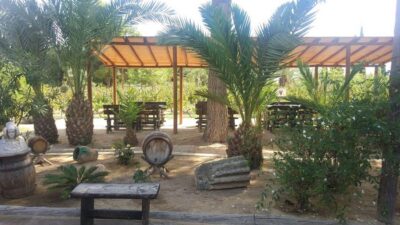
After Pompeii, the day shifts gears—this is where the trip becomes a break. You travel by short ride to Cantina del Vesuvio, an organic winery in Mt Vesuvius National Park run by the Russo family since 1930.
Your visit begins with a guided 15-minute stroll through sunlit vineyards. From there, you learn about Lacryma Christi wines, which is the winery’s signature style.
Then you sit down for the meal. The set menu includes appetizers like bruschetta, cheeses, and cured meats, followed by spaghetti made with Vesuvius cherry tomatoes and meatballs. Dessert is traditional Neapolitan pastiera, and the plan notes vegetarian and gluten-free options.
The wine part is the real headliner: the meal is paired with five separate wines. Payment is on-site, and it’s described as pay by card or cash. Also, booking is handled for you by Fabrizio.
One important reality check: this experience is in the volcano area, but the tour does not reach the top of Mt Vesuvius. So expect views from the winery setting, not summit-level vistas and not a crater rim trek.
Price and value: what you pay up front vs what to budget on the spot
The listed price is $434.46 per person, and the tour is structured so your base cost covers the parts that usually cost time and stress: private transfers, a private walking tour with an archaeologist/official guide, and the Pompeii Express skip-the-line admission fee.
What’s not included is the winery lunch and wine-tasting add-on. The data gives classic and superior options, listed as €50 classic / €60 superior in one place, and €55 / €65 in the winery menu description. Either way, you should budget roughly the low-to-mid €50s for classic and low-to-mid €60s for superior for the winery meal and pours.
So the value equation is this: you’re paying for a private guide and smooth day flow in Pompeii, then adding the food-and-wine portion where the experience gets more relaxed and scenic.
If you love history but also like a good payoff at the end of a long day, the structure makes sense. If you’re chasing the cheapest possible day trip, this is not that.
Who this private tour is best for
This is best for people who want Pompeii in a controlled, high-quality way. It suits couples and small groups, especially if you don’t want to spend your limited hours figuring out which ruins are most important.
It also fits non-specialists. One of the strongest signals from the guide feedback tied to this tour is that Fabrizio keeps people engaged even if they aren’t history-first. He customizes the route based on what you want to see.
If your travel style includes good pacing (not sprinting), this tour is also a good match. The route is described as tuned to your physical attitude, and the guide has experience adjusting pace for different bodies, including plus-size visitors.
Wine and lunch lovers should definitely pay attention. The winery component includes a real meal, not a quick tasting. If you’d rather skip the extra cost and just want a short tasting, you might find the add-on too much.
Should you book this Pompeii tour with Fabrizio and the Vesuvius winery?
Book it if you want: a private archaeologist-led Pompeii focused on the Forum highlights, skip-the-line entry, comfortable van transfers, and then a structured winery lunch with five wine pours. You’ll also enjoy it if you like museums that add context, since Antiquarium is part of the flow.
Skip it if your priority is: getting to the Mt Vesuvius summit or doing an ultra-budget day with minimal guidance. This plan is about Pompeii depth plus a relaxed volcano-area meal, not summit hiking.
If you’re deciding between going it alone and paying for a private guide, I’d lean private here. Pompeii rewards understanding. When you see the Basilica function as a courthouse, or the baths as daily social infrastructure, the ruins stop being random stone and start making sense fast.
FAQ
How long is the Pompeii and winery tour?
The duration is listed as approximately 4 to 7 hours, depending on timing and how the day flows.
Does this tour include Pompeii tickets and skip-the-line entry?
Yes. The experience includes the Pompeii Express skip-the-line admission fee, and a mobile ticket is provided.
Do we go to the top of Mount Vesuvius?
No. The tour does not reach the top of Mt Vesuvius.
What winery experience is included, and what do I pay for?
The winery visit and reservation are handled for you, but lunch to be paid on the spot. The additional cost is listed as €50 for the classic tasting or €60 for the superior wine experience (the winery menu description also lists €55 and €65 respectively).
Is pickup available, and where does it start?
Pickup is offered from Naples and Sorrento by A/C Mercedes minivan. You provide your meeting point and phone number on tour.
Is this tour private?
Yes. It is a private tour/activity, and only your group participates.
Can I cancel for free?
Yes. Free cancellation is available up to 24 hours in advance for a full refund.