REVIEW · REIMS
Vineyard and Triple Tasting First Cru in the Mountains of Reims
Book on Viator →Operated by Champagne Lallement Massonnot · Bookable on Viator
Champagne with mountain views. This Vineyard and Triple Tasting First Cru experience shows you Champagne at its source, in the middle of Chardonnay 1er Cru vines, with the Cathedral of Reims part of the scenery. I love the clear step-by-step tasting method, Eye, Nose, Mouth, and I love how the guide ties what you drink to where it grows, right out in the vineyard.
You’ll taste three Champagnes in a small group setting, and you’ll get story plus technique without feeling rushed. One drawback to plan for: snacks aren’t included, so eat beforehand if you’re sensitive to alcohol.
In This Review
- Quick highlights you’ll actually use
- Where first cru Champagne feels real fast
- Vineyard storytelling: terroir, history, and the people behind it
- The vineyard stop with ten hectares and Cathedral views
- Eye, Nose, Mouth: how the guide trains your senses
- Your three cuvées: choosing from Sun D’eden, Floresian Zest, Baies d’Alizés, and Vintage 2020
- Pace and group size: better conversation in a max of 8
- The service and family-estate feel you’ll notice right away
- Price and value: what $30.04 buys you in real terms
- Logistics that make the experience smoother
- Who this tour fits best
- Should you book this Champagne tasting tour in the mountains of Reims?
- FAQ
- How long does the Champagne tasting tour last?
- What’s included in the price?
- Are snacks included?
- Do minors take part in the tasting?
- Is the tour offered in English?
- Where does the tour start and how big is the group?
Quick highlights you’ll actually use
- Eye, Nose, Mouth tasting with sommelier gestures
- Chardonnay 1er Cru setting overlooking ten hectares in the west of Reims
- 3 tastings in about 1 hour, keeping palate fatigue in check
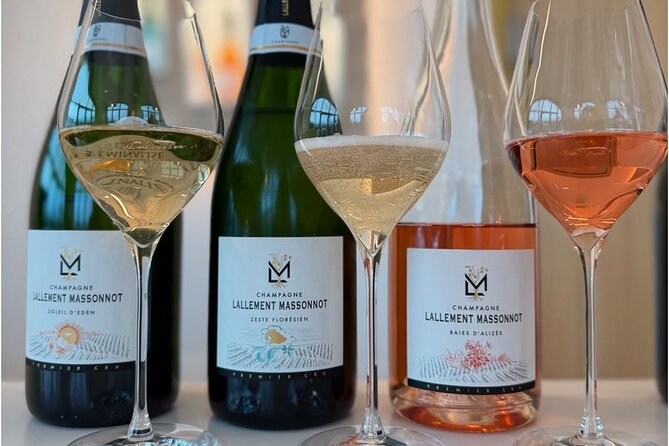
- Pick from four cuvées: Sun D’eden, Floresian Zest, Baies d’Alizés, Vintage 2020
- Small group size (up to 8) for real questions
- Family-estate welcome, including English guidance
Where first cru Champagne feels real fast
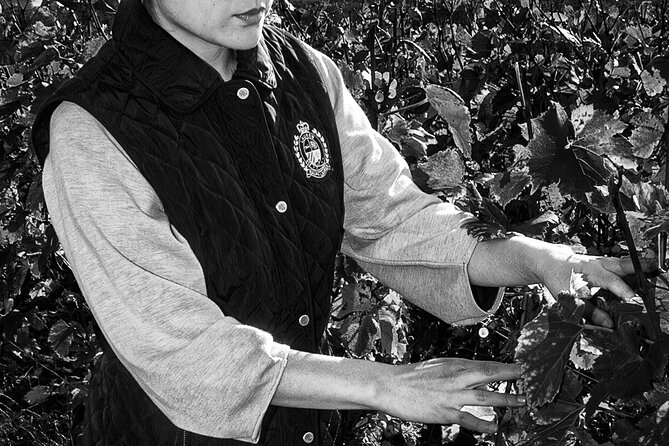
This tour works because it doesn’t treat Champagne like a museum piece. It treats it like a living product. You’re in the Montagne de Reims area, surrounded by vines, and the views help you understand why a place can matter as much as a label.
If you’ve ever felt confused by Champagne jargon, you’ll likely appreciate the focus here. The guide walks you through the idea that Champagne is not just a drink. It’s growers, choices, and time. And it’s tied to terroir—the soils and the slope—and to the practical reality of making wine year after year.
You can also read our reviews of more tours and experiences in Reims.
Vineyard storytelling: terroir, history, and the people behind it
Before you get deep into tasting technique, you’ll get the bigger picture. You’ll hear about different economic actors involved in Champagne, plus how terroir and history shape what ends up in your glass. It’s the kind of explanation that helps you stop thinking of Champagne as a single product and start thinking of it as a system.
This part matters because it changes how you taste. When you understand that winemaking is made of decisions—what gets planted, how grapes are handled, what style is being pursued—you’re less likely to judge a Champagne only by sweetness or “how it hits.” You start noticing structure, balance, and the progression of styles.
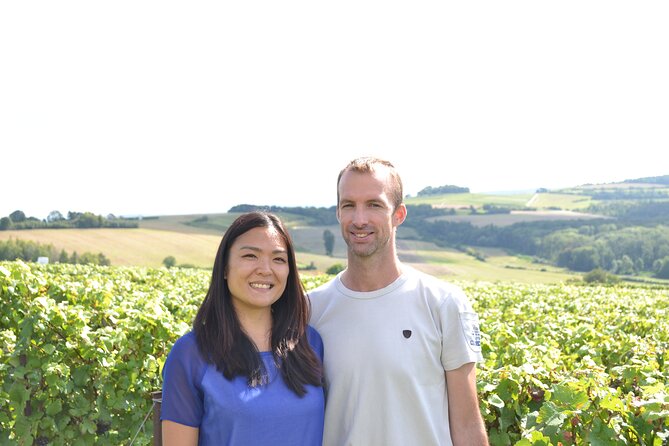
And yes, you’re doing this while standing somewhere pretty special. Ten hectares of Chardonnay 1er Cru sit right there in front of you, and the Cathedral of Reims is visible in the broader view. That combo makes the education feel grounded, not abstract.
The vineyard stop with ten hectares and Cathedral views
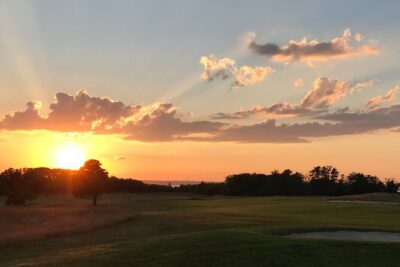
The setting is one of the strongest reasons to book. You’re not touring a warehouse and hoping for the best. You’re learning in the middle of the plot of Chardonnay 1er Cru, with sweeping views of the mountain of Reims to the west.
Why this matters: Champagne tasting improves when you can connect flavor to place. Even without memorizing soil types, you get the sense of scale and exposure—sun, slope, and the everyday reality of vineyard work.
There’s also a psychological bonus. Seeing the region from up high makes it easier to remember what you learn later. You’ll likely leave with mental “anchors,” like the view angle and the feeling of standing in a real vineyard block, not just watching someone talk.
Eye, Nose, Mouth: how the guide trains your senses
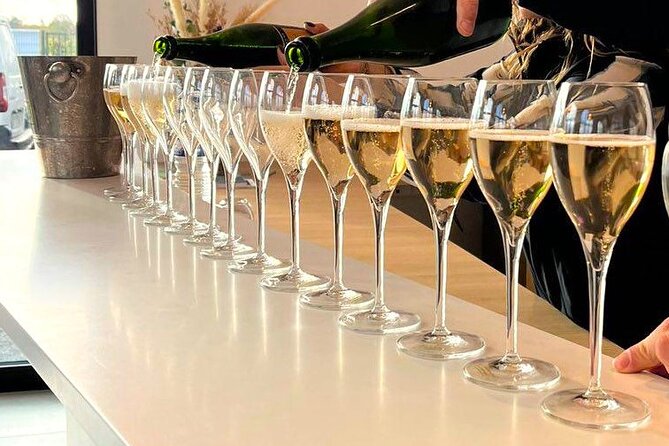
Now for the technique. This tour teaches you how to taste Champagne like a pro using a three-step approach: Eye, Nose, Mouth.
Here’s the practical value of that structure:
- Eye helps you look past color as decoration. You’ll learn to pay attention to how the wine shows itself in the glass—things you can observe before you even smell.
- Nose is where people often rush. The guide slows you down so you can identify what you’re actually reacting to.
- Mouth is where the last step matters most. It’s not just about taste. You’ll learn to notice how the Champagne changes from the first sip to what lingers.
The tour also includes associated sommelier gestures. That sounds small, but it helps. Gestures give you a repeatable routine, so you can taste with confidence even if you’re new to this.
One detail I really like about the way this is built: they keep the palate safe. You’ll taste three cuvées, chosen to respect progression of styles and avoid saturation. Translation: you don’t get hammered with three totally overwhelming pours back-to-back and then asked to score them like a judge.
Your three cuvées: choosing from Sun D’eden, Floresian Zest, Baies d’Alizés, and Vintage 2020
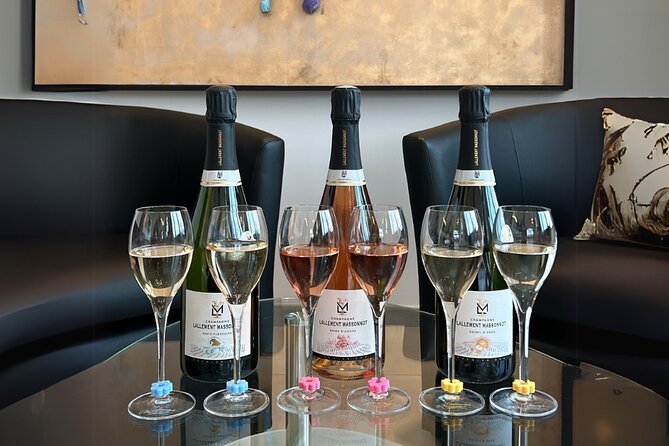
You’ll taste three Champagnes during the triple tasting portion. The selection is made from four cuvées in the range:
- Sun D’eden
- Floresian Zest
- Baies d’Alizés
- Vintage 2020
The important part for you: you and your companion (or your group) will choose among these four, and the tour is set up to guide that choice based on your situation. That means it’s not a one-size-fits-all script.
So what should you do with this information? If you’re with a couple or a small group, consider picking different styles so you can compare. If everyone chooses the same thing, it’s harder to learn. The point is contrast plus control.
I also appreciate that one of the choices includes Vintage 2020. That gives you a way to compare how a vintage-focused Champagne fits into the broader range tasting.

Pace and group size: better conversation in a max of 8
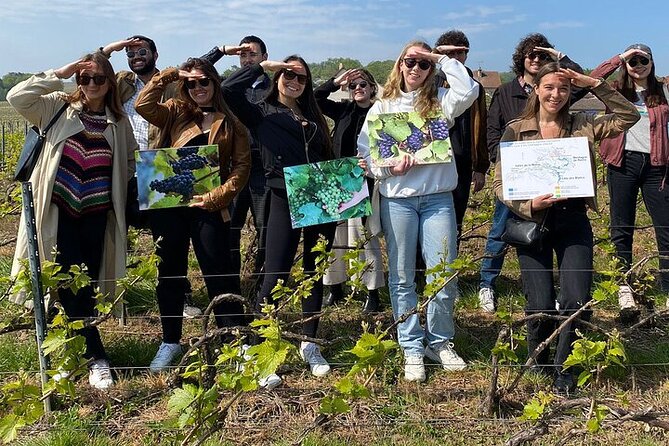
This isn’t a long seminar. The tour runs about 1 hour. That’s ideal for a few reasons:
- You get enough time to learn the tasting method without dragging your day.
- You don’t end up exhausted from standing around and listening.
- The tastings stay focused, especially because they keep palate fatigue in mind.
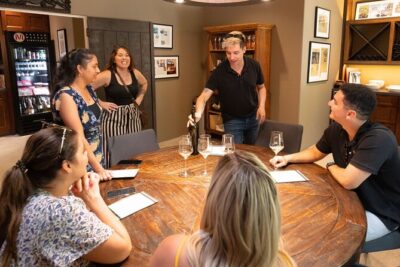
The group size is capped at 8 travelers, which is a big deal. In a small group, you can ask follow-up questions and you’re more likely to get personal attention instead of being swept along.
Language is English, so you can relax and focus on the wine rather than decoding a translation.
If you like hands-on learning, this format fits well: you’re not just hearing. You’re practicing the sequence.
The service and family-estate feel you’ll notice right away
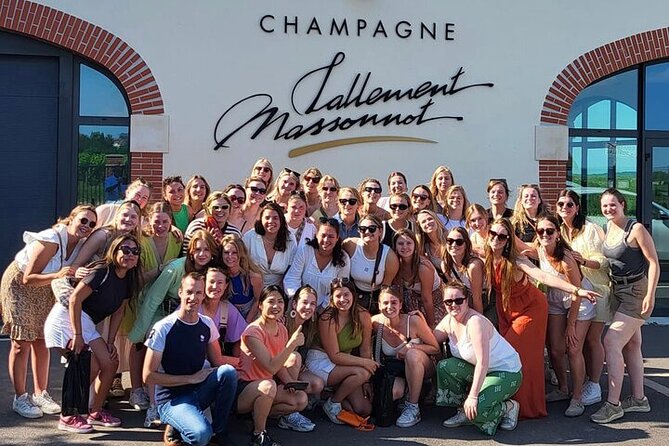
From the way the tour is run, the vibe is family estate first, sales pitch second. You’ll likely feel that in the tone of the welcome and the care taken with the visit.
A name that comes up in the experience is Marie. She’s credited with making visitors feel welcome from the start and with tailoring the tasting and tour to needs. That kind of flexibility matters more than people think. If you’re curious but uncertain, a guide who can adjust makes the difference between confused tasting and actual understanding.
There’s also a practical note from the team’s replies: if you order Champagne boxes to take home, the winery says they keep you updated about delivery. That’s useful if you’re thinking ahead and want your purchase to show up safely after your trip.
Price and value: what $30.04 buys you in real terms
At $30.04 per person, the value is driven by what you get, not by hype.
You’re paying for:
- 3 Champagne tastings
- guided instruction on how to taste (Eye, Nose, Mouth + gestures)
- vineyard context in a Chardonnay 1er Cru setting
- a small-group experience with English guidance
When you compare this to a lot of tastings where you basically get poured and told to guess what you like, this has more structure. You’re not just consuming. You’re building a repeatable routine you can use later, even after you leave Reims.
One caution on value: snacks aren’t included. That doesn’t change the worth, but it changes your comfort. If you book this as your first stop of the day, eat before you go. Then hydrate. Champagne is delicious, but it’s still alcohol.
Logistics that make the experience smoother
You start at Champagne Lallement Massonnot, 35 Rue Haute, 51390 Coulommes-la-Montagne, France, and the tour ends back at the same meeting point.
A few details that can matter for planning:
- You’ll receive confirmation at booking time.
- This is a mobile-ticket experience.
- Service animals are allowed, and unassisted dogs are allowed during the visit.
- Only alcoholic beverages are served to travelers aged 18 and over; minors are served soft drinks.
Because it’s a max-8 group, it’s also the kind of tour where showing up on time helps. The schedule is tight, and the tastings are part of a progression.
Free cancellation is available up to 24 hours in advance for a full refund, which is nice when you’re juggling weather or changing plans around Reims.
Who this tour fits best
This is a great match if you:
- want Champagne education without a long classroom vibe
- like small groups and direct interaction with the guide
- enjoy learning tasting technique you can repeat later
- are in Reims and want more than a quick pour
It also works well for couples because it’s designed around choosing among cuvées as a pair, not forcing everyone into the same tasting experience.
If you’re traveling with kids, minors can be included as long as you’re okay with them receiving soft drinks rather than Champagne.
Should you book this Champagne tasting tour in the mountains of Reims?
Book it if you want Champagne with context. The vineyard setting, the Chardonnay 1er Cru focus, and the Eye, Nose, Mouth training make this more than a simple tasting stop. The small group size helps, and the guidance is structured so you don’t leave with random opinions—you leave with a method.
Skip it or plan carefully if you were hoping for snacks or a bigger, all-day itinerary. This is short on purpose, and you’ll want food beforehand.
If your priority is learning how to taste Champagne in a real vineyard environment with thoughtful pacing, this one is easy to recommend.
FAQ
How long does the Champagne tasting tour last?
It lasts about 1 hour.
What’s included in the price?
The price includes 3 champagne tastings (alcoholic beverages).
Are snacks included?
No. Snacks are not included.
Do minors take part in the tasting?
Alcoholic beverages are only served to travelers aged 18 and over. Minors are served soft drinks.
Is the tour offered in English?
Yes, the tour is offered in English.
Where does the tour start and how big is the group?
The tour starts at Champagne Lallement Massonnot, 35 Rue Haute, 51390 Coulommes-la-Montagne, France. The group size is capped at a maximum of 8 travelers.