REVIEW · JEREZ DE LA FRONTERA
Visit a century-old winery in the centre of jerez
Book on GetYourGuide →Operated by Cayetano del Pino y Cia S.A · Bookable on GetYourGuide
Walk into sherry history in the middle of town. In central Jerez, this guided visit takes you inside Bodegas Cayetano del Pino, a working winery founded in 1886, with an audio-visual show and a clear, graphic history of sherry from ancient times to today. I especially like the way the tour combines explanation (the visitor center timeline) with the real thing (the cellar and production space), and I also love the historical label exhibition, where packaging design becomes part of the story. One thing to consider: at 75 minutes it moves at a brisk pace, so if you want a slow, stand-around kind of tasting, you might feel a little rushed.
You’ll spend most of your time learning and tasting rather than wandering. The tour includes a guided route through the mid-19th century cellar introduction, a look at how sherry is made through graphic modules, and a tasting of 4 award-winning sherries with chips and a small snack to keep things comfortable. If you’re hungry for a full meal, the Iberian dish option is not included.
In This Review
- Key highlights that make this tour worth your time
- Entering Bodegas Cayetano del Pino: a working winery in central Jerez
- The mid-19th century introduction: how the tour gets you oriented fast
- The sherry history timeline: what the graphics do better than a brochure
- The 1886 winery tour: original materials and the sense of place
- Vineyard and winemaking modules: the explanation you’ll actually remember
- Historical label exhibition: sherry branding as design history
- The tasting of 4 award-winning sherries: how to get the most from the glass
- Shop time: turning learning into a bottle you’ll drink
- Price and value: is $29 for 75 minutes reasonable?
- How long you’ll actually spend in the experience
- Who this tour is best for
- A note on food: what’s included and what costs extra
- Should you book the Cayetano del Pino sherry tour?
- FAQ
- How long is the guided tour?
- Where does the tour start?
- What language is the tour offered in?
- How many sherry wines do you taste?
- What’s included with the tasting?
- Is food like Iberian dishes included?
- Is the tour wheelchair accessible?
- What if plans change and I need to cancel?
Key highlights that make this tour worth your time
- Inside a real sherry winery at Bodegas Cayetano del Pino, not just a showroom
- Audio-visual timeline of sherry, including its elaboration and long regional origins
- 1886 winery history walk, with original 19th-century material on display
- Vineyard and winemaking explained with graphics, so you’re not guessing what you’re seeing
- Historical label exhibition, where famous labels are treated almost like artwork
- Tasting 4 wines (with chips and a snack), so you leave with experience, not theory
Entering Bodegas Cayetano del Pino: a working winery in central Jerez
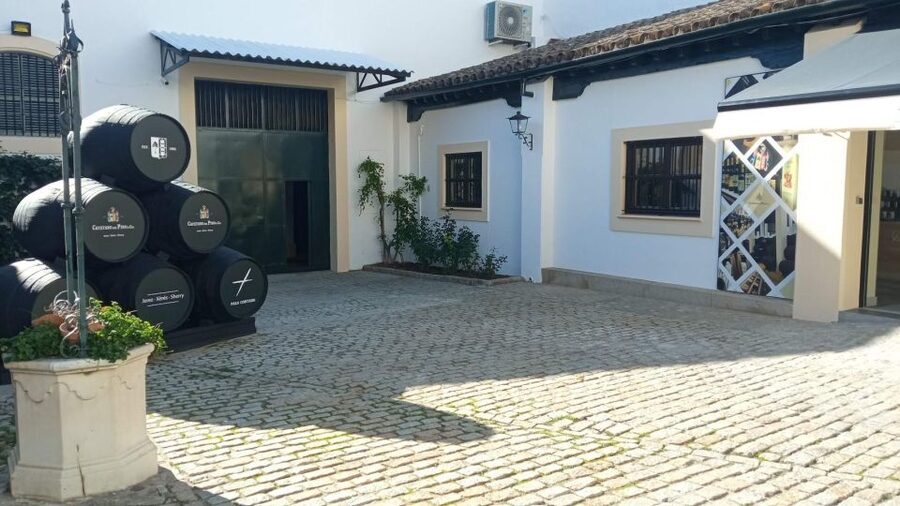
The meeting point is Bodegas Cayetano del Pino (Vinos de Jerez, D.O. Jerez-Xérès-Sherry), right in the center of Jerez de la Frontera. That matters because you can fit this into a normal day of walking, shopping, and tapas without planning a long detour out to the countryside.
Right away, you’re in the right frame of mind: this isn’t a museum where everything is dead and silent. It’s a tour where the “why” is explained in front of you, then you see the “how” in the winery itself. You get that satisfying shift from story mode to real-world production mode.
And yes, you’ll learn. But you’ll also taste. That combo is what makes the time feel well spent for the price.
You can also read our reviews of more tours and experiences in Jerez De La Frontera.
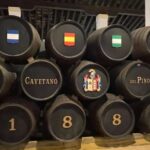

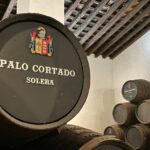
The mid-19th century introduction: how the tour gets you oriented fast
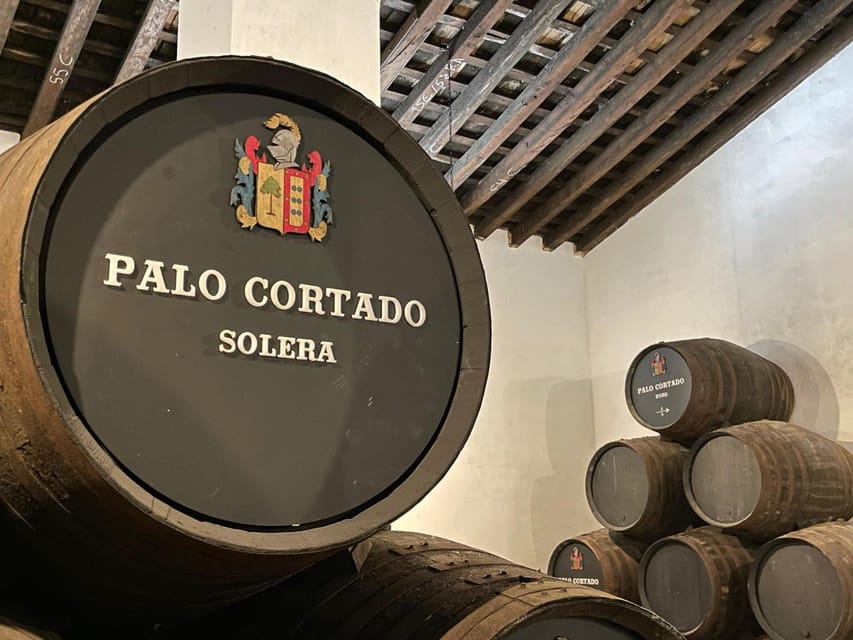
The visit begins with an introduction in a mid-19th century cellar, which is a smart opening. If you’re new to sherry, you need basics before someone starts pointing at barrels or describing processes. This section is built to get you oriented without turning it into a lecture you can’t hold onto.
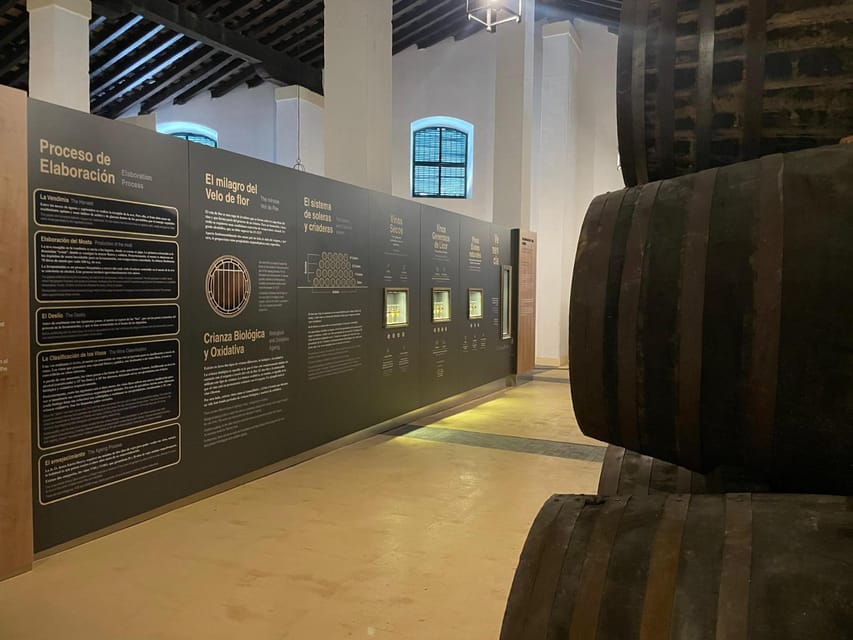
A key part is the way the tour uses visuals to explain what you’re learning. You’ll see an audio-visual graphic that talks about the history of sherry and its elaboration, including a sweep through regional history from ancient eras (the tour mentions the Phoenicians) to more recent times. Even if you already know some sherry terms, the timeline helps connect the dots so you understand why sherry developed the way it did in this specific region.
Possible downside? If you’re the type who loves to linger, the pacing can feel tight. At 75 minutes, the staff has to keep things moving so you still reach the tasting and the shop.
The sherry history timeline: what the graphics do better than a brochure
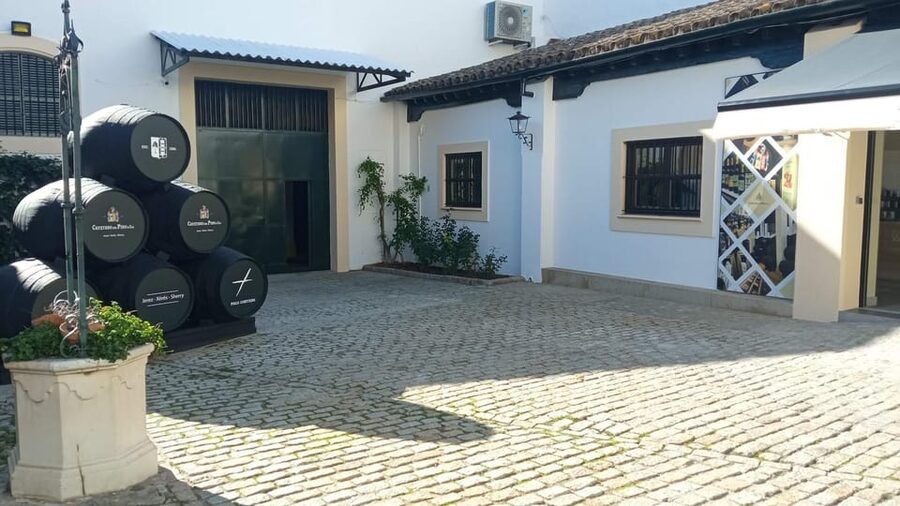
One of the most practical parts of this tour is the visitor center timeline, designed to show the most important facts about sherry wine. It’s not just “here is history,” but a sequence that helps you follow the story instead of collecting random dates.
Here’s what you can expect this to do for you as a visitor:
- It gives you context for what you’ll taste later, so the tasting feels connected, not separate.
- It helps you understand that sherry is a regional product with long development, not a generic “fortified wine” concept.
- It sets up the later modules about vineyard and winemaking, so you know what to look for.
This is the kind of teaching that’s actually useful on the palate. You don’t just hear about winemaking—you start recognizing ideas while you’re sipping.
The 1886 winery tour: original materials and the sense of place
After the introductory section and timeline, you move into the history of the winery founded in 1886. You’ll tour the winery from a historical angle, including seeing material original 19th century.
Why that matters: you get a sense of continuity. Sherry still relies on specific regional methods, but the winery itself has long lived through changes in the world outside its walls. Even if you’re not a history nerd, this part helps you understand that what you’re tasting has been shaped over time by local practice.
You also get a change of atmosphere from the visitor center. The tour feels more grounded because you’re inside the production space, and you can connect the explanation to the environment.
Vineyard and winemaking modules: the explanation you’ll actually remember
A standout section is the part focused on vineyard and winemaking, explained graphically. This is where a lot of wine tours either get vague or get too technical. Here, the structure is meant to show important points clearly.
You’ll also notice how the tour breaks information into digestible blocks:
- How the process works (at a conceptual level)
- How sherry fits into the broader regional story
- What matters in production, not just what’s romantic
If you’ve ever left a tasting thinking you liked a flavor but couldn’t explain why, this section is built to prevent that. Even if you don’t memorize every term, you’ll have a working mental map for your next sherry conversation—at least enough to sound like you know what you’re talking about.
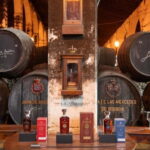
Historical label exhibition: sherry branding as design history
Another high point is the special module with other wineries in Jerez plus a label exposition where famous labels are displayed as if they were works of art.
This might sound like “stuff on a wall,” but it’s more interesting in practice. Labels in sherry aren’t only marketing. They’re part of how the product traveled, how it was recognized, and how each brand positioned itself over time. Seeing historical labels helps you realize that sherry culture includes design, not just wine chemistry.
If you like collecting packaging, this is also where you’ll start seeing which brands you might want to buy in the shop afterward. You’re not guessing. You’ve already been guided through how these labels evolved and what the producers wanted to communicate.
The tasting of 4 award-winning sherries: how to get the most from the glass
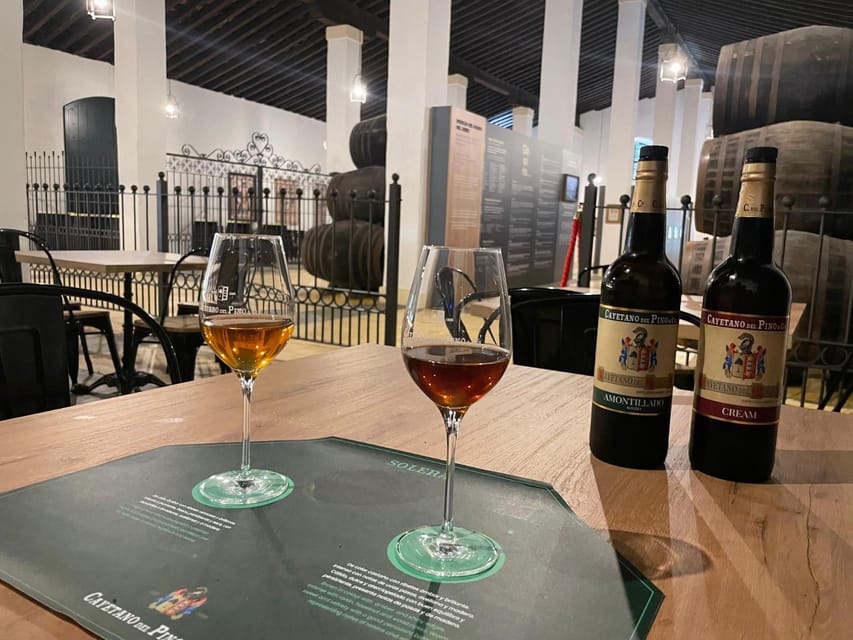
Then comes the part you actually came for: tasting. You’ll sample several award-winning sherry wines, with a total of 4 wines included, along with chips and a snack.
A helpful way to approach this part (so you get more than just a pleasant sip) is to taste with a simple set of questions:
- What feels most dominant: nutty, salty, dry, sweet, or aromatic?
- Does it change after a few seconds, or does it hit immediately?
- How does it pair with the included snack?
Because you’ve already been through the history and production explanations, the tasting has context. That’s where value shows up. Instead of “four random pours,” you’re tasting with a clearer sense of regional identity and winemaking choices.
Also, the tour is live-guided in Spanish and English, so you can ask for meaning, not just instruction. One guide you may hear about is Linda, praised for explaining both the business and the wider sherry market and process. That kind of explanation helps you translate what you’re tasting into something you can remember.
Shop time: turning learning into a bottle you’ll drink
After the tasting, you’ll visit the shop. This is where the tour closes the loop: you can buy souvenirs, wine, and items tied to what you saw in the label exhibition and tasting.
I like this structure because you’re not forced to buy anything right away. You leave the tasting with real impressions and then decide if a brand matches what you enjoyed.
Practical tip: if you’re short on luggage space, pick one bottle you loved most and one you’re curious about but didn’t expect to like. That way you get variety without turning it into a shipment.
Price and value: is $29 for 75 minutes reasonable?
For about $29 per person (for 75 minutes), you’re paying for three things that many wine experiences separate:
1) guided winery access (inside the sherry production space)
2) structured education (audio-visual history + graphic modules)
3) tasting with 4 wines plus chips and a snack
If all you wanted was a quick tasting, you might find cheaper pour-only stops around Jerez. But you’d likely miss the timeline context and the 1886 winery story. If all you wanted was a museum visit, you’d probably pay similarly and still not get the tasting payoff.
So the value works best if you want both education and tasting and you’re happy with a timed, guided route. If you want extra time in the cellar after the formal tour or want to focus on food pairing, the provided format is a solid start, not a multi-hour slow crawl.
How long you’ll actually spend in the experience
The tour clocks in at 75 minutes, and that timing shapes everything. You’ll move through:
- the visitor center intro and audio-visual content
- the historical winery walkthrough connected to the 1886 story
- modules that explain vineyard and winemaking
- the label exhibition
- a tasting of 4 wines
Because it’s a live guided experience, you’ll feel the schedule. That’s not a deal-breaker; it’s often the best way to keep the experience focused. Just plan to arrive with enough time to check in and not feel rushed.
Who this tour is best for
This works especially well if you:
- are new to sherry and want a guided path instead of random browsing
- like wineries that explain the process in plain language with graphics
- enjoy tasting but also want the “why” behind what you’re drinking
- want a centrally located activity you can slot into a Jerez day
It may be less ideal if you:
- want a long tasting with lots of sitting time
- prefer a mostly self-guided experience
- are hoping for a full meal as part of the visit
A note on food: what’s included and what costs extra
The tour includes chips and a snack, which helps during the tastings. Iberian dishes are not included, though there’s an option listed as an extra add-on (plus 15 euros).
If you’re building a food day in Jerez anyway, this is fine. You’ll likely want tapas afterward, and the snack included here is meant to keep you comfortable for the wines.
Should you book the Cayetano del Pino sherry tour?
Yes—if you want a clear, guided introduction to sherry that happens inside a real winery, in central Jerez, and ends with a proper tasting. The mix of audio-visual sherry history, a label exhibition that’s more than decoration, and a structured 4-wine tasting makes the $29 feel earned rather than random.
I’d book it when you want value for time: it’s short, focused, and designed to give you something to remember after the last sip.
FAQ
How long is the guided tour?
The tour lasts 75 minutes.
Where does the tour start?
The tour starts at Bodegas Cayetano del Pino in Jerez de la Frontera (Vinos de Jerez, D.O. Jerez-Xérès-Sherry).
What language is the tour offered in?
The live guide offers the tour in Spanish and English.
How many sherry wines do you taste?
You taste 4 wines as part of the experience.
What’s included with the tasting?
The tasting includes chips and a snack, along with the tasting itself and the guided winery visit with audio-visual and history materials.
Is food like Iberian dishes included?
No. Iberian dishes are not included and are listed as an extra option.
Is the tour wheelchair accessible?
Yes, the activity is wheelchair accessible.
What if plans change and I need to cancel?
You can cancel up to 24 hours in advance for a full refund.