REVIEW · POMPEII
Wine Tasting and Winery Tour in Vesuvio National Park with Lunch
Book on Viator →Bookable on Viator
Volcanic wine tastes like a place. This Vesuvius National Park stop pairs a walk through organic vineyards and a cellar cut from lava stone with lunch-style Neapolitan dishes and Caprettone-rooted local pride, guided by Marco. The biggest catch: you’ll likely need to sort out your own ride to the winery area, since it’s not a plug-and-play city stop.
I like how the tasting is built around real terroir, not just pours on autopilot. You’ll try 4 wines (from rosé to reds) paired with 4 Neapolitan dishes, and the pace stays tight for a small group. Expect about 2 hours total, starting at 12:00 pm, with the tour ending back at the meeting point on Via Cifelli in Trecase.
In This Review
- Key highlights you’ll actually care about
- What you’re booking: a volcanic wine tour with lunch pairings
- Getting to the meeting point in Trecase (and planning your ride)
- Vineyard walk: organic, ungrafted vines on volcanic soils
- The winery setting: family roots under the house
- Cellar tour in lava stone: amphora and steel vats
- The tasting: 4 Lacryma Christi wines paired with 4 Neapolitan dishes
- Lunch-style pacing: how it fits into a 2-hour experience
- UNESCO Vesuvius: what the status means for your visit
- Price and value: is $79.94 worth it?
- Who this tour is best for (and who might skip it)
- Should you book this Vesuvio wine tour with lunch?
- FAQ
- Where is the meeting point for the tour?
- What time does the tour start?
- How long is the winery tour with lunch?
- How many people are in the group?
- What’s included in the tasting?
- What wine type will you be tasting?
- What is the cancellation policy?
Key highlights you’ll actually care about
- UNESCO Vesuvius setting: a family winery inside the Vesuvius National Park biosphere reserve (UNESCO since 1995)
- Walk real vineyards: 12 hectares of organic vines, grown on volcanic soils at different altitudes
- Native varieties with a rare local star: Aglianico, Falanghina, Piedirosso, plus Caprettone (grown only here)
- A cellar carved from lava stone: it uses the eruption rock for naturally favorable temperatures and humidity
- Four wine pours, four food pairings: Lacryma Christi wines matched with Neapolitan dishes
- Small group vibe: maximum 10 travelers for questions and calmer pacing
What you’re booking: a volcanic wine tour with lunch pairings
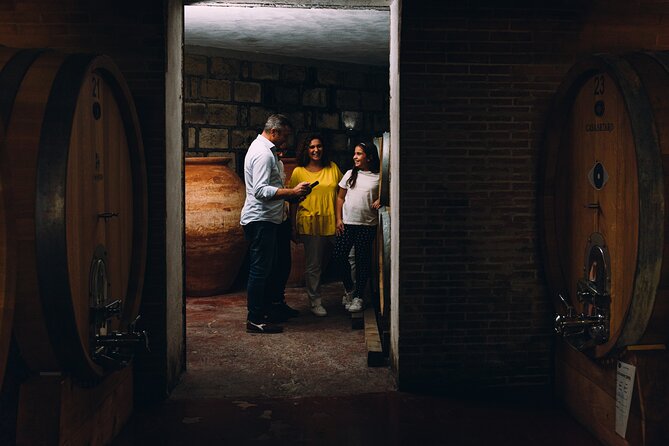
This is a family-owned winery experience where the “tour” part is just as important as the tasting. You’re not only sampling wine—you’re also seeing how volcanic conditions shape the growing area and the winemaking setup.
The value is in the pairing format: 4 wines (rosé to reds) and 4 Neapolitan dishes. That’s a smart way to taste with context, so you can connect flavors you notice in the glass to flavors on your plate.
Price-wise, $79.94 can feel like a step up—until you compare it to typical “just wine” tastings. Here, you’re getting a vineyard walk, a cellar visit, and a structured lunch-like meal pairing, all in about two hours.
You can also read our reviews of more tours and experiences in Pompeii.



Getting to the meeting point in Trecase (and planning your ride)
The tour meets at Via Cifelli, 10, 80040 Trecase NA, Italy, starting at 12:00 pm. It ends back at the same meeting spot, so you’re not stuck figuring out a new location when you’re done.
One practical note: this isn’t presented as a city-within-walking-distance stop. A common snag is simply reaching the winery area on time. If you don’t have a car or an easy pre-planned transport option, make that your first task before you book—because arriving late is the easiest way to ruin a short tour.
If your schedule is flexible, give yourself extra buffer around noon. Trecase is close enough to Pompeii to make a half-day work, but you still want time for transport and finding the right spot.
Vineyard walk: organic, ungrafted vines on volcanic soils
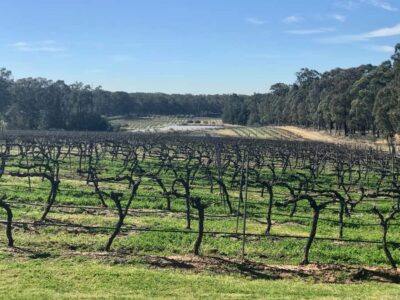
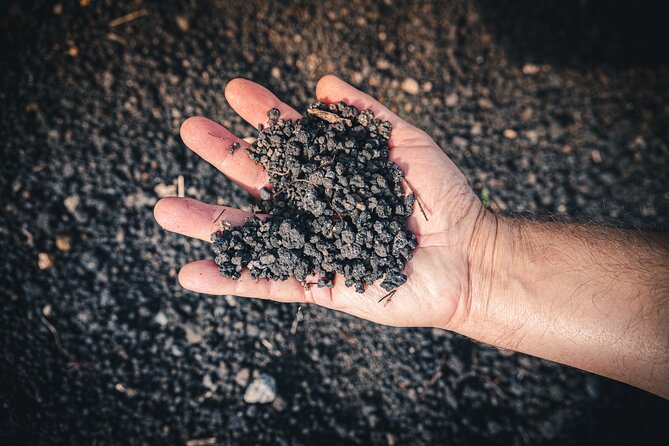
The heart of the visit is the vineyard walk. You’ll learn how the property works across 12 hectares inside the park, with vineyards placed on volcanic ground at different altitudes and exposures. That variety is part of what makes the tasting interesting: wines grown across distinct micro-conditions can taste noticeably different.
The winery cultivates vines organically and uses native varieties of ungrafted vines. That matters because it keeps the story tied to place instead of relying on generic planting methods.
Here’s what you’ll hear about:
- Aglianico
- Falanghina
- Piedirosso
- Caprettone, described as rare and grown only here
This is also where the tour’s tone becomes personal. The format leans on a host-led explanation, not a rushed slideshow. Marco is specifically mentioned for making the history of the vineyard feel clear and worth paying attention to—especially when you’re standing where the vines grow.
The winery setting: family roots under the house
This winery is described as being part of the family home—obtained below it—so the environment inside isn’t generic “wine storage.” You’ll get the reasoning behind it: the last great Vesuvius eruption left volcanic rock that creates favorable temperature and humidity conditions for winemaking.
Why you should care: temperature and humidity influence fermentation conditions and aging behavior. Even if you’re not a wine nerd, you’ll likely notice the cellar feels steadier and cooler than an ordinary space—because the rock is doing the heavy lifting.
It’s a small detail, but it ties the whole experience together: the volcano isn’t just scenery. It’s working in the soil and then again in the structure holding the wine.
Cellar tour in lava stone: amphora and steel vats
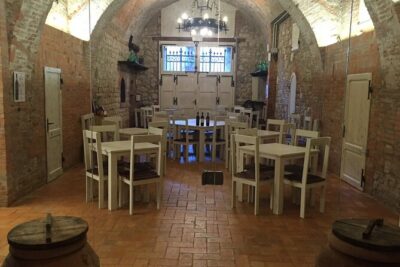
After the vineyard walk, you move to the cellar. The key idea is simple and memorable: this cellar is dug out of the lava stone from the last great eruption.
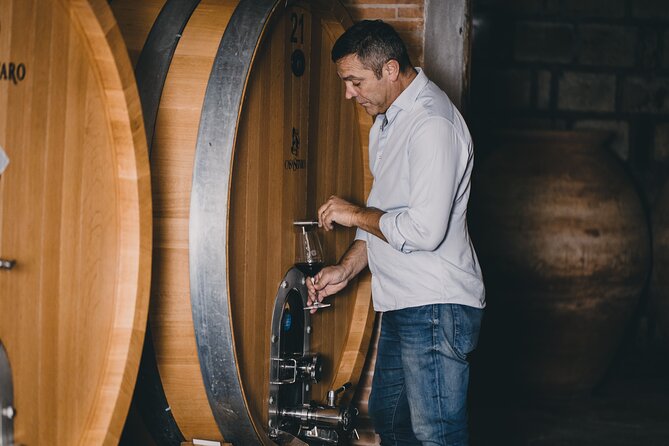
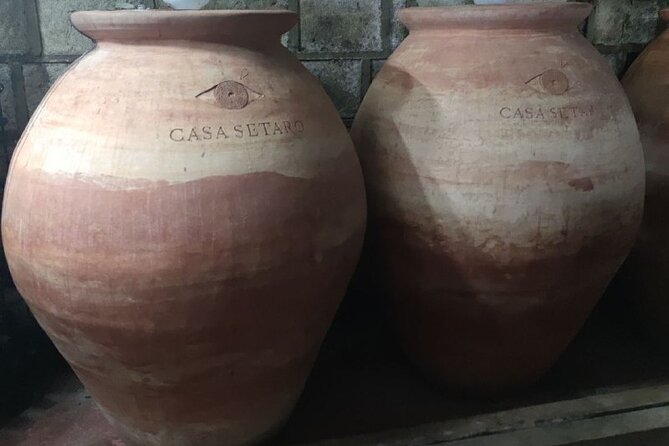
Inside, you’ll see and hear how vinification and fermentation are handled, including:
- large steel vats
- amphora
The amphora piece is often what makes people perk up, because it signals a traditional approach alongside modern tools. Even without getting overly technical, you’ll come away with the idea that different vessels can steer fermentation and flavor development in different ways.
This section also tends to be where the host’s teaching style shines. One review calls out how Marco explains the vineyard history and pairing logic clearly. In practice, that means you’re less likely to drink passively and more likely to taste with purpose.
The tasting: 4 Lacryma Christi wines paired with 4 Neapolitan dishes
The tasting is the main event, and it’s structured for variety. You’ll sample 4 wines, moving from rosé to reds, paired with 4 Neapolitan dishes.
You’ll specifically be tasting Lacryma Christi wines, which is a big part of why this tour makes sense in this area. Lacryma Christi is strongly associated with Vesuvius, so the wine choice reinforces the volcanic terroir theme. When you pair those wines with local food, you’re basically getting a condensed flavor map of the region.
What you’ll likely notice during the meal:
- the wines are selected to match the food portions, not thrown at you one after another
- the tour’s food isn’t generic bar snacks; it’s presented as local Neapolitan dishes
- the order from rosé to reds gives you an easy way to compare how styles shift as you go
From the reviews, the strongest praise centers on the pairing itself—people liked how the combinations felt “inspiring,” and they also highlight the hosting as a major part of the fun. That’s the difference between a tasting where you’re just handed glasses and one where you’re guided to connect flavors.
Lunch-style pacing: how it fits into a 2-hour experience
Time is short: about 2 hours total. That’s actually a benefit here. You get to enjoy the vineyard, see the cellar, and taste wines with food without turning your afternoon into a full half-day commitment.
A typical flow is:
1) meet at Via Cifelli at 12:00 pm
2) visit the vineyards and hear about the vines and volcanic growing conditions
3) tour the cellar and learn how the winery makes and stores wine
4) do the tasting and food pairings (4 wines + 4 Neapolitan dishes)
5) return to the meeting point
Group size is capped at 10 travelers. That keeps the host’s attention from getting diluted and helps you ask questions without waiting forever. It also helps the pacing stay smooth—especially during transitions from outside vineyard to inside cellar.
UNESCO Vesuvius: what the status means for your visit
This experience happens inside a Vesuvius National Park area that is also a UNESCO site (since 1995) and part of a biosphere reserve. If you like travel that has more than a photo-op value, this matters.
Why it’s not just a badge: you’re walking a working vineyard on volcanic soils inside a protected zone. The organic cultivation and native varieties connect to the broader idea of preserving land and practices that fit the environment.
Even if you don’t study the UNESCO jargon, you’ll feel the logic in the tour’s structure. You’re not only drinking wine. You’re seeing the living system—soil, altitude, vine types—that produces it.
And Caprettone being grown only in this area is the kind of detail that makes the trip feel focused. It’s not just “try local wine.” It’s “try a local vine that you can’t reliably get elsewhere.”
Price and value: is $79.94 worth it?
At $79.94 per person, you’re paying for three things at once:
- guided vineyard and cellar access (not just a tasting counter)
- a structured tasting of 4 wines
- 4 Neapolitan dishes paired to those wines
If you’ve ever done wine tastings that are mostly one-and-done sips with no context, this feels more complete. The host’s guidance—Marco is specifically praised—turns the experience into something you can remember and repeat mentally.
Also, small-group pricing matters. With a max of 10 travelers, the host can actually explain what you’re looking at and help you understand the pairings as you go. That’s hard to find at lower-cost tastings where everyone is herded through quickly.
One tradeoff is that transport is on you. If getting there is easy for you, the value looks strong. If you’d have to scramble last-minute for a ride, the “value” can shrink fast in real time.
Who this tour is best for (and who might skip it)
This works especially well if you:
- enjoy wine but also want the story behind it
- like hands-on learning (vineyards and cellar, not just a room)
- want a short activity that still feels substantial—about two hours
- are curious about Vesuvius-specific wines like Lacryma Christi
You might think twice if you:
- need everything to be within easy public transit range (transport to the winery area can be a snag)
- dislike tasting menus and prefer only one or two wines
- have very limited flexibility around a 12:00 pm start time
If you’re pairing this with a Pompeii day, it’s a nice way to change gears: archaeology in the morning, wine and volcanic food later. Just make sure you plan your timing so the noon start doesn’t become a stress test.
Should you book this Vesuvio wine tour with lunch?
Yes—if you want a small-group, guided winery visit where the wine is paired with real local food and tied directly to Vesuvius terroir. I like the structure: vineyard walk, lava-stone cellar, then a tasting that goes beyond random pours.
Book it with confidence if you can handle getting to Via Cifelli, 10 in Trecase on time. If transport is unclear, sort that first, then lock it in. Once you’re there, the standout is the hosting and the way the pairing experience is explained and paced.
In short: this isn’t just a wine stop. It’s a well-paced, two-hour look at how a volcano makes wine—and how Naples-style food brings it to life.
FAQ
Where is the meeting point for the tour?
The tour meets at Via Cifelli, 10, 80040 Trecase NA, Italy.
What time does the tour start?
The start time is 12:00 pm.
How long is the winery tour with lunch?
It lasts about 2 hours.
How many people are in the group?
The tour has a maximum of 10 travelers.
What’s included in the tasting?
You’ll taste 4 wines (from rosé to reds) paired with 4 Neapolitan dishes.
What wine type will you be tasting?
The tasting includes Lacryma Christi wines.
What is the cancellation policy?
You can cancel for free up to 24 hours in advance for a full refund.
If you cancel less than 24 hours before the experience starts, the amount paid isn’t refunded.