Alicante turns into a winery classroom. This 2-hour visit at Bodega Casa Sicilia starts in the vines, moves through the production rooms (plus an oil museum and old machines), and ends with a four-wine tasting paired with tapas. It is the kind of Alicante experience that feels hands-on, not just walk-in-and-wait.
I like how the lesson starts at the plant level—how grapes are planted and when harvest happens—so the wines make sense once you start tasting. I also like the small-group vibe, with a maximum of 7 people, which keeps the pace friendly and questions possible. One possible drawback: it is short, so if you want a long, slow sit-down meal with zero movement, this may feel a bit tightly scheduled.
In This Review
- Key Things You’ll Notice on This Alicante Winery Tour
- Bodega Casa Sicilia in Alicante: Why the Two-Hour Format Works
- Start in the Vineyard: Grapes, Planting, and Harvest Timing
- Production Rooms: How Each Wine Is Made (and Why Time Is Part of Taste)
- Oil Museum and Old Production Machines: A Bonus That Adds Local Depth
- Wine Tasting With Four Glasses and Tapas: How to Get More From It
- Guides, Language, and the Small-Group Advantage (Up to 7 People)
- Price and Value in Alicante: Is $71.38 Worth It?
- Who Should Book This Alicante Winery Tour?
- Should You Book Beautiful Winery in Alicante?
- FAQ
- Is this winery tour in Alicante, Spain?
- How long does the tour last?
- What is the price per person?
- Is a guide included?
- Are alcoholic beverages included?
- What happens during the tasting?
- Is the ticket mobile?
- What language is the tour offered in?
- How big is the group?
- What is the cancellation policy?
- Is the tour suitable for most people?
- Do I get confirmation right away?
Key Things You’ll Notice on This Alicante Winery Tour
- Vineyard-first storytelling: You begin with how grapes are planted and how harvest is done.
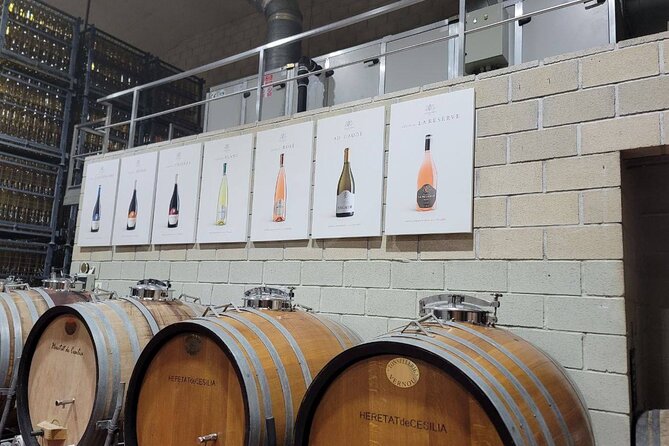
- Production rooms + timing: You learn the winemaking process and how long each stage takes.
- Oil museum and old production machines: It adds a local-industrial history twist beyond wine.
- Four pours with tapas: You taste 4 different glasses, not just one quick sample.
- Small groups of up to 7: Easier conversation and fewer bottlenecks.
- English is the operating language: It is built for English-speaking visitors.
Bodega Casa Sicilia in Alicante: Why the Two-Hour Format Works
This tour is designed for people who want real winery time without burning half a day. In about 2 hours, you get a full loop: vines → production → a couple of extra exhibits → tasting. For Alicante, that is practical. The city is easy to reach and you can still keep your afternoon flexible for the beach, the old town, or another stop on your plan.
The value here is not only that you get wine. It is that the tasting is tied to what you just saw. You are not left guessing why one glass tastes a certain way. Instead, you hear how grapes grow, how harvest is handled, and how production works—so your palate has context.
That said, keep expectations realistic. You will not linger in one room for a long, museum-style wander. The experience is structured and moving. If you prefer slow travel, plan for a follow-up stop later (a casual drink somewhere nearby, or a second winery visit on a different day).
You can also read our reviews of more tours and experiences in Alicante.
Start in the Vineyard: Grapes, Planting, and Harvest Timing
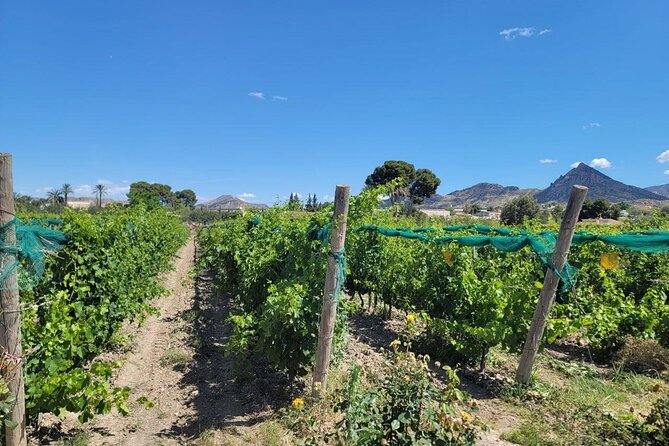
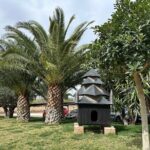
The visit opens in the vineyard, and that is a smart choice. Wine tours that skip the vines often turn into a generic slideshow of barrels. Here, you start with the basics: how the grapes are planted, what effort it takes, and how harvest is timed.
Why that matters for you: harvest timing influences ripeness, which affects the balance of sweetness, acidity, and flavor. Even if you are not memorizing technical terms, you will start linking the final glass to real farm decisions. It also gives you something to ask about later, because you are learning from the source, not from a signboard.
Expect a straightforward, grounded explanation. The tour is built for “most travelers can participate,” so it is not positioned as a hardcore agricultural field trip. You will walk through the vineyard area, then shift into indoor production.
Production Rooms: How Each Wine Is Made (and Why Time Is Part of Taste)
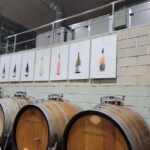
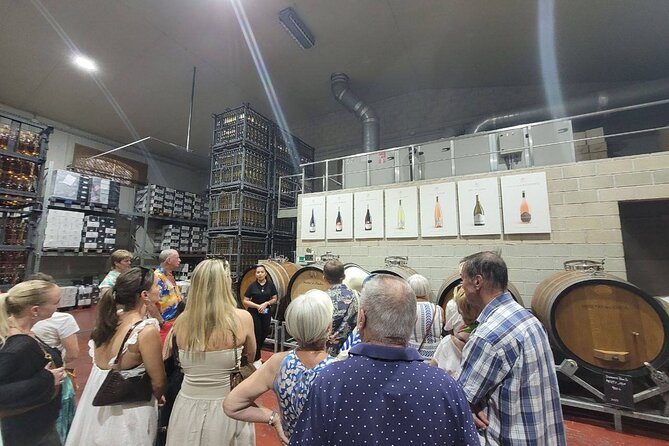
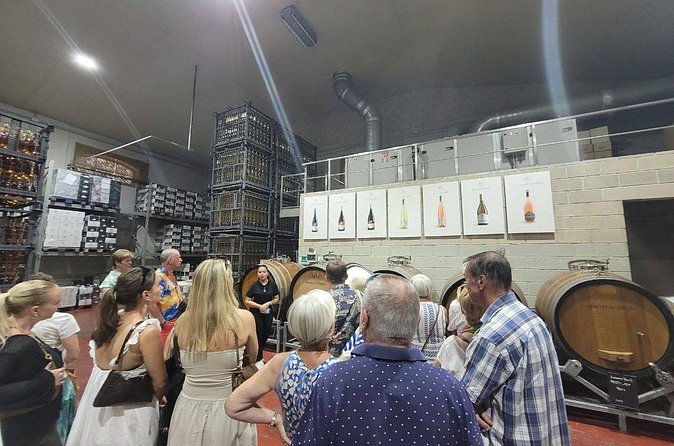
After the vineyard, you move on to the production rooms. This is where the tour earns its “educational but not exhausting” feel. You learn about the process behind each wine and you hear that winemaking is not instant. The guide explains how long each step takes.
That “timing” detail might sound small, but it helps you taste more intelligently. Fermentation and aging decisions don’t just happen to the wine. They shape the texture and how flavors show up. When you later taste 4 different glasses, you can listen for changes in structure, not just flavor.
This portion also tends to be visually interesting: production rooms usually give you a sense of scale. Even if you only see parts of the workflow, you get the idea that a winery is both craft and system. It is not magic, and it is not only tradition. It is work—measured work.
Oil Museum and Old Production Machines: A Bonus That Adds Local Depth
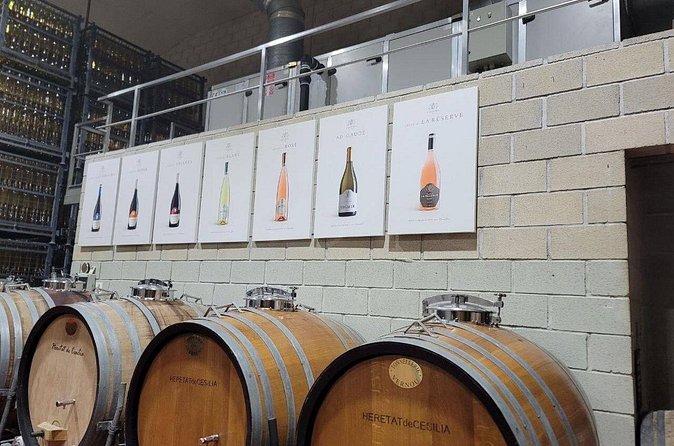
Most winery tours focus on wine only. This one adds two extras: an oil museum and old production machines. That makes the visit feel more connected to the region’s broader food-and-farm culture.
If you like travel that feels specific to a place, this is a win. Alicante isn’t just about one product. Olive oil and historic machinery tell you the area used to rely on seasonal labor and technology that evolved over time. It also keeps the pace from becoming repetitive. You are not standing in one tasting corridor for the whole experience.
Practical note: these stops can be great if you enjoy seeing equipment up close, not just tasting. If you want wine-focused only and nothing else, you might feel these exhibits slightly “side-quests.” Still, they help break up the tour and make the winery feel like an actual working site with a past.
Wine Tasting With Four Glasses and Tapas: How to Get More From It
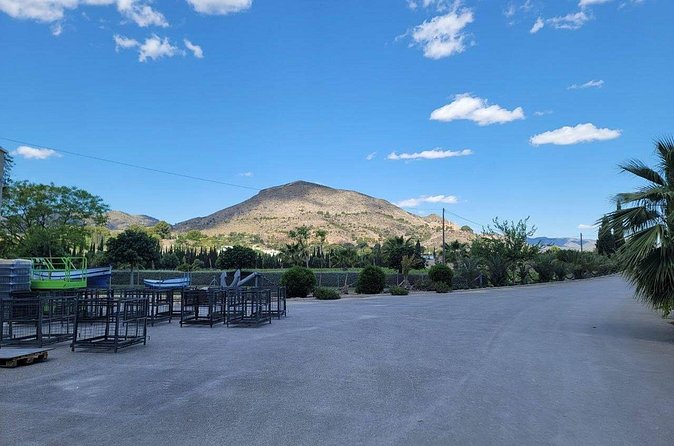
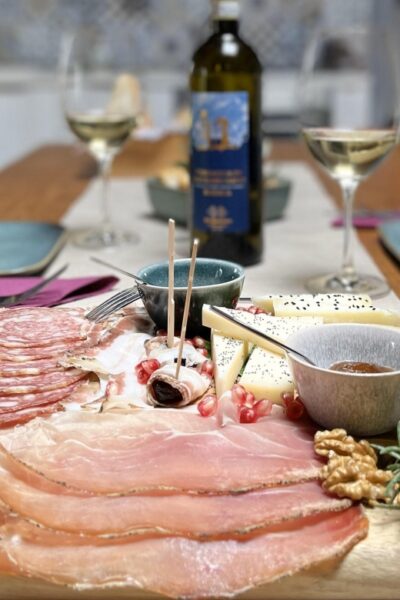
The tour ends with wine tasting where you try 4 different glasses with a tapas accompaniment. This is the payoff, and it is also where you can quickly figure out whether you like the winery’s style.
Here is how to make the tasting more fun and useful:
- Take notes fast, even if you only use a mental checklist: fruit, acidity, finish.
- Don’t force comparisons right away. Let each glass be its own moment.
- Pair taste with the earlier lesson. Ask yourself what might connect to harvest timing or production choices.
You also get tapas, which matters. Alcohol + food helps you taste more clearly and avoids the rushed, buzzy feeling that can happen if you are sampling without a bite.
From one recent experience: it was possible to buy bottles after tasting, and the purchase experience included an extra bottle offer. That kind of perk is not guaranteed, but it is a good reminder to bring a little extra spending flexibility if a wine really clicks for you.


Guides, Language, and the Small-Group Advantage (Up to 7 People)
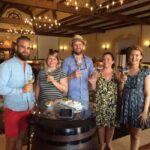
This tour runs in English, and it caps at 7 travelers, which is excellent for a short itinerary. In a small group, you are less likely to get lost in a crowd, and you can actually hear explanations without straining.
The human part matters too. One guide you might encounter is Mikhail. In a private-turned-group setting, he had limited English but still did a strong job and helped keep the day moving smoothly, including getting everyone back on time. Another guide you might encounter is Dimitrij, who was described as fantastic—warm and generous, and able to create a memorable experience.
No guide is identical, but the common thread is that the tour leadership seems to focus on making it work for you: clear enough explanations, a comfortable pace, and attention to timing.
If you care about comfort and conversation, this is a tour that matches that mood. If you want a big, theatrical performance, you may find it more grounded and straightforward than showy.
Price and Value in Alicante: Is $71.38 Worth It?
At $71.38 per person for about two hours, you are paying for a guided, structured winery circuit plus included tasting and drinks. The ticket includes the guide and alcoholic beverages, and it also includes admission.
Here is why it can feel like good value for the Alicante area:
- You get more than a tasting. You get vineyard learning, production explanation, and museum/exhibit stops.
- You taste 4 wines, not one.
- You get tapas with the tasting, so the experience is not just liquid sampling.
- The small group (up to 7) supports a more personal experience than mass-coach tours.
The main “cost risk” is that this is short. If you dislike structured pacing or want more free time for wandering, you may feel like the price should buy more hours. But if you want a focused winery introduction and a clear tasting finale, the format is aligned.
Also consider that the tour requires good weather. If conditions are poor, you may be offered a different date or a full refund. That weather dependency is not a bad sign—it usually means the outdoor parts matter to the experience.
Who Should Book This Alicante Winery Tour?
Book this if you want a practical Alicante winery experience that gives you context fast. It is ideal for:
- Couples and small groups who prefer a quiet pace over crowds
- Wine-curious visitors who want structure: vineyard → production → tasting
- Travelers who like local extras (oil museum and old machines) instead of wine-only focus
- People on a time budget in port or with a tight day plan
It may not be the best match if you want a long gourmet meal, lots of downtime, or a purely wine-centric tour with deep technical tasting sessions.
Should You Book Beautiful Winery in Alicante?
Yes, if your goal is a short, well-run taste of Alicante wine culture—without spending half your day. The vineyard start gives you meaning before you drink. The four-glass tasting with tapas gives you a satisfying finish. And the small group size helps you actually enjoy the explanations.
My main caution is timing: this is built for 2 hours. If you need a slower schedule, choose something longer and more leisurely. If you are okay with a guided flow and you want your wine trip to feel educational without dragging, this one is a strong bet.
FAQ
Is this winery tour in Alicante, Spain?
Yes. The experience is located in Alicante, Spain.
How long does the tour last?
It lasts about 2 hours.
What is the price per person?
The price is $71.38 per person.
Is a guide included?
Yes. The guide is included.
Are alcoholic beverages included?
Yes. Alcoholic beverages are included.
What happens during the tasting?
You taste 4 different glasses of wine, with a tapas accompaniment.
Is the ticket mobile?
Yes. A mobile ticket is provided.
What language is the tour offered in?
The tour is offered in English.
How big is the group?
It has a maximum of 7 travelers.
What is the cancellation policy?
You can cancel up to 24 hours in advance for a full refund. If the experience is canceled due to poor weather, you will be offered a different date or a full refund.
Is the tour suitable for most people?
Yes. Most travelers can participate.
Do I get confirmation right away?
Confirmation is received at the time of booking.